9 January 2020
 The morning began with an excellent visit the the Executive Director of Lubaga, Dr. Andrew Ssekitooleko, the Principle Pharmacist, Dr. Michael Mubiru, and the pharmacist interested in pharmaceutical care, William Kalule. I love that they started and ended the meeting in prayer, which is quite common in Uganda even in a secular setting like the Makerere Pharmacy School. Also, they have a formal way of introducing everyone which show so much respect and sets the atmosphere for a collegial meeting. Winnie and I were there to explain the PC research to the ED and the principle pharmacist to see if they were interested in participating. We had a fantastic conversation about the role of the pharmacist and Dr. Andrew remarked how this could improve the quality of patient care and improve safety. Their hospital focuses on patient care, training and research and the PC project fits every area. We all left the meeting feeling uplifted and excited about the future!
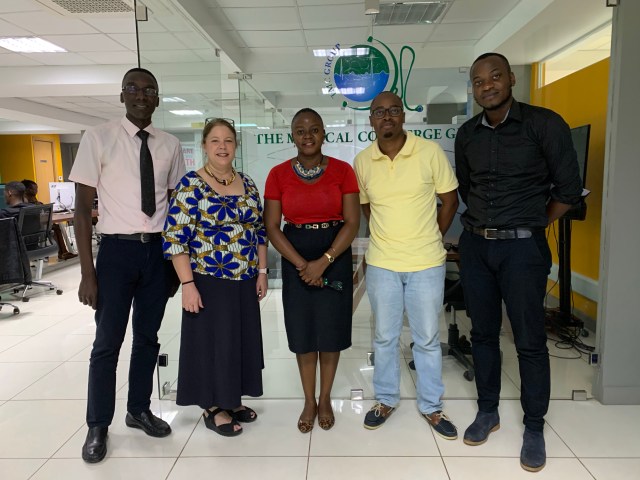 We immediately headed to our next meeting. Early in my stay here in Uganda, I received a message through LinkedIn from the grants mHealth Project Manager, Dr. Louis Kamulegeya, of The Medical Concierge Group, a telemedicine organization in Uganda. Yes, healthcare workers and IT experts have partnered to develop a Telehealth organization. They started in 2012 and it is amazing to see their operation now. Dr. Louis had reached out to me because he had seen my blog post on LinkedIn, read about my pharmaceutical care work and thought we might have research interests in common. Winnie and I didn’t really know what to expect as we headed to this meeting but we were both interested to learn more about their company. You can click on the link above for more information but in brief, they provide healthcare via phone consultations with physicians. When needed, they send a laboratory technician to your home or place of business to obtain the specimen for lab testing. When the results are back, they contact the patient with those results and if a prescription is needed, the physician writes it and then it is delivered to the patient. They also have a state of the art Telehealth clinic where patients who need to be seen and examined are sent to have their vitals taken (blood pressure, heart rate, etc.). A nurse can place a stethoscope so the Telehealth physician, who is not present can hear the heart beat and the lungs and see the patient via computer or TV monitors. All of the patient’s information is kept in a detailed patient database, an electronic medical record, and can be referred to in the future should the patient need another consult. This type of service is only in its infancy in the US so I was completely amazed at what they are doing in Uganda. They also have an eStore, RocketHealth, a pharmacy, where clients can purchase over the counter meds and have them delivered. They can fill prescriptions written by outside physicians, too, but they CAN NOT get antibiotics and antimalarials without an appropriate prescription! I was so happy to hear this. In Uganda, and in many LMIC (low and middle income countries), antibiotics and other meds that would usually be available only by prescription in the US are casually sold without a prescription. This has contributed to the severe Antimicrobial Resistance problem that now exists in Uganda and all over the world. I was really impressed with the healthcare practitioners we spoke with today, including Louis, but also his partners, Dr. Davis Musinguze, Managing Director, and a Telehealth pharmacist, Dr. Paul Mirondo. Winnie and I were both so excited about all of the possible ways we could collaborate. Winnie was focusing on this organization as an opportunity for her pharmacy students to learn about this healthcare model and was asking if they would be willing to have pharmacy students or pharmacy interns be place there for experiential learning. I was excited to learn that they collect all of the patient data and it is housed in an eMR just waiting to be extracted and analyzed to look for ways to improve healthcare. To date, I’ve not worked with any hospitals in Uganda who have a comprehensive electronic database with patient information that could be used to determine what is needed to improve patient health care outcomes and to show how the pharmacist can be a part of the solutions to improving outcomes from NCDs (non-communicable diseases). In the US we call these chronic illnesses like high blood pressure and diabetes. In most of the rest of the world, illness is split into 2 categories: NCD’s and communicable diseases, which are infections like HIV, pneumonia, Typhoid, Malaria, etc. I’m not sure what collaborations will develop in the future but I’m sure there are ways we can partner. And regardless, I am so grateful to have learned about this organization!
After a delicious dinner at a Mexican place in Kampala, I went back to the guest house and Winnie went to a garage to check on her brakes in her car. Everything was fine until yesterday when her car started making scary sounds. She found out it was her brakes and hopefully they will be able to fix them soon. You really need good brakes in Uganda. There are many hills and steep grades. Even the parking ramps seem very steep at times.

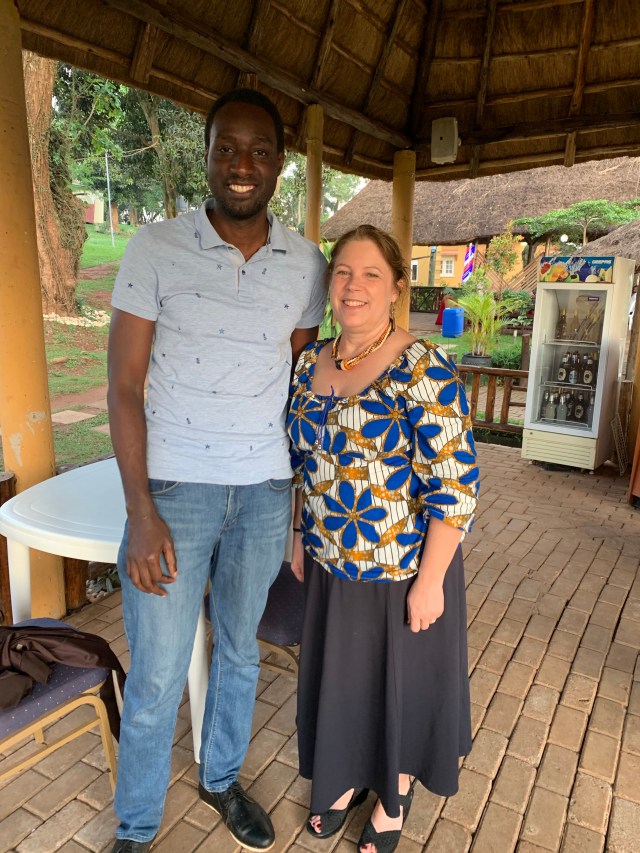 A little later I had a visit from a Makerere University pharmacy alumni who was one of my students when I taught here in the past. It was so great to catch up with him! I remember his enthusiasm for pharmacy when I first met him in the canteen at Makerere Pharmacy School. I explained I was there to teach pharmaceutical care skills and he told me about his passion to develop drugs and go into the industry. I tried to turn him towards clinical care and he graciously said he’d consider it, knowing full well that drug chemistry was what got him going each day. He is currently doing well and working in one of the pharmaceutical industries in Kampala, Cipla.
 Today I went where I haven’t been before, the Ministry of Health (MOH). This is the government body that writes and regulates healthcare policy. They advocate for public health and mobilize resources needed to support healthcare providers and innovations/initiatives to improve health. It is the MOH who ultimately needs to be convinced how important the pharmaceutical care role of the pharmacist is to improving safe medication use and patient health in Uganda. It is not that they don’t know this – the pharmacists and other healthcare providers know that pharmacists are critical members of the healthcare team but they need evidence to be able to convince the rest of parliament to make policy changes and then support these with appropriations. Winnie and I were invited to speak with Dr Fred Sebisubi, the Pharmacy Commissioner at the MOH to discuss the pharmaceutical care implementation project. I had briefly met him yesterday at the One Health meeting but today we were able to succinctly outline my work over the past 10 years with PSU and Makerere University towards building capacity for pharmaceutical care (PC) implementation in Uganda. All of that prior groundwork has led to the currently project proposal and PC implementation research. It was a fantastic meeting and sharing of ideas and goals. The MOH has already begun work towards this as well and it is time to bring everything together.
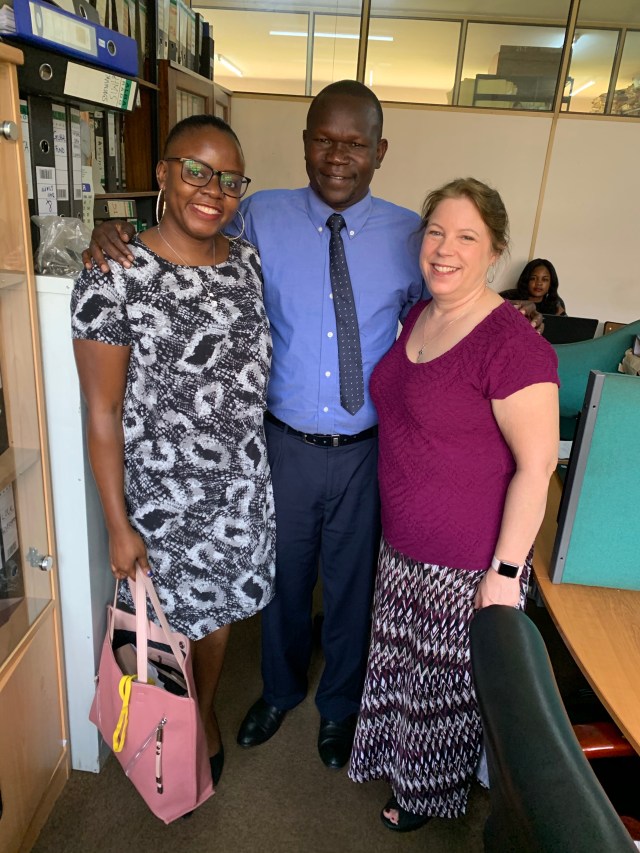 Before leaving the MOH, Winnie and I met with a friend of hers, Jimmy, a Biostatistician for MOH. He had lots of helpful ideas regarding the PC research and I’m so glad we were able to catch him in the office on the spur of the moment.
 In the afternoon, we went to Nakesero Hospital, another private hospital in Kampala, to speak with the Principle Pharmacist, Esther Gasana. I wanted to speak with her to see if she and Nakesero are interested in participating in the PC study. Winnie had told me she is really interested in PC and our conversation confirmed this. I thoroughly enjoyed talking with her and found that she already does quite a lot regarding direct patient interactions and pharmaceutical care. The only factor holding her back is being able to find dedicated time for PC activities when she has full-time administrative duties. She has identified many ways to improve patient care and reports this out at the monthly staff meetings. She also has a very supportive Executive Director who is also encouraging the pharmacists to go on ward rounds. I’m so glad to have her on board for the study!
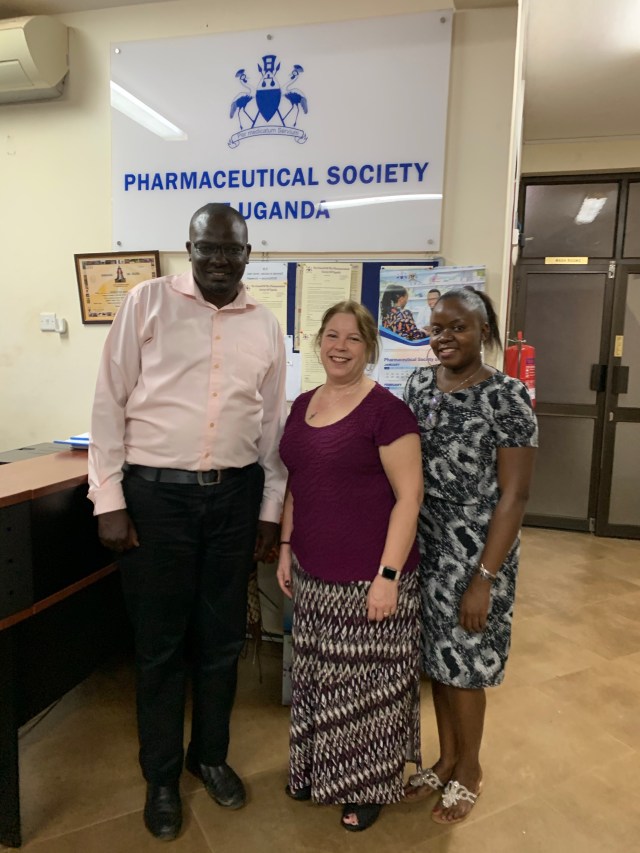 This evening, we met with the Secretary of PSU, Sam Opio. It was a great reunion as it has been 1.5 years since my last visit to Uganda. Although Sam’s professional pharmacy focus is the pharmaceutical industry, it is his vision for implementation of pharmaceutical care and seeing that it needed to be implemented in Uganda to improve safe medication use way back at our meeting in 2012 that has spurred me on and kept my work on track. He is one busy man but always makes time to see me when I’m in Uganda and tirelessly advocates for pharmaceutical care. It has taken many years, but the time is right to proceed with the PC research and PSU is, of course, in support! Sam will also be a part of the platform session at the WHS. It is shaping up to be an excellent session- Winnie and I are so excited!!!
 Today was a GREAT day! This morning I had the pleasure of meeting with William, a pharmacist at Lubaga Hospital in Kampala. This is a private not for profit Catholic hospital and I’m hope to engage the support of the hospital executive director and pharmacy administration to allow 2 of their pharmacists to participate in the pharmaceutical care implementation project and collect and share their clinical intervention data. William was very interested in this research and has had many positive interactions with the other healthcare providers in the past. In fact, the physicians have asked for the pharmacy interns to start attending ward rounds to assist in drug therapy management and have frequently sought William’s advice about drug therapy. If Lubaga Hospital joins this project, they will be able to have systematically collected data over 6 months which will inform pharmacy practice and policy to improve patient care and health outcomes at their institution. The type of intervention data to be collected to show what pharmacists are able to contribute to the healthcare team include actions such as educating the patient about adherence, reviewing a medication profile for drug interactions, and utilizing lab data to assess kidney and liver function and recommend dosage changes of drugs as necessary to prevent adverse events. In addition, we want to assess the perceptions of patients and healthcare providers about the interactions with the pharmacists. Winnie and I will go back to Lubaga on Thursday to meet with William and the Executive Director.
 This afternoon was spent observing a task force meeting of the One Health program in Uganda which is working towards reducing antimicrobial resistance in the country by improving antibiotic use in both animals and humans and implementing better microbial surveillance and infection control practices. One Health is a worldwide accepted concept that human health is connected to the health of animals and the environment. We have to consider all angles to improve human health. An example that many have heard of is that the antibiotics added to animal feed can cause microorganisms in the animals to become resistant to normal antibiotics, meaning they aren’t killed, and then when humans get infections with these resistant organisms it becomes very difficult to treat them. Below is a graphic from the
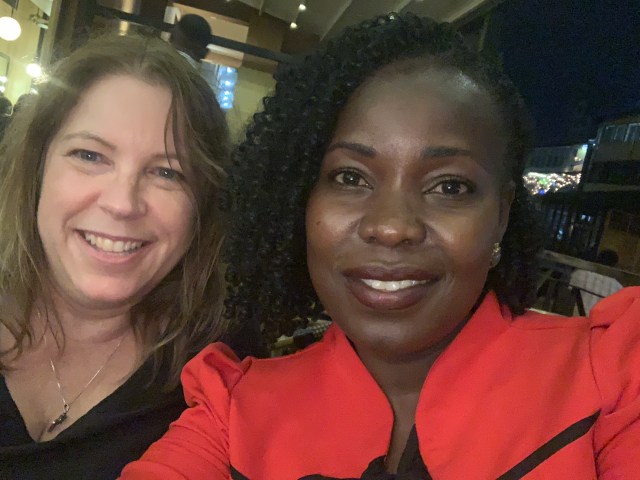 I ended the day by having dinner with Gonsha, whom I’ve known for many years now. She is one of the Ugandan pharmacists who came to the US to study with me back in 2015. She owns 2 pharmacies and they are both doing really well. Gonsha calls her pharmacies, Extra Care Pharmacy, which is what she provides to her clients/patients. She truly cares about her them. I remember one time that a patient of hers needed money for surgery and she raised the money for him. I believe he had diabetes and had a really bad infection in his leg and needed to have it amputated to save his life. She is a leader among community pharmacists and organizes a Whatsapp chat for pharmacists all over Uganda to communicate, share ideas, and assist each other with questions. She also has a Whatsapp chat group for her clients/patients. It was wonderful to catch up with her over a really good Funghi Pizza at Cafesserie, which is in the Acacia Mall. Yes, you can get really delicious pizza in Uganda.
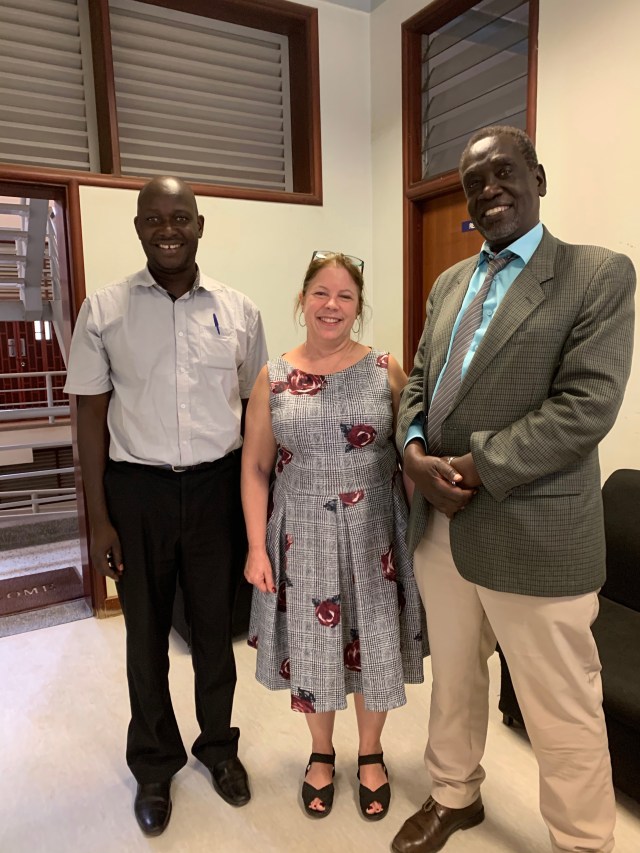 It’s been another busy day and I need to get to bed, but here is a quick post. First of all, I was able to go to the pharmacy school today and meet up with Professor Richard Odoi and the Head of the Pharmacy Program, Dr. Pakoyo Kamba. It was a wonderful reunion. I spent quite a bit of time today working on the details of the pharmaceutical care research project and getting a few new ideas.
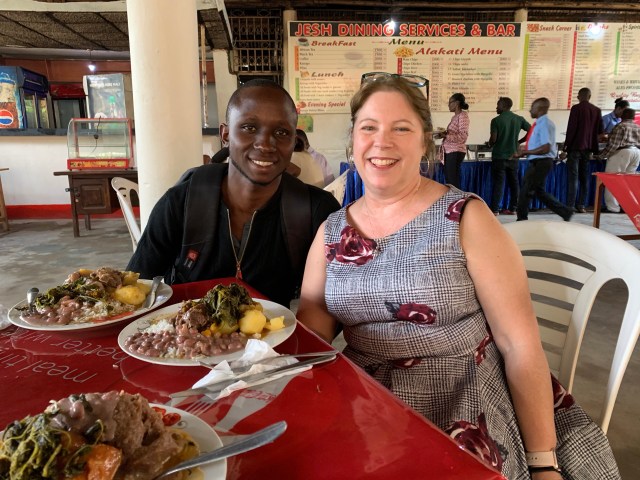 I was also able to meet Mark Juba, a 4th year Pharmacy student. He was one of 9 students who were paired up with students of my Complementary and Alternative Medicine elective to do an interview over Whatsapp, a social media chat and phone call app that is widely used all over the world and is my main mode of communication with my Ugandan colleagues. The purpose of the interview was to help the US students understand the role of traditional medicine, mostly herbs and herbal products, in healthcare in Uganda and what Ugandan healthcare professionals think about them. This activity was thoroughly enjoyed by both groups of students. Mark filled in for an extra group of students when something came up for their assigned student. Today Mark and I talked over a classic Ugandan meal of matooke (cooked, mashed green banana- it is not sweet), Irish potatoes (regular white potatoes), rice, greens, and 2 sauces. One was a beef soup sauce and the other was a mixture of beans and g-nuts. G-nuts or ground nuts are similar to peanuts. They are ground and made into a sauce that has a mild peanut butter taste. It was all delicious but way too much food for me to eat!
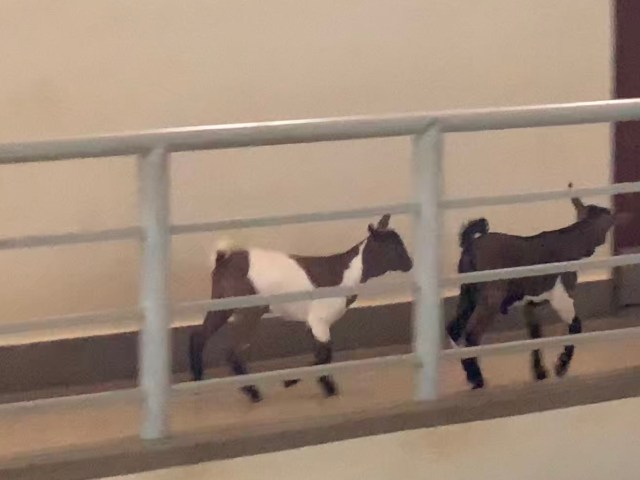

 After lunch I went back to the pharmacy school and was working in the board room and all of a sudden I heard some motion and bleating sounds. I turned around a 2 young goats has just joined me. Some how they found there way into the pharmacy school building and came to visit me. It was pretty hilarious. Dr Kamba had to go around and shoo them out of the building. Someone from a nearby area was probably grazing their goats and these two must have escaped.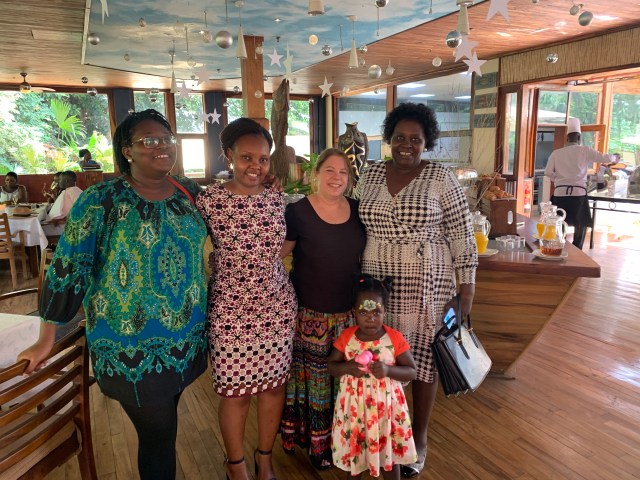
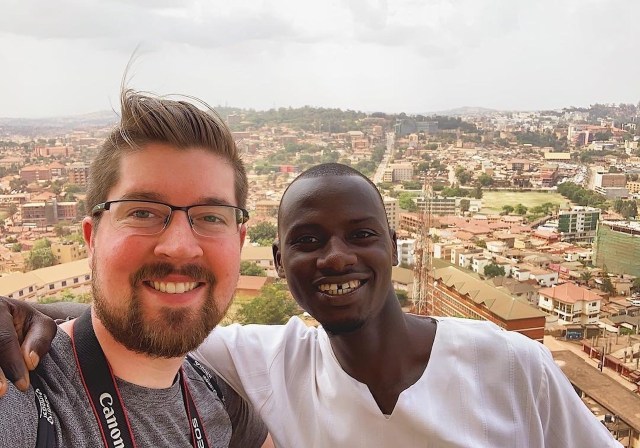


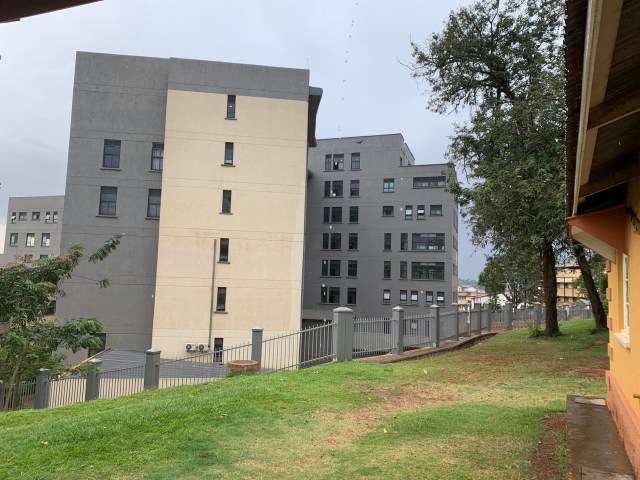


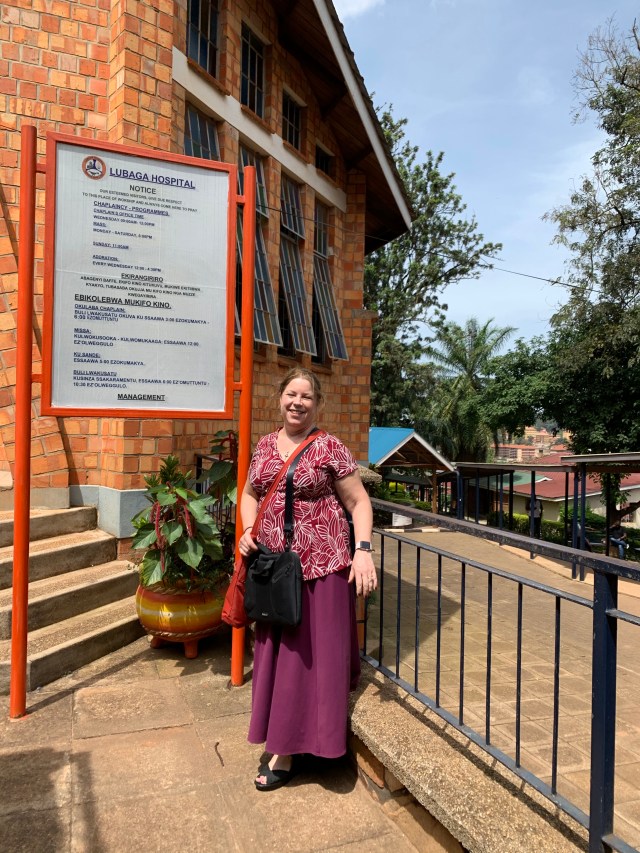
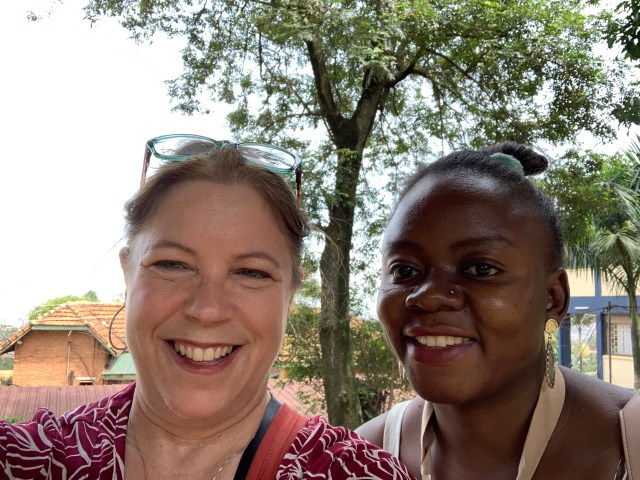 Winnie and I had plans to visit a hospital this morning to meet with the head pharmacist to discuss the project but before we could head over to Lubaga Hospital, Winnie got an urgent phone call about a lost key at the pharmacy she supervises. This detour proved to be very interesting for me. While she worked out the key issue, I had the pleasure of talking with the pharmacy technician who does most of the dispensing at the pharmacy. Yes, you heard me correctly. In Uganda, it is pharmacy technicians, and sometimes untrained workers, who dispense and sell drugs. Every pharmacy has to have a supervising pharmacist but that pharmacist doesn’t have to be on the premise for drugs to be sold and in fact, in many cases, the pharmacist only checks in on the pharmacy from time to time and does ordering and such. There are pharmacists who routinely stay at their pharmacies and dispense but it is not required by law. The biggest reason for this is lack of capacity. Until recently, the pharmacy workforce wasn’t large enough to service all of the pharmacies required to serve the needs of the country so pharmacists could supervise more than one pharmacy. The idea initially was the pharmacist would be in one or the other pharmacy during working hours but somehow without appropriate over-site, it evolved into a situation where often pharmacies run without pharmacists. Recently, though, the Pharmaceutical Society of Uganda (PSU) has declared that pharmacists can only supervise 1 pharmacy because the workforce is growing. But old habits die hard and until over-site and accountability is initiated, pharmacists may continue to be absent. I digress…let me get back on track. Jamir, the pharmacy technician, told me that it takes 3 years of college to be trained as a pharmacy technician. Then he applies for licensure but there isn’t an exam as with pharmacists. I asked him what the most expensive drug he had was and this led to a great conversation about drug quality and pricing and appropriate use of antibiotics. At one point I asked him about drug concentration time curves, don’t worry if you have no idea what this is, and I was amazed he had learned about this in school. What I asked him about is pharmacokinetics and related to how fast the drug is absorbed into the body and how high the drug level gets in the blood. This is a concept that all pharmacy students learn but I’ve never heard of an US pharmacy technician knowing this detail about drugs. It is possible this is included in college pharmacy technician curriculum but I have no experience with this. Jamir’s goal is to work as a pharm tech for a year or two to earn the money to go to pharmacy school. He wants to go into the drug industry and develop new drugs. I believe his goal is attainable if he keeps his focus and works towards it. It turns out the most expensive drug is an antibiotic called Cefixime. He had 2 brands in stock, The one manufactured by Torrent in India, cost 6000 shillings ($1.62) for a 200mg capsule while another brand made by Sance in India, cost only 1500 shillings ($0.40) for a 400mg capsule. Wow what a difference! A normal dose might be 400mg a day for 7 days so with one brand a patient might pay 10,500 ($2.80) for the course of treatment while using another brand, a patient might pay 84,000 ($22.68).




 Out of the Pharmacy Classroom and Into Africa