Teaching Pharmacy Interns and Seeing Patients at a New Hospital

13 October 2016

A Blog Post By Dr. Edward Foote

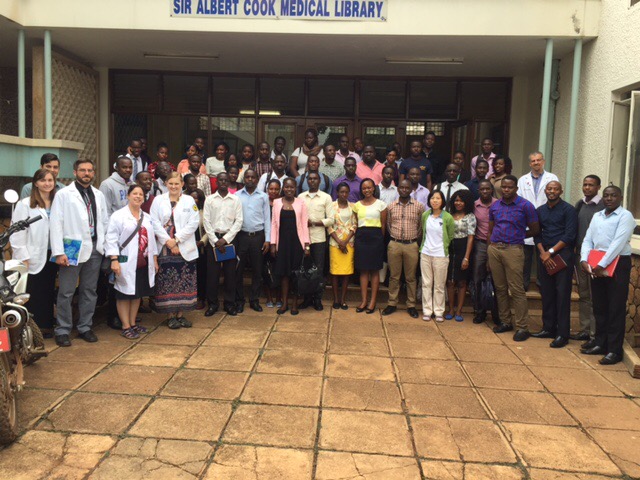
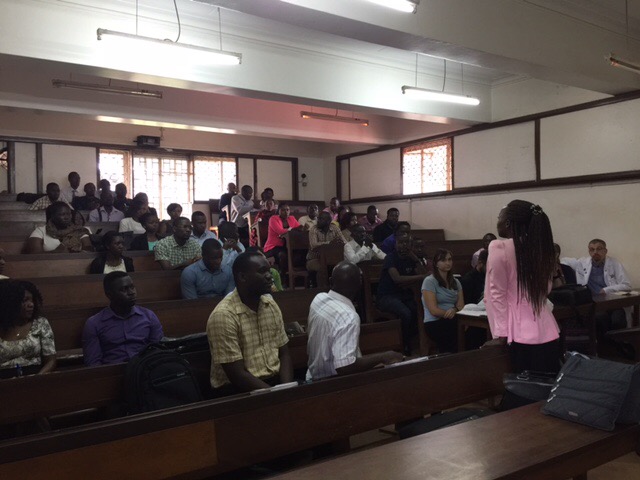
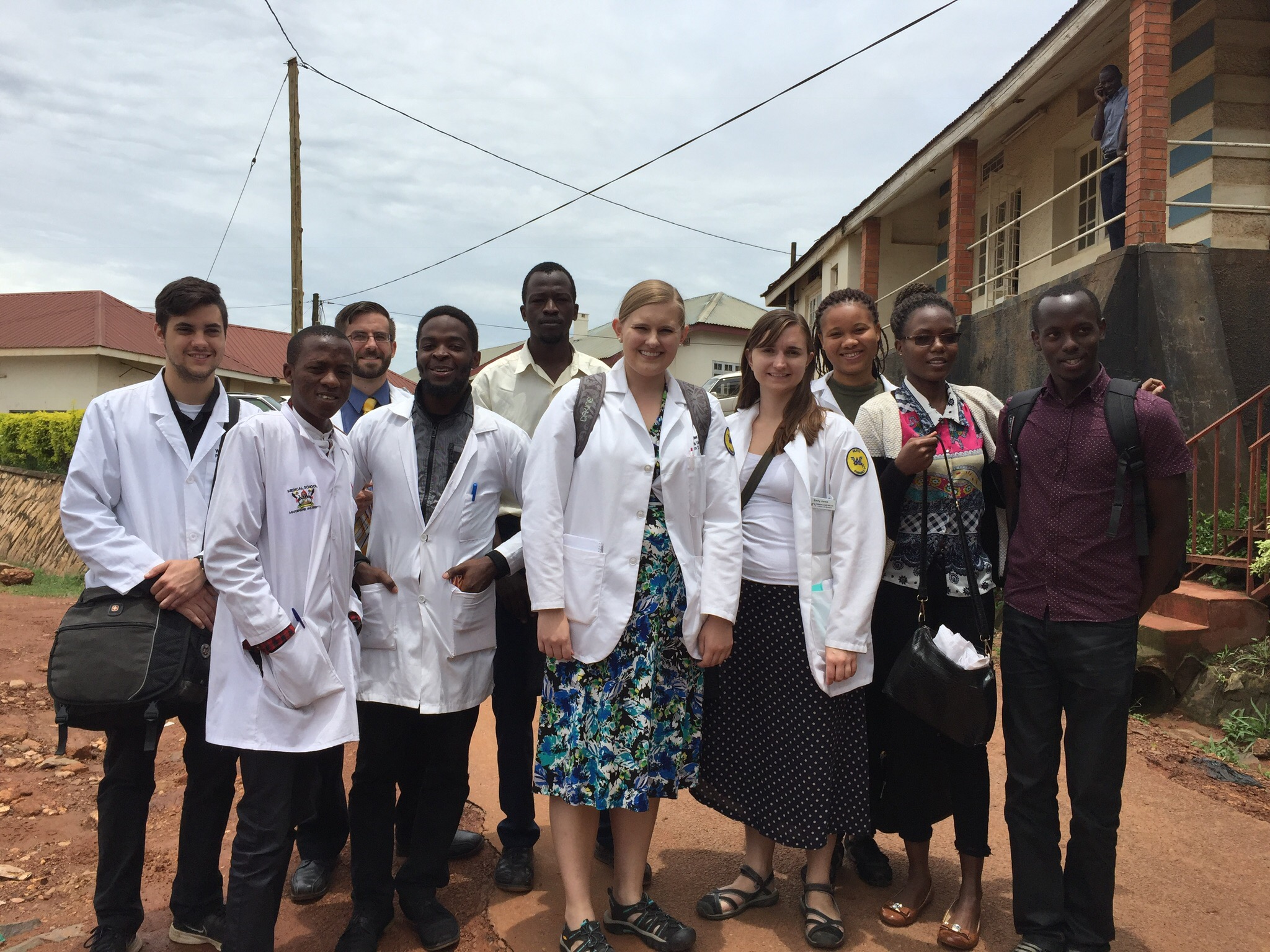
We had a busy morning today. First, we walked over to Mulago hospital to make a presentation to the pharmacy interns. Our first goal was to teach the pharmacy interns about three free apps that they can download onto their phones and use for patient care. Some of the interns were ready and able to use the apps with us but we suspect others may have had difficulties due to a lack of a smart phone or internet access.

Clinical pharmacy is in its infancy in Uganda and it possible some of these pharmacy interns really don’t think they need these types of tools since they will spend most of their time dispensing. Some pharmacists are definitely making strides but the profession has a long way to go. After that presentation, one of the pharmacy interns presented a case of a patient with kidney failure. After he presented, I spent some time facilitating discussion.

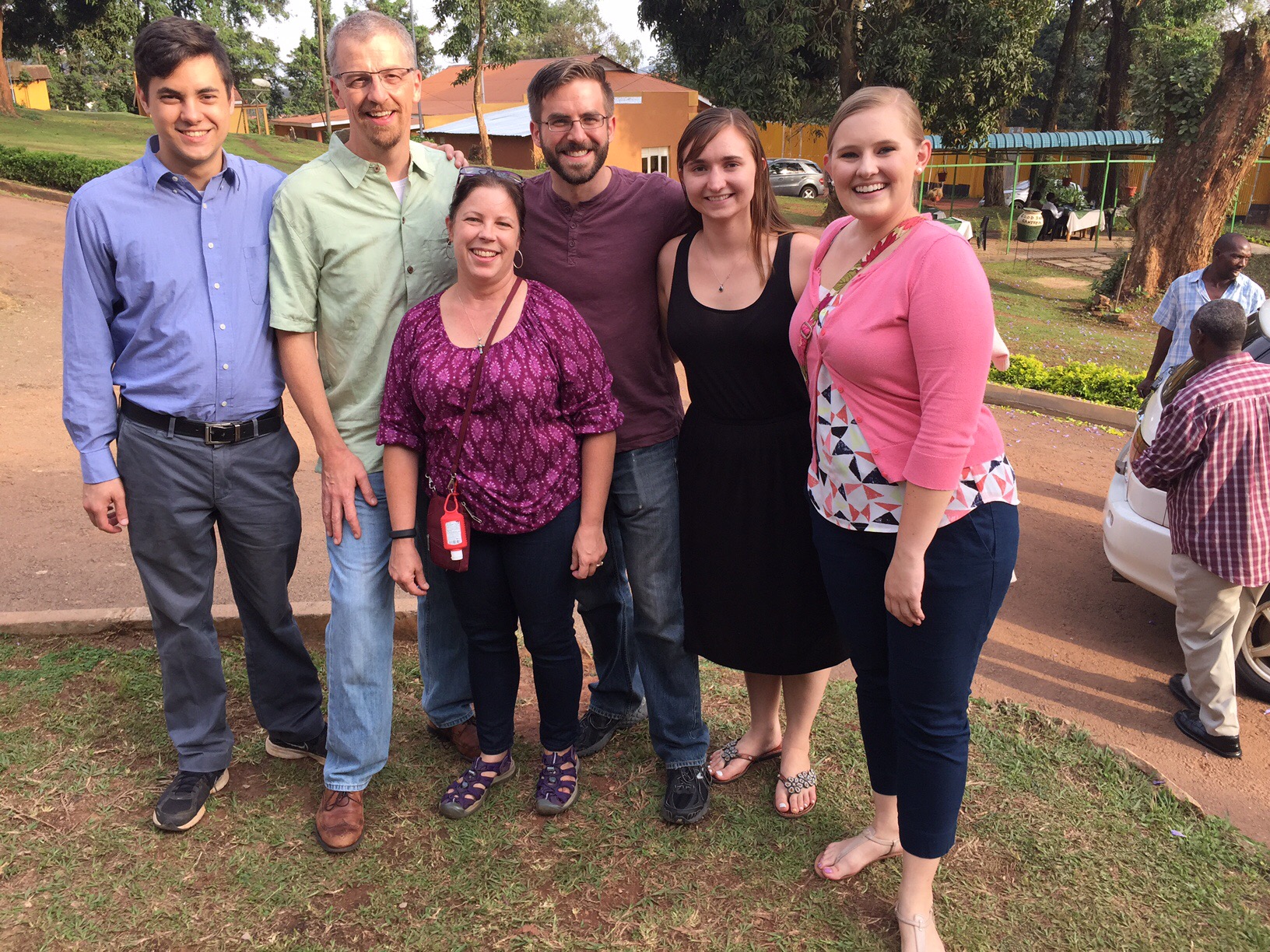
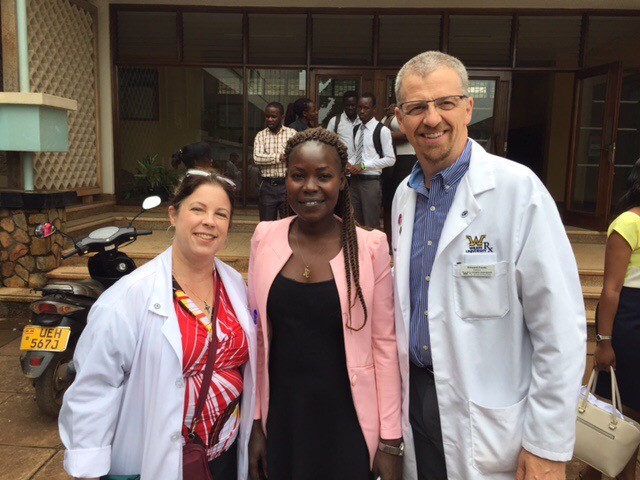
After that, we headed out to Kirrudu hospital to meet with Winnie and the Makerere pharmacy students. Since Mulago hospital is under renovation, many patients were sent out to this smaller hospital. Although only several miles from us, it took nearly an hour due to traffic (“the Jam”). The hospital is fairly new and from the outside, looks nothing like the other hospitals we’ve seen since it appears, well, Western. Unfortunately, inside the same challenges for Uganda health care persist. Each floor of the hospital is 2 or 3 huge wards in which patients are cramped very close to each other. We saw two patients in the ward who had very severe anemia but the blood supply is very low so they were basically left untreated. Still, the doctors and nurses (“sisters”) who work here are quite welcoming and I think are used to having outsiders in their wards. The students did well and will be presenting their cases on campus Friday.

Our last dinner out in Kampala! We chose one of our favorites, Il Patio, an Italian restaurant. There are casinos in Uganda and Il Patio has one so we took a stroll through it. After playing some slots (they chipped in) a couple of the group tried their luck at blackjack and won! The minimum for blackjack is 5,000 Shillings (less than $2 USD) so it was fun. We didn’t stay long and headed back for some well-deserved sleep.

Posted in Diseases/Health | Tagged , , , , , , , , , , , , , , , , | 3 Comments

Queen of Katwe

12 October 2016

A Blog Post by Nick

The other day, my professor and classmates told me that they wanted to go to see a movie here in Kampala. My response to them was, “Why? We are in Uganda for such a short period of time. We should be embracing the local culture and experiencing our surroundings. Why should we waste our time going to see a movie when we can do that back home in the States?”

They replied that the movie that they wanted to see, “Queen of Katwe,” was a true story about a Ugandan girl and that it was filmed right here in Kampala with local actors. “Wouldn’t it be a neat experience,” they said, “to see her story here in Uganda?” Interesting, yes, but they were met with much opposition before they convinced me to go to see the film with them.

As I mentioned, “Queen of Katwe” is a book and movie based on the true story of Phiona Mutesi, a Ugandan girl from Katwe, a slum in the city of Kampala, Uganda. The story shows how Phiona managed to escape poverty and to make a better life for herself and for her family by learning how to play chess and becoming a champion.

I must admit that the movie was quite good, and it was pretty cool to be able to see it in the city in which it was filmed. Having been in Uganda for nearly four weeks and Kampala for three of those, it was really neat to actually be able to recognize different places in the film. Having been immersed in the culture, we were also able to appreciate many (but not all) of the social behaviors, cultural norms, words, jokes, etc. in the movie that most people outside Uganda probably will not understand or even notice.

In addition to sharing Phiona’s inspiring story, the movie also gives a surprisingly accurate portrayal of Ugandan culture and what we have been experiencing here on this rotation. As an example, in one chilling scene, Phiona’s brother was hit by a boda boda and required surgery. The doctor explained that the hospital did not have any pain medication because they ran out, and that they would not have any more until the following day, so the child had to get the operation without any painkillers.

The movie also shows the extreme poverty that many people face here. Phiona’s family had trouble paying the rent, which was 10,000 shillings (about $3.00). Consider that we paid 15,000 shillings each just for admission to see the movie. Consider that we have been spending much more than that on our meals every day, and that is more than what they could afford for rent for the entire month. It really makes one think and be appreciative of what one has.

I would recommend that anyone who would like a glimpse of Uganda see this film. I definitely will be buying it to watch with my family when I get home.

Posted in Diseases/Health | Tagged , , , , , , , , , , , , , , , , | 1 Comment

A Variety of Healthcare Experiences Today in Kampala

11 October 2016

Divide and conquer in the morning. Dr. Foote goes back to Mulago and the students head to a local pharmacy! – a post by Dr. Foote
In the morning, I walked over to Mulago hospital to meet with Gonsha, a pharmacist who supervises the pharmacy interns, and Joshua, one of the new interns. In Uganda, after graduation, pharmacists must complete a one-year internship in a hospital (similar to our optional residencies). Gonsha is pushing the interns to get into the wards and help the doctors and nurses rather than staying in the pharmacy dispensing meds. Since my area of practice is nephrology, Gonsha wanted one of the interns to present a patient case related to that during the normal Thursday pharmacy intern case presentations. So today, we met to help the new intern identify a good patient. We found a good case in the urology wards. I say “good” because the interns can learn from the case but sadly the patient is probably not receiving the care he needs due to limited access to medicines, proper monitoring and dialysis treatment. For example, this patient had a serum potassium level of 8.2 mEq/L. This is VERY high and would be an urgent call to the physician at home with immediate action to correct this level. The first line treatment includes insulin and glucose. These medications are available here BUT they do not have a way to easily monitor blood glucose levels – something that is absolutely necessary when using insulin in this setting.

Gonsha and Joshua outside one of the wards at Mulago Hospital. Some of the wards can be seen in the background

Fun Fact Nurses here are all called “Sister”. The first one or two times I heard it I thought maybe they were nuns but after a few times hearing this I started thinking that there can’t be THAT many nuns here. Then I thought it was a very general phrase to show general friendship or collegiality. In reality, the phrase “Sister” for nurses goes back to colonial and missionary times when many of the nurses, were in fact, religious sisters and the term just “stuck”. “Sisters” in Uganda still wear nursing caps.

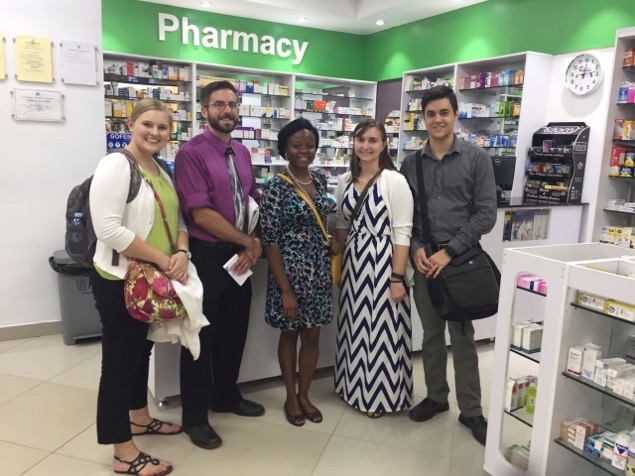
While I was at the hospital, Winnie took the students to a pharmacy in the Acadia Mall. The Acacia Mall is a very modern mall in Kampala. As mentioned in an earlier post there are LOTS of pharmacies all over Uganda and a pharmacy does not need to be supervised by a registered pharmacist at all times (like it is in the U.S.). The students enjoyed hanging out with Winnie and learning more about community pharmacy in Uganda.

Jennie, Mike, Winnie, Emily and Nick at Ecopharm Pharmacy

In the afternoon we visited IDI, The Infectious Disease Institute, for a tour. IDI is part of the college of Health Sciences at Makerere University. IDI was created nearly 15 years ago at the height of the HIV/AIDS crisis in Uganda. The vision of IDI  is “A healthy Africa free from the burden of infectious diseases”. IDI provides direct patient care, education, research and capacity building services. While there has been much progress in the treatment of HIV/AIDS in Uganda there is much more that needs to be done. Too few people are tested for HIV in the county. The majority of transmission is through heterosexual contact by young adults. So a big emphasis needs to be put on prevention. Many more people are living longer in Africa with HIV because of greater access to medication. That is the good news. However, there needs to be more strides in decreasing the transition of the virus.

Next up for the blog tomorrow: A review of the movie “The Queen of Katwe”!


Posted in Diseases/Health | Tagged , , , , , , , , , , , , , , , , , , | 1 Comment

10 October 2016

A Blog Post by Mike

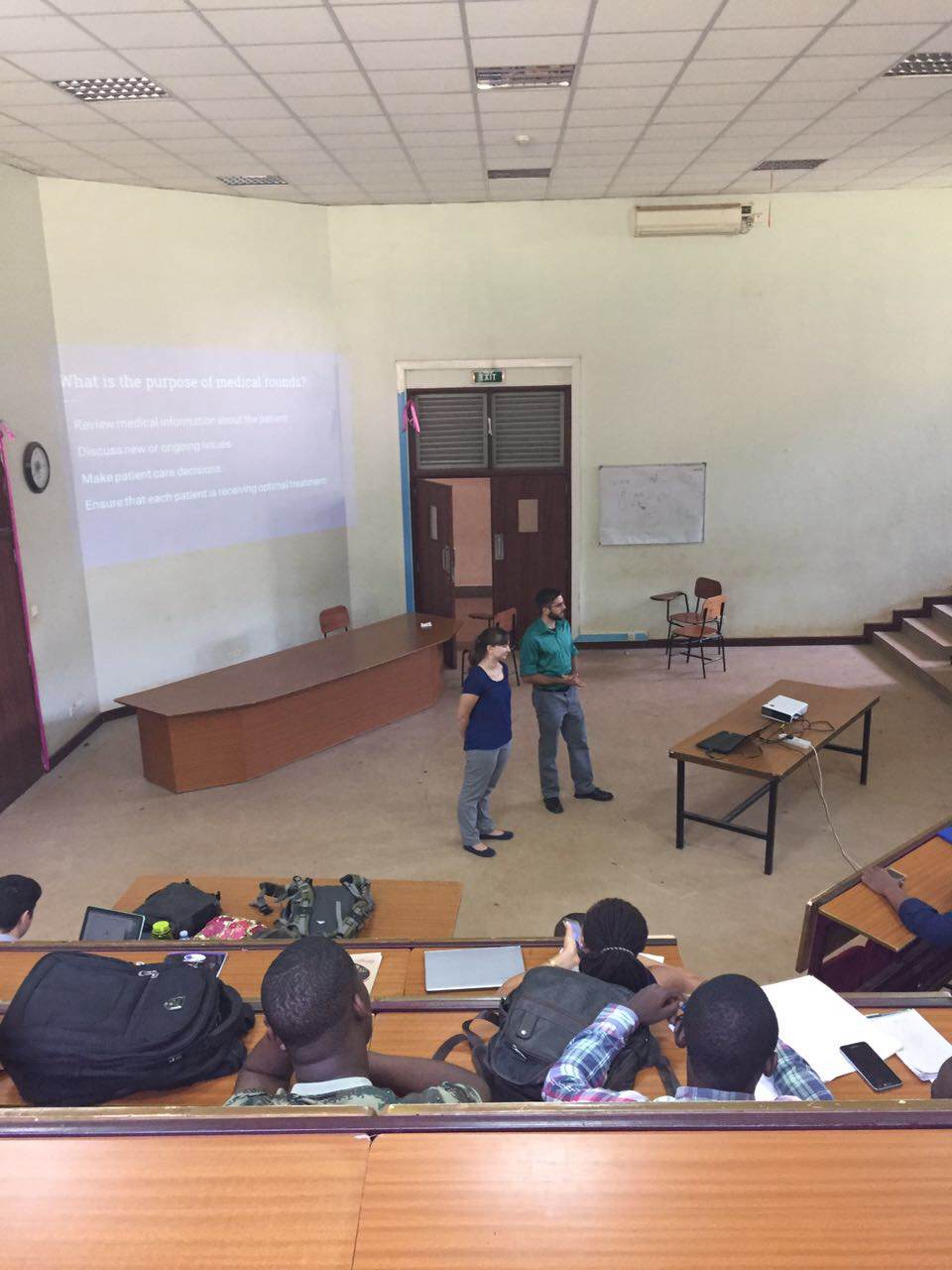
Mike and Emily talk about how to behave professionally on Medical Rounds with other healthcare professionals

Mike and Emily talk about how to behave professionally on Medical Rounds with other healthcare professionals in the Lecture Theater at Makerere University School of Pharmacy

Through my time in Uganda, one of the things that took some adjustment is the pace of life relative to that back in the United States. In Uganda, the tendency is for things to happen when they happen. Examples of this include students trickling into class after the official start time or people showing up an hour or two after work started when it is raining in the morning. I noted an entertaining encounter yesterday which helps to illustrate the situation.

A local who was driving stopped to talk to some boda boda (motorcycle taxi) drivers that were waiting for customers. A muzungu (foreigner) drove up behind him and impatiently laid on his horn. Normally people will beep to get someone moving but that’s usually a quick little beep to let someone know they are there- this was the angry New York City, full-hand smashed against the horn, blaring honk. The local driver slowly pulled out as he finished his conversation and the muzungu proceeded to angrily tailgate the local through the parking lot. Following this interaction I overheard one of the boda boda drivers make the comment, “This is Africa- there is no hurry.” This statement made me laugh as I have observed it to be true during my time here in Uganda. The boda boda driver saw me laughing and commented on how I understand how it is.

Today we had the opportunity to present to the third and fourth year Makerere University pharmacy students. Nick and Jennie presented on Medical Apps for smart phones that the students can use while practicing on rounds and in clinical settings. Emily and I presented on communicating with providers and how to organize a recommendation to a physician. These presentations went well and the students brought up some very good points during our discussions.

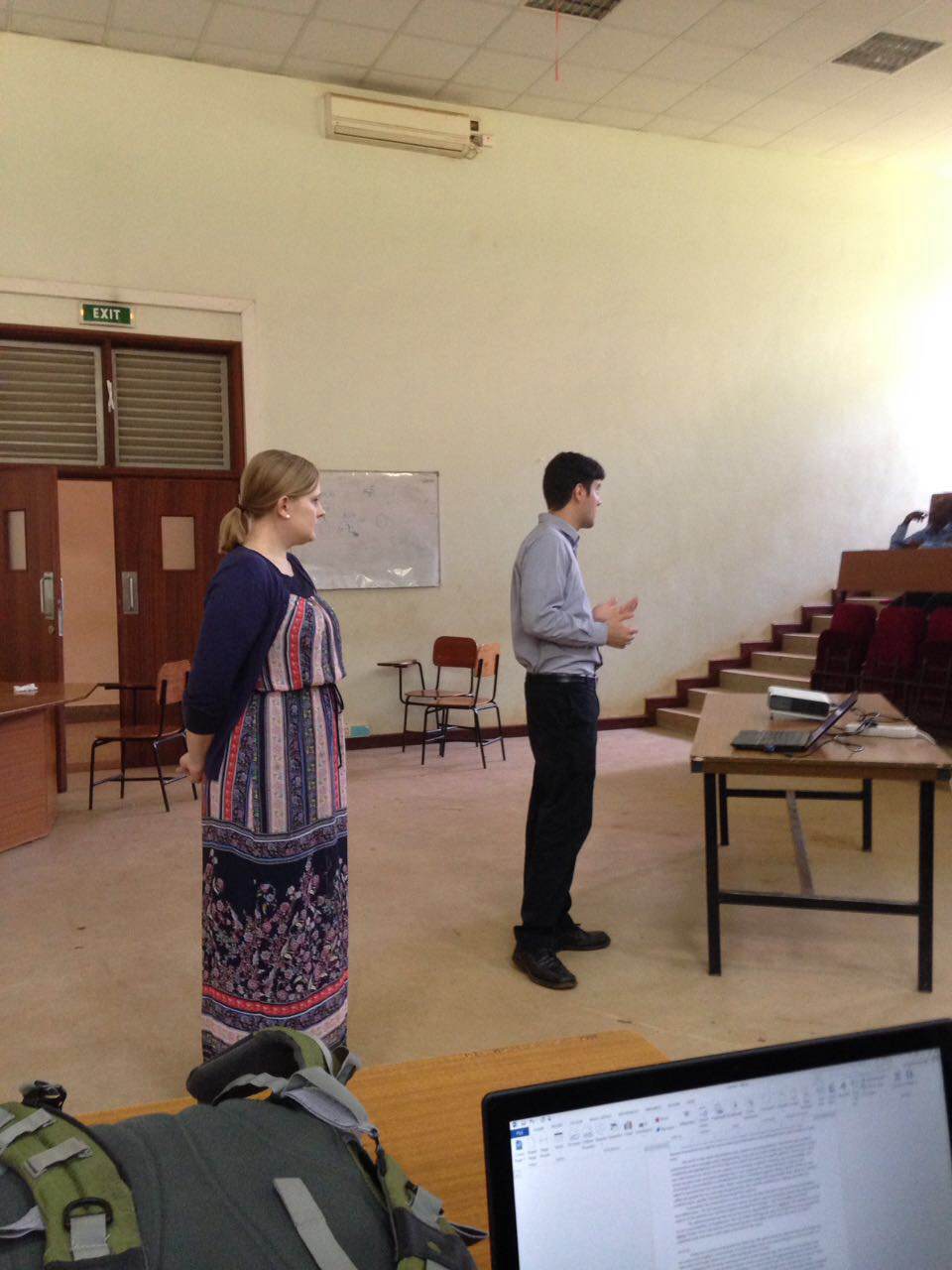
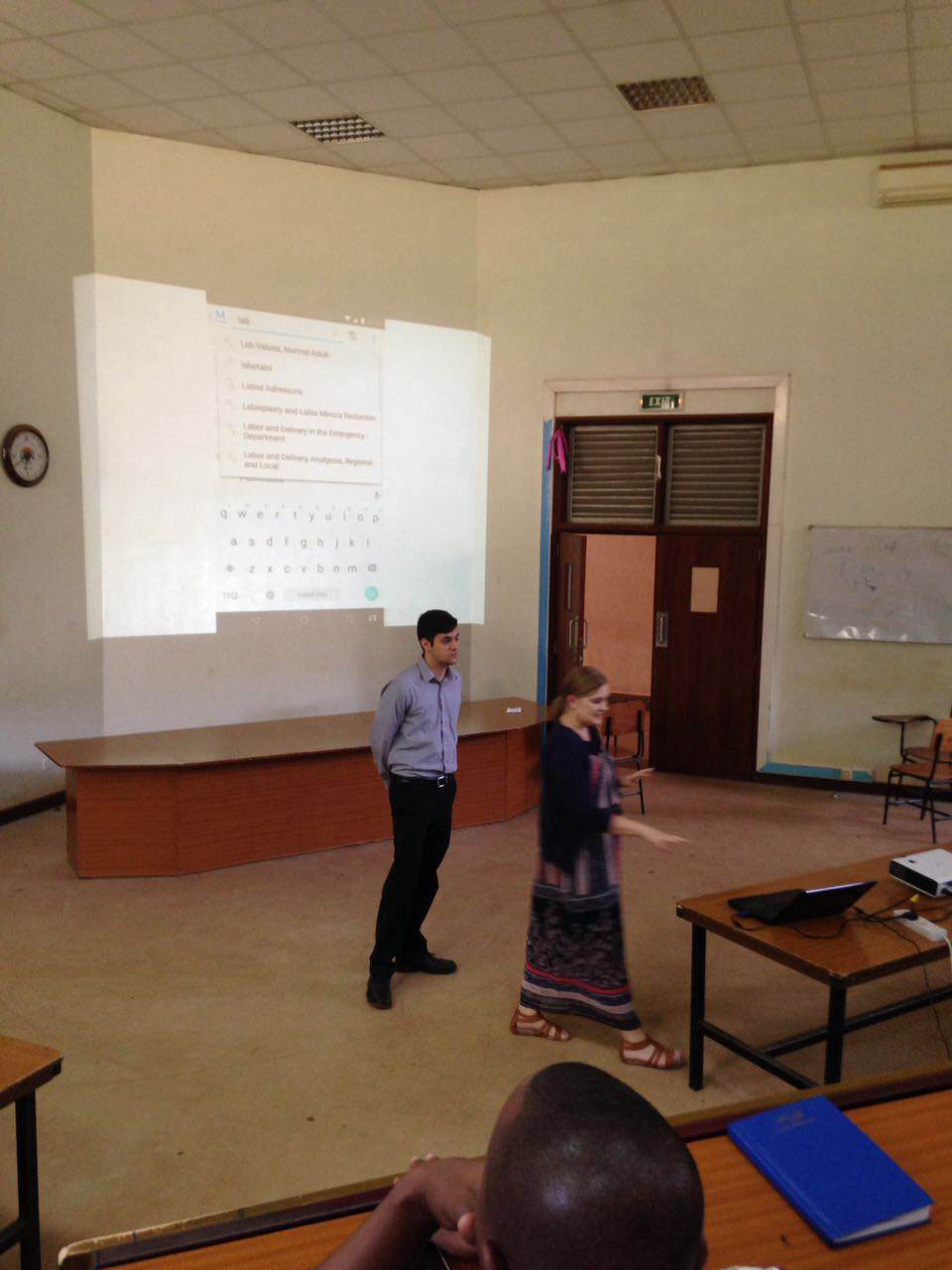
Nick talks about Medical Apps for smart phones

Nick talks about Medical Apps for smart phones

Following the presentations we were able to work with the fourth year students on their case presentations. We reviewed use of the mnemonic I ESCAPED CPR (for assessing the appropriateness of drug therapy) and how to incorporate the Apps and the information which they provide to make the assessment of the drug therapy. This process included using the Apps to calculate patient specific information and then reviewing the drugs to determine if dosing adjustments were necessary.

Emily talks about Medical Apps for smart phones

Emily talks about Medical Apps for smart phones

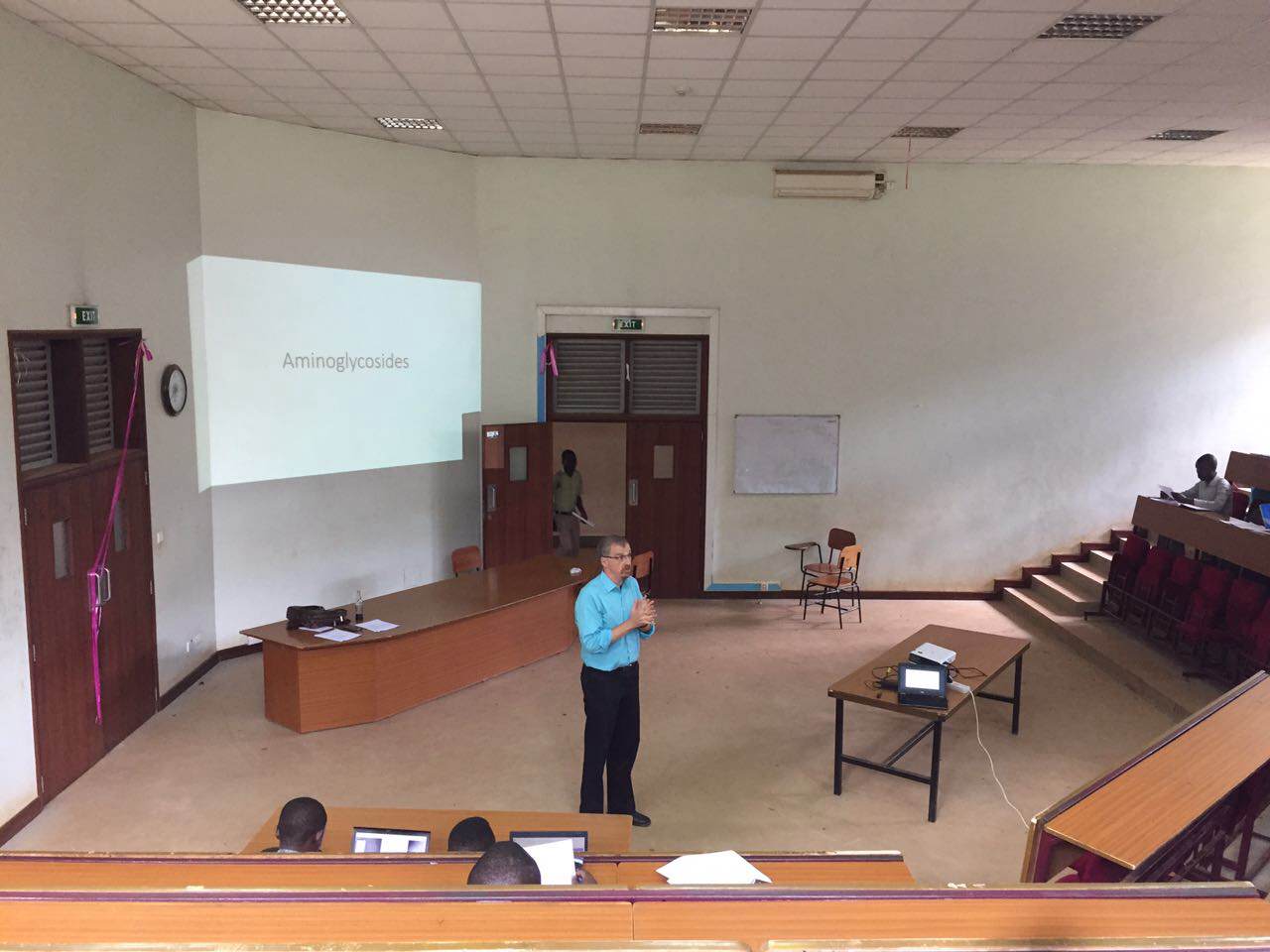
In the afternoon Dr. Foote presented on aminoglycoside and phenytoin dosing and monitoring. The pharmacy school had asked him to present on some aspects of the pharmacokinetics of these of drugs. The students were very interested in the process of monitoring these drugs and adjusting the medications based on the results.

Dr. Foote discusses pharmacokinetics

Dr. Foote discusses the pharmacokinetic dosing of Aminoglycosides, an antibiotic

{Note from Dr. Bohan: although the students are very interested and they will likely be examined on this material and the calculations, the ability to do therapeutic drug monitoring is not very common in Uganda. Government healthcare doesn’t pay for drug levels and I don’t even think they have the equipment to do them. Patients could get drug levels done at private labs, but this is not affordable for most people. So it is important to help the Ugandan students to understand the limitations of therapeutic drug monitoring in their low resource environment and think of different ways to monitor drug use such as by observing patient symptoms for adverse effects and monitor for drug toxicity with lab tests that are available like Serum Creatinine for kidney function. I always want the students to learn Best Practices so they can advocate for newer drugs and laboratory tests but until those are available, their recommendations to the Physicians need to be based on what is possible in this setting.}

This evening we were intending to go and see the new Disney movie “Queen of Katwe”. This movie is about a young girl in the slums of Kampala who learns to play chess. Through her abilities she becomes a top player. The movie was both based and filmed in Kampala. Unfortunately, Monday is the cheapest night for movie tickets and the showing we wanted to see was sold out. Hopefully we’ll be able to make it there another evening this week. Instead we went for some gelato before returning to our guest house for an early evening.

Posted in Diseases/Health | Tagged , , , , , , , , , , , , , , | 1 Comment

Blood Pressure Screening at All Saints Cathedral after Sunday Services

9 October 2016

A Blog Post by Dr. Edward Foote

bp-screeningToday the pharmacy team visited the All Saints Cathedral in Kampala to conduct a blood pressure screening clinic. The screening was facilitated by our good friend Lydia. All Saints Cathedral is the seat of the Bishop of the Diocese of Kampala who is also the Archbishop of the Province of the Church of Uganda.  There are three major religious groups in Uganda: indigenous religions, Islam, and Christianity. However, about four-fifths of the population is Christian, primarily divided between Roman Catholics and Protestants (mostly Anglicans). All Saints Cathedral is part of the Christian Church of Uganda.

bp-screening-2As in the U.S., religious services are as diverse as the people in the Nation.  Sunday services at All Saints Cathedral were very crowded and quite long.  There were two HUGE tents on the ground and overflow from the main church would sit there and watch the service on large TV screens.  Services this morning were at 7:30, 9:30 and 11:30 AM.  Services were nearly two hours long so at the time end of one service, another one was just starting so there was lots of coming and going among the faithful and lots of car “jams”.  In fact, there was a lot of comings throughout the service and the grounds were always quite active.  We feel very safe in Uganda.  However, life here is different.  For instance, there is a full metal detector that the faithful need to walk through before entering the church area.  Bags are checked and sometimes individuals are frisked.  This in contrast to the really warm and loving environment of the Cathedral.

bp-screening-3The blood pressure screening went well.  We screened almost 50 individuals after the services.  Luckily there were no series blood pressure problems but we did identify five patients who were above the recommend BP level.  Like in the U.S., patients here struggle with diet, salt intake and exercise.  The parishioners of the Cathedral are relatively affluent compared to other parts of the city (and certainly the country) so cost of medicines and access to care is less of an issue.

We enjoyed this screening event and had an opportunity to meet and talk with many of the parishioners.  It is raining season in Uganda so a few rains storms put a bit of a crimp on our clinic.  After the clinic we took a late lunch and then headed back to the House for a nap.  In the evening we played some cards in the garden.  Another great day in Africa!


Posted in Diseases/Health | Tagged , , , , , , , , , , , , , , | 1 Comment

A Day of Culture and an Evening of Beauty

8 October 2016

A Day of Culture and an Evening of Beauty. – Dr. Foote writes his first blog post!
It was tough seeing Dr. KarenBeth leave last night but the pharmacy team was able to survive. Last night (Friday), we attended the Ndere Troupe Show in Kampala which included an evening of African Music and Dance. The word ENDERE means “FLUTE”. The flute was chosen as symbol of this performance because the flute represents beauty and universal unity. Ndere Troupe prides in emphasizing commonalties and enjoying the rich differences in culture. The open-air theatre and the ambience was incredible. There were more than 40 performers (musicians and dancers) who put on a terrific show. At the end, we were able to do a bit of dancing with them!


Today, we spent the day doing a bit more touring. Our first visit was the Lubiri Palace. Built in 1922 Mengo Palace is the former home of the king of Buganda (the largest Kingdom in Uganda). This is just one of a few palaces of the King. The King of Buganda is revered in Kampala. He is known to be a very kind and loving ceremonial monarch. The current King doesn’t live here but sometimes receives foreign dignitaries.


However, the place has a dark history as well. In 1966, Prime Minister Milton Obote ordered an attack to oust Kabaka Mutesa II (then King and president of Uganda). Led by the forces of Idi Amin, soldiers stormed the palace and, after several days of fighting, Mutesa was forced to flee and live in exile in the UK. The palace was converted to army barracks, while an adjacent site became a notorious underground prison and torture-execution chamber built by Idi Amin in the 1970s. We were able to go right into the chambers (which is something we couldn’t imagine doing in the U.S. since it was not really well kept and sort of difficult to get to. The torture site is a dark concrete tunnel with numerous dark, damp cells, which were separated by an electrified passage of water to prevent escape. Our guide told us that the primary torture and murder method was by forcing victims into electrified water. The deaths of 300,000 Ugandans are attributed to Idi Amin.

After the Place, our driver, Haji, drove us around Kampala visiting some of the main churches in the city. We had an awesome lunch and then spend the afternoon shopping in a variety of craft shops behind the National Theatre in Kampala. The sellers there are really gracious (and not nearly as pushy as other markets we visited earlier in the week). Really beautiful arts and crafts can be found there. The students were saying I have a shopping disorder because I bought LOTS of stuff.


In the late afternoon we drove to the outskirts of Kampala to Cassia Lodge. A beautiful spot in Kampala which overlooks Lake Victoria. We enjoyed some drinks, great conversation and awesome views.


A view from Cassia Lodge overlooking Lake Victoria, Kampala.

All in all, a great day learning about this beautiful culture.

Posted in Diseases/Health, My Safari (My Journey/Adventure) | Tagged , , , , , , , , , , , , , , | 1 Comment

Monkeys in the House & Dr. Bohan Says Farewell to Uganda (for now…)

7 October 2016

We spent the day at Makerere University sitting in on the 3rd and 4th year students’ Patient Case Presentations.  I was really impressed with one of the 3rd year groups. They clearly had listened to what we have been teaching them and used all of the tools we discussed to help them identify all of the relevant drug therapy issues for the patient. Kudos to that 3rd year group!! 

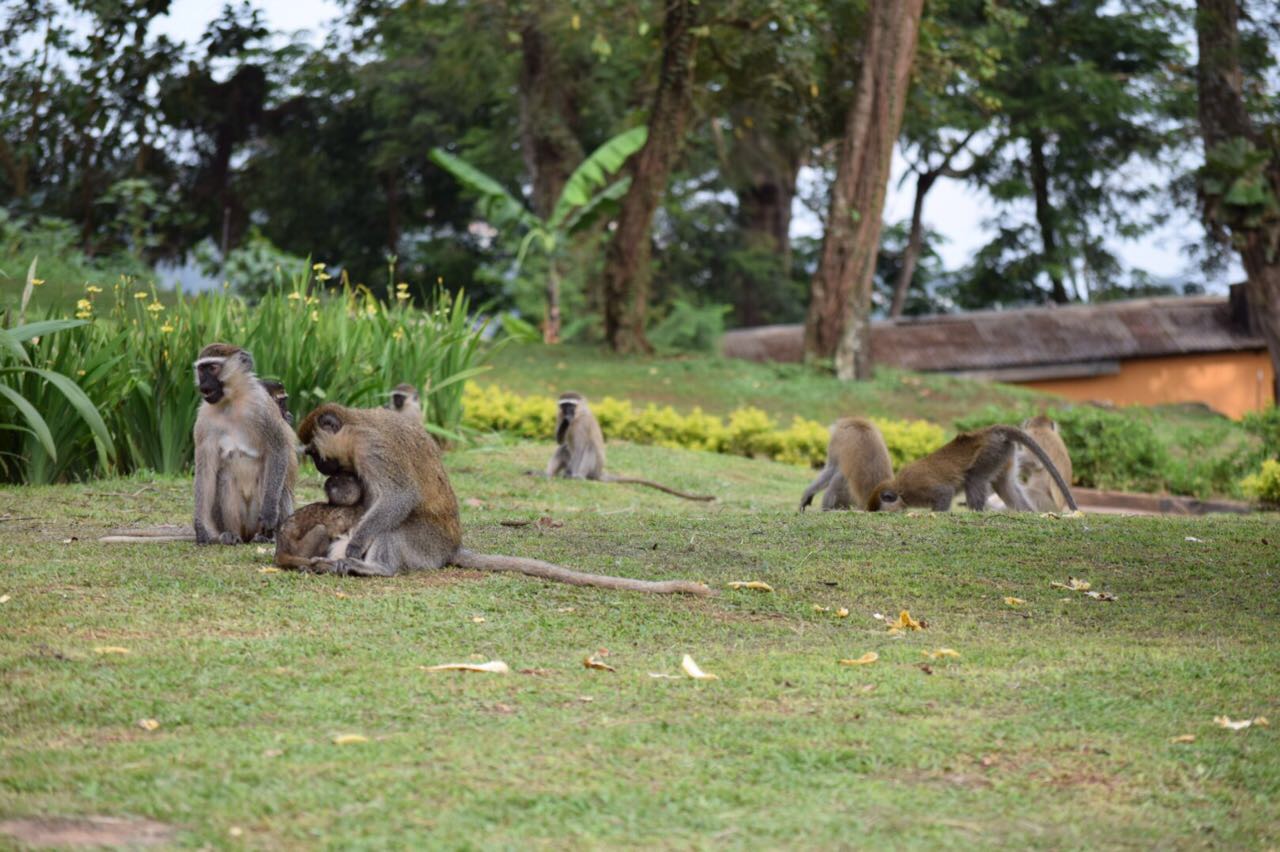
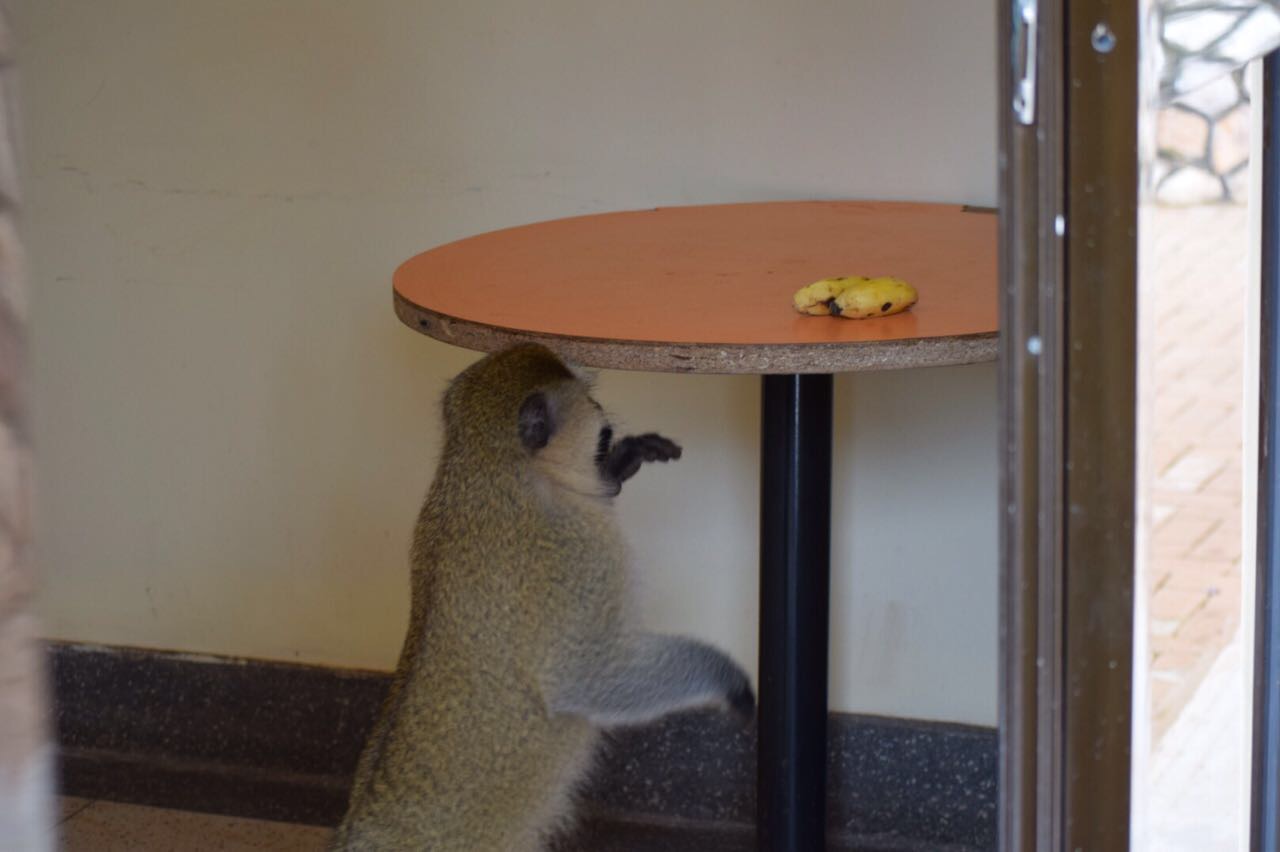
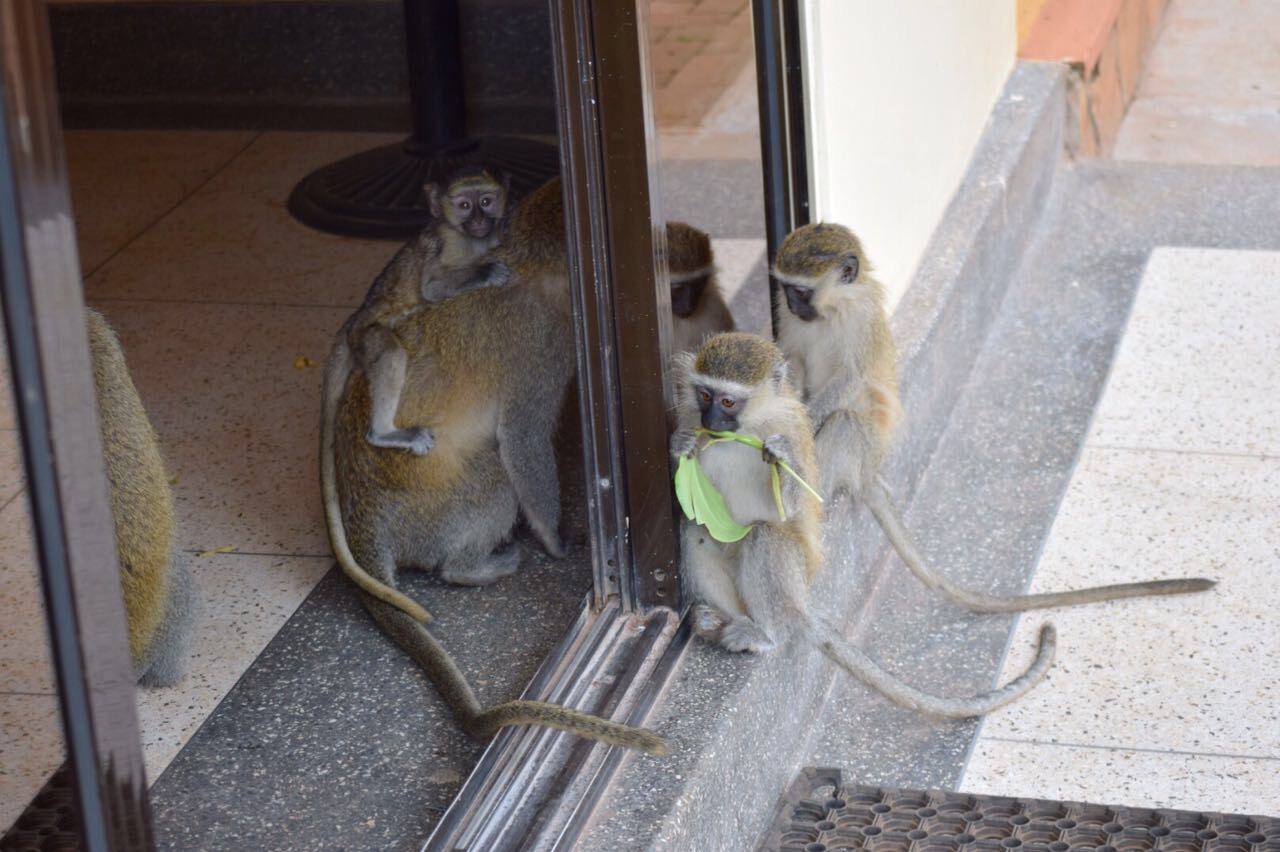
When we got back to the guest house so I could finish my final packing and then head to the airport, there were Monkeys all around!! They were even so bold as to enter any room that had a door open. I didn’t realize what was happening since I was in my room packing and I was caught by surprise when I left my room and nearly ran into a monkey in the hall.  Although they are really cute, as you can see, it is dangerous that they feel so comfortable around us.  Monkeys are smart for sure, but they can be mean, too, and have been know to attack and they can carry lots of diseases.  These photos were taken by the students but they definitely were keeping their distance to stay safe.  So tonight I head back to the USA. My new university, Binghamton University School of Pharmacy and Pharmaceutical Sciences, is getting ready for an accreditation visit and I have much work to do to prepare.  It has been, once again, a fantastic trip.  The 4 students have been a pure pleasure to work with.  They have worked hard and have been dedicated to my project here, to help advance pharmaceutical care and improve safe medication use. They have also grown tremendously in their cultural competence and especially their understanding of and appreciation for this wonderful Ugandan culture!! It’s been fun to have my old boss, Dr. Foote, along this time.  He, too, has jumped right in and hasn’t shown any sign of difficulties acclimating to the work here.  I am 100% comfortable with leaving the students in his care.  Actually, they will all take care of each other.  My only sadness is that I will miss out on the rest of the work and on seeing the continuing transformation of the Makerere Pharmacy Students as they continue to learn.  I have also worked closely with Winnie, the Ugandan Pharmacist Coorinator of my project and am so impressed with her dedications and passion for the patients and for the project.  We will continue to work on the projects we started from afar, but it was so nice to be here and brainstorm together the way forward.  From this point on, the students and Dr. Foote will continue the blog, so they’ve promised me…

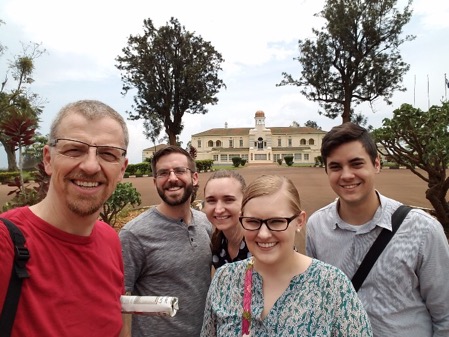
This is a picture of the group right before I headed to the airport. 

Posted in Diseases/Health, My Safari (My Journey/Adventure), Ugandan Nature | Tagged , , , , | 2 Comments

A Meeting with the New Pharmacy Interns in Kampala

6 October 2016

Kampala Area Pharmacy Interns

Usually the Pharmacy Interns start working at the beginning of August each year. This is a year of experiential learning that takes place after graduation from University (although the students are done as of May, the actual commencement ceremony isn’t until January, at least for Makerere University) and completion is required before they can take their Registration examinations and become licensed Pharmacists. This year the start of Internship was delayed for all interns, Pharmacy, Medical, and Nursing, due to a disagreement about payment with the Government.  That has finally been resolved so the Interns went back to work this week.  Today we got a chance to meet with them and remind then about their role as Pharmacists and their many and varied duties at the hospital. I wanted to reinforce the clinical aspect of being a pharmacist. All of the Interns knew they would be responsible for dispensing drugs and placing drug orders but they also have valuable skills they can use to improve patient care.  I also basically gave them a pep talk about how they could implement some very simple things and really help the doctors, nurses, other healthcare professionals and patients. I reminded them of the importance of developing relationships with the other healthcare team members. This is the first step in a good working relationship. And of course I mentioned the need to “keep time”.  This is the terminology they use to mean they should show up on time.  “You won’t be able to use your knowledge to improve patient care if the doctors can’t rely on you to SHOW UP!”  I especially want them to communicate with their Intern Supervisors if they are going to be late and to inform those clinicians on the wards.  They will not be respected until they can be counted on to show up.   It was great to see so many familiar faces among the crowd of Interns today. This is the first group, at least those from Makerere University, that took both years of the class I teach – Pharmaceutical Care Skills Lab.  I get to come back in April with more students and I will be eager to work with them and see how they are using their skills.  

Gonsha discusses the process for weekly case presentations with the Interns

Dr Foote talks to the Interns about Medical Apps they can download on thir smart phones and Emily writes them on the chalkboard

Gonsha talks with the Interns


Posted in Diseases/Health, My Safari (My Journey/Adventure) | Tagged , , , , , | 1 Comment

Rounds at Mulago Hospital with the Makerere Pharmacy Students

5 October 2016

Wilkes University Students with Makerere 3rd year students

Today was exhausting but good.  It started out as a really rainy day. The pouring rain started around 2am and it was a great accompaniment to sleep with the nice rhythm of the rain on the metal roofs.  Plus it really cooled down so we all snuggled under the covers. But when the rain didn’t let up in the morning, it began to be a little more of a burden as we all struggled to get out of our warm, dry beds.  But, we did arise and trudge to the hospital through the mud and were at the ward by 8am. But, the students didn’t show up until a bit later.  This is pretty common. Rain seems to be a common and accepted excuse for not coming to work. But, the students did eventually show up and we had a great learning experience. We spent all day on the wards in pediatrics and neurosurgery with Winnie, the Ugandan Pharmacist we are working with, as well as the 3rd and 4th Makerere Students. The doctors were amazing and do such great work despite their meager resources. We felt really needed today – they asked our recommendations on a number of issues.   We ended the day with a nice, relaxing dinner.  Now it’s time for bed! 

Posted in Diseases/Health, My Safari (My Journey/Adventure) | Tagged , , , , | Leave a comment

It was a good day!

4 October 2016

the Wilkes University Students and Dr Foote in front of the Makerere University Pharmacy School

It was a good day! In the morning we went to the Pharmacy School and the students and Dr Foote sat in on the Tutorial session for the 3rd year pharmacy students.  The curriculum here is taught in a PBL format- Problem Based-Learning.  This focuses the responsibility of learning on the students and the faculty are the facilitators of learning.  The logistics of this pedagogy is that there are 2 tutorials per week and each week introduces a new concept and new material. During the first session early in the week the students receive a small scenario, like a patient case, and they analyze this and create a list of objectives that they need to research during the week to teach themselves the material. Then during the 2nd session of the week, the students teach themselves the content. A faculty member, called a tutor, is present and facilitates the learning. As the students present the material to each other, the tutors guide them when needed so they learn the correct facts.  

All ready to tour the Uganda National Mosque. We brought our own head coverings since we knew we would need to wear them.

Beautiful views from the top of the Mosque Tower

This is the inside of the Mosque and where they hold special ceremonies and pray on special occasions

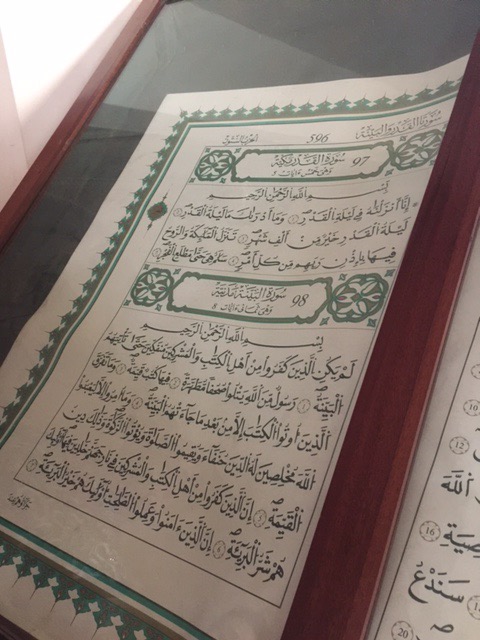
This is the large version of the Koran which the tour guide chanted from.

This afternoon, we decided to go site seeing since there wasn’t any specific work for us at the hospital. We went to 2 places that I haven’t been before and the experiences were so wonderful, that I hope to include this in future trips.  We went out to the Uganda National Mosque and the B’hai Temple. We had tour guides for both and learned a lot about these different religions.  The woman who led the Mosque tour chanted from the Koran for us when we were looking at the large version encased in glass and the tones were soooo beautiful!  The view from the high tower was incredible. You could see all of Kampala!  We also enjoyed the tour of the B’hai Temple. This is the only temple in Africa! The flowers around the temple were lovely but then it started to rain so we couldn’t explore as much as we wanted to.We ended the day by visiting one of Gonsha’s pharmacies. I’ve known Gonsha since about 2012 and she was one of the Ugandan pharmacists that came to the USA to study with me in July/August 2015. Since returning from the USA, Gonsha has tried to implement more patient care services such as taking her patient’s blood pressures and recording their drug therapy and making reminder phone calls to improve adherence. This is not very common in Uganda because a pharmacy doesn’t even have to have a pharmacist present to operate.  Many pharmacies just function with “dispensers” which may be trained pharmacy technicians or just staff that are trained on the job.  And although the are medications that are supposed to be purchased only on prescriptions from the clinician, this rule isn’t enforced so a person can basically ask for any drug and be sold it in the pharmacy. They can also get antibiotics without a prescription and I think this is leading to the high Antimicrobial resistance rates in Uganda. Most of the respiratory tract infections that people get are viral yet most pharmacies want to sell more drugs so instead of just selling a person a cough syrup or a decongestant, they talk people into purchasing antibiotics that they probably don’t need.  


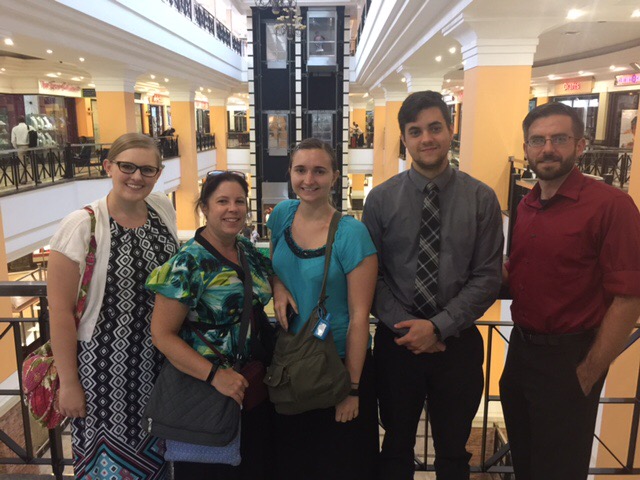
We had a delicous lunch as the very modern mall, Acacia Mall in Kampala

The B’Hai Temple

The whole group in front of the B’Hai Temple


All in all this was a GREAT DAY!! 

Posted in Diseases/Health, My Safari (My Journey/Adventure) | Tagged , , , , , , | 1 Comment