Learning More About TASO and Safe Male Circumcision To Prevent HIV Transmission

Wednesday, April 22, 2015:  A Blog Post by Hanna Raber and Lizzie Cook

These are the Boda-Boda's (motorcycles) that the TASO healthcare workers use to go to the field to set up clinics. The supplies and equipment to do HIV testing and CD4 counts along with the drugs follows behind in a 4-wheel drive vehicle with more healthcare workers.

These are the Boda-Boda’s (motorcycles) that the TASO healthcare workers use to go to the field to set up clinics. The supplies and equipment to do HIV testing and CD4 counts along with the drugs follows behind in a 4-wheel drive vehicle with more healthcare workers.

We spent Monday morning at TASO, The Aids Support Organization, once again today. The original plan was for us to spend time in the clinic, checking weights and administering surveys on their general health status. However once we arrived we were told that because of the Easter Holiday the schedule was really light today- only 16 patients were scheduled as opposed to some clinic days when over 150 patients would be scheduled. So instead we were given a really in depth tour of the facilities. We were really impressed by the holistic approach that TASO takes to HIV management. There were patient counseling rooms, education rooms, family planning space, an area dedicated to youth, and a well-organized pharmacy (a rare site to see). We were also shown an area of the property where a little garden was growing. They called this the “demonstration garden” and taught clients how to plant seeds and care for crops at their own homes. TASO also provides certain patients with “starter-kits” for certain careers including farming, hair dressing, and auto-mechanic.

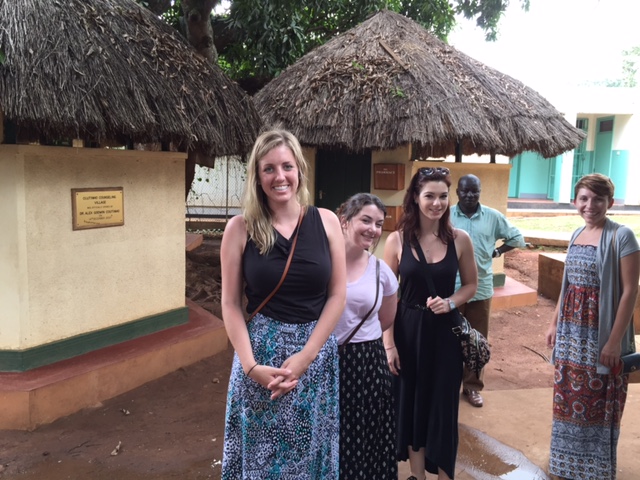
This is an example of the cute huts that are used as patient consultation rooms at the TASO facility in Masindi, Uganda.

This is an example of the cute huts that are used as patient consultation rooms at the TASO facility in Masindi, Uganda.

After we finished touring the TASO facility we were able to walk down the road to the government sponsored HIV clinic. It was significantly smaller than TASO but did include a counseling room, pharmacy, lab, and physician rooms. The TASO facility does see more patients per day than the government clinic- on their two clinic days they see about 50-70 patients.

One of the most interesting parts of the day was our next stop- we were taken to the SMC (Safe Male Circumcision) tents out in a field across the street. We were told that males from age 10 and up were taken to these tents to undergo circumcision. This has been a huge initiative to help reduce the spread of HIV. One significant caveat of providing such a service is that many men believe they are immune from contracting HIV if SMC is performed. This prompts many men not to use condoms and many women to believe that men who are circumcised are “clean.” Therefore, it is very important that a comprehensive approach is taken to educate both men and women on safe sex practices.
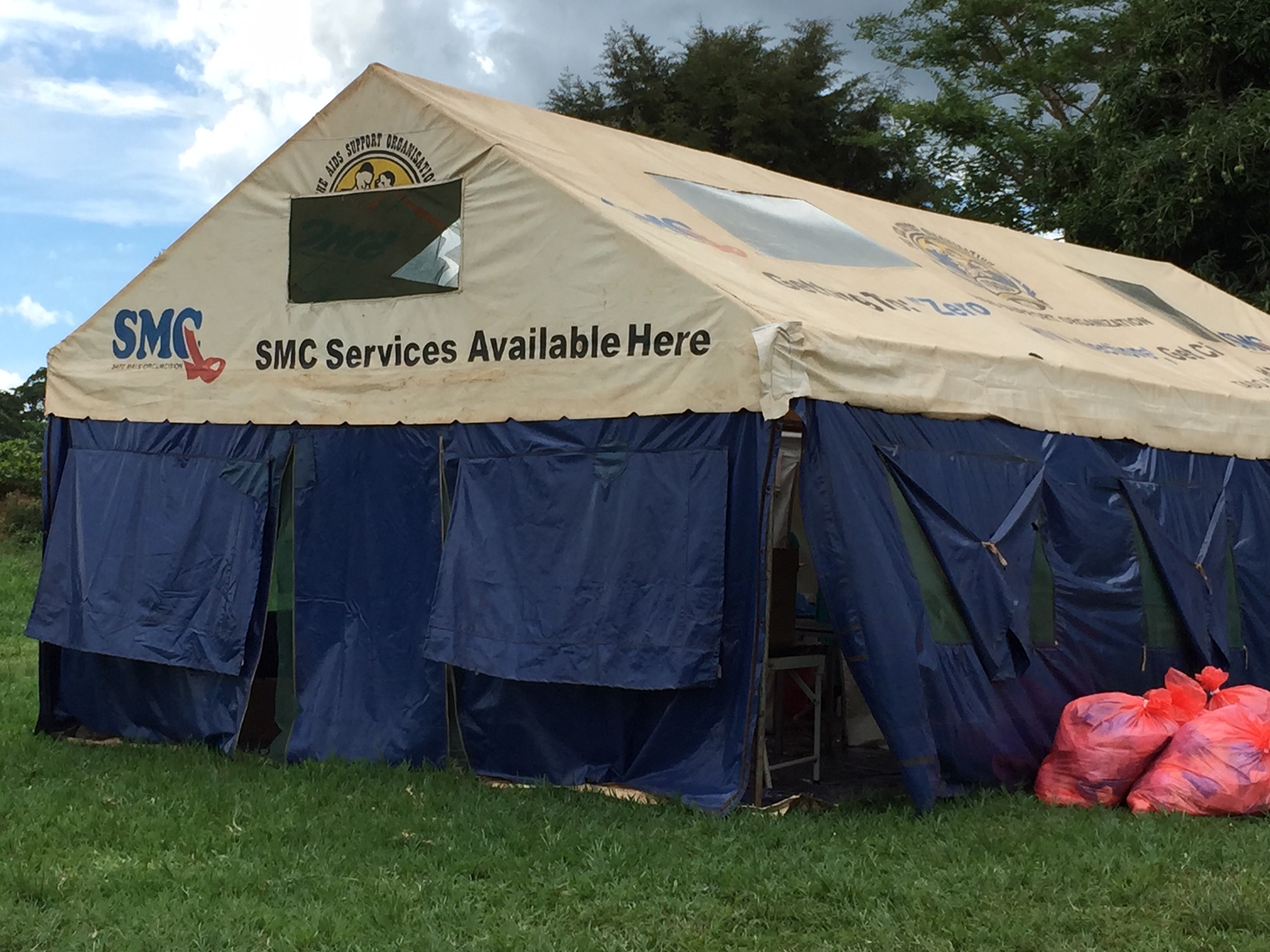
This is one of the Safe Male Circumcision (SMC) tents

This is one of the Safe Male Circumcision (SMC) tents

When we arrived to the circumcision tents, there were roughly 30 boys waiting (they were brought in from a school with permission slips signed by their parents or older siblings) to be circumcised. Prior to the procedure, each boy would be taken under an awning for a counseling session about the scope of the procedure and how to use barrier contraceptives, such as male and female condoms.

None of the boys who were waiting seemed nervous and there were no sounds of screaming coming from the tent. We were later told that this was a right of passage and that the boys were expected to be calm, cool and collected during the process in order to be deemed “men.” We were told that the boys were not given any topical numbing agents before the procedure and they were only given Tylenol after for pain management.
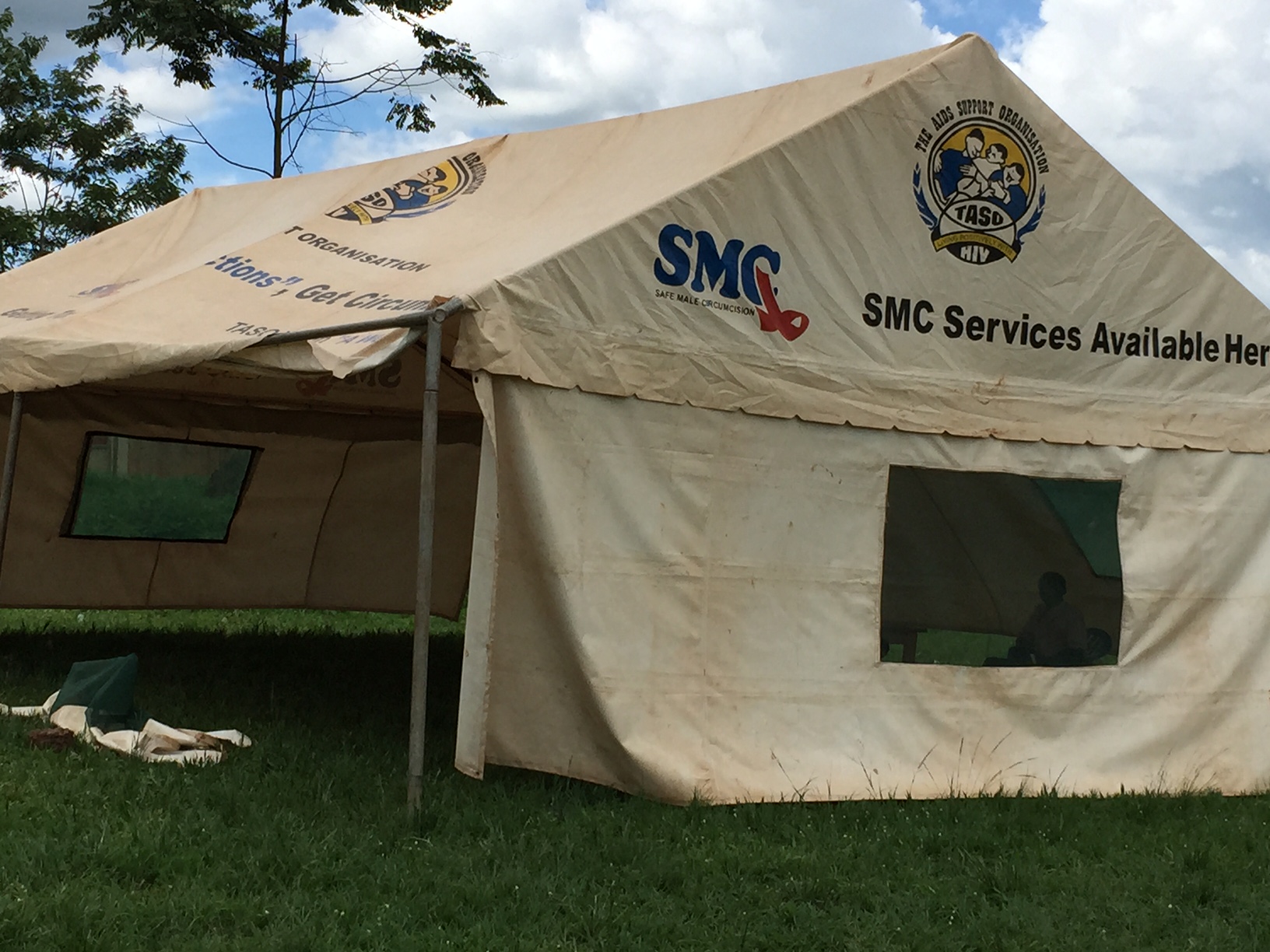
Another SMC tents
Another SMC tents

Posted in Diseases/Health | Tagged , , , , , , , , , , , , , , , | Leave a comment

Reading Glasses for Masindi-Kitara Diocese

Tuesday, April 21, 2015

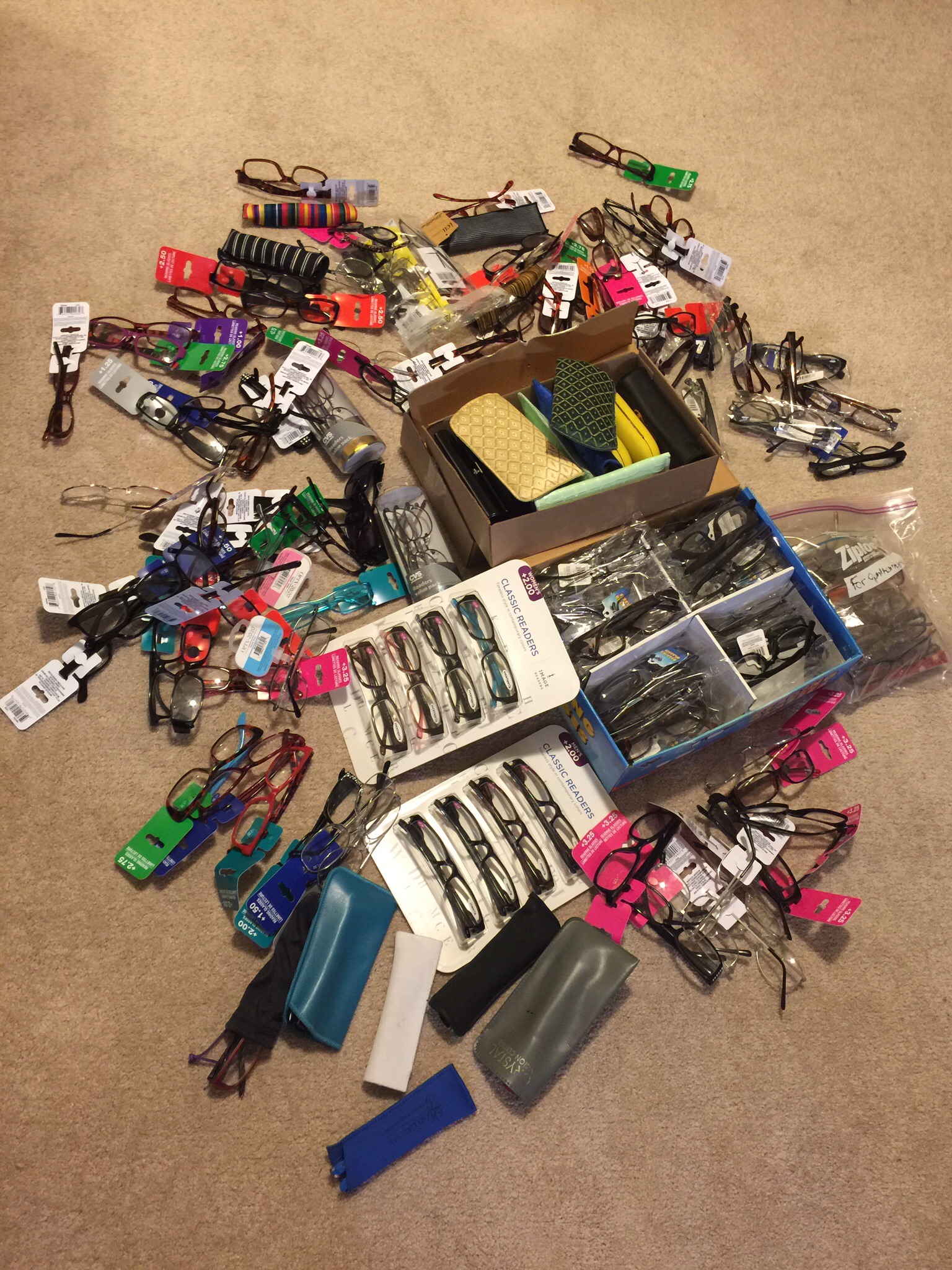
Lots of reading glasses donated by St. Luke Lutheran Church in Bloomsburg, PA USA to bring to Masindi, Uganda

Lots of reading glasses donated by St. Luke Lutheran Church in Bloomsburg, PA USA to bring to Masindi, Uganda- there are 192 pairs!!!!

Ever since I started coming to Uganda, I have tried to bring gifts with me to serve the people I’m working with. They so graciously welcome us into their lives and allow the students and I to learn from and with them and I want to give them some sort of small token of thanks. Early on the Professor at Makerere University School of Pharmacy requested we bring pharmacy textbooks because their supply was low and very old. Over the past few years I’ve brought several hundred pounds of textbooks. This year was no different, although in the future this may have to be curtailed because British Airways may cease letting volunteers bring extra luggage at no charge.  This year although I had confirmed ahead of time that we were allowed to bring 3 bags each, at the airport gate check-in I had to bargain with them to let us take the bags we had packed with the books and Blood Pressure cuff supplies needed for the screenings.

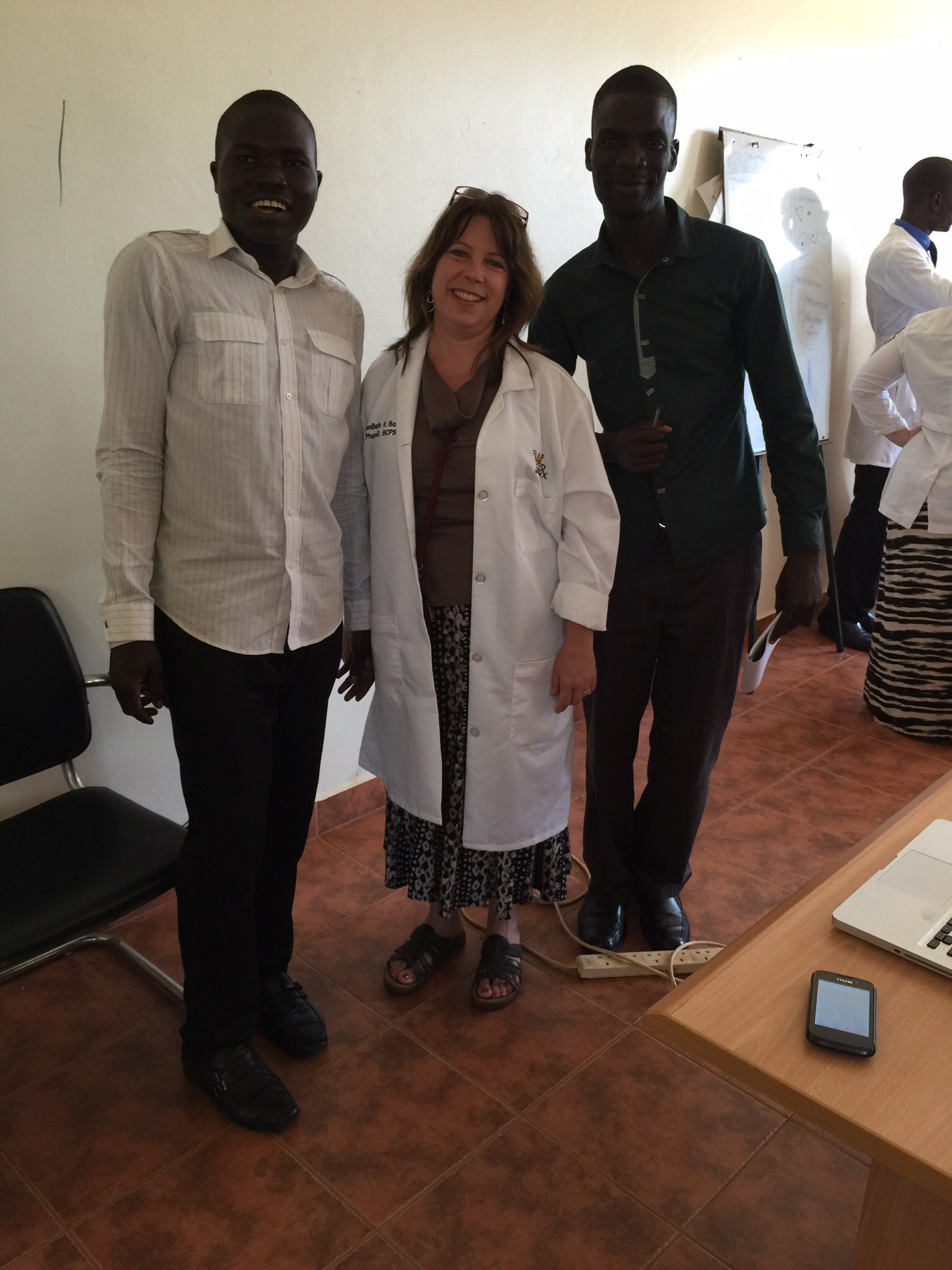
Janine, Rev. Josebard, and Dr. KarenBeth Bohan

Janine, Rev. Josebard, and Dr. KarenBeth Bohan

In addition to textbooks, I was also able to identify a need for reading glasses from talking with the Rev Evas of the Masindi-Kitara Diocese and Janine, the Diocesan Health Coordinator a couple of years ago.  Almost everyone’s eyes change as we grow older and in fact long distance vision can improve but close up reading distance vision can grow worse. This is a condition close to my heart since I heavily rely upon my own reading glasses to perform any kind of computer or reading work.  Even selecting money from my wallet requires the use of my reading glasses.  If you look back at pictures of me on this blog, invariably you will see me wearing glasses on top of my head and this is so the glasses are never far from me.   Thus we have also brought reading glasses to Uganda and below is a note of thanks from Janine.

Janine hands out the glasses- The Rev Bishop Julius Caesar was one of the grateful recipients

Janine hands out the glasses- The Rev Bishop Julius Caesar was one of the grateful recipients

She introduced me to two clergy who have personally benefited from the glasses and who are pictured in this blog.  They expressed sincere gratitude to me and the members of my church, St. Luke Lutheran Church in Bloomsburg, PA, who collected and donated the glasses. Reading glasses are available in the USA at all pharmacies and even at some convenience stores; they also tend to be reasonable priced.  Unfortunately that is not the case in Uganda.  Although they may be available at some stores, the price is not affordable for most people.  The provision of reading glasses seems simple but can really make a big difference in the lives of a person who can no longer read without great difficulty.  Reading their Bibles and conducting basic business transactions like signing their name or selecting money for a purchase can now be accomplished without eye strain or assistance.

Note from the Diocesan Health Coordinator:  We here at Masindi-Kitara Diocese are most grateful for your donation. Here we have many people such as pastors and lay readers who dearly desire to read the Bible, and who are needing to preach and share from the bible. Unfortunately, as they pass the age of forty or so, many of these key people start losing the ability to read the bible as they don’t have reading glasses. Your donation will help the Health Office of Masindi-Kitara provide those who need them these reading glasses. Thank you so very much and may God richly reward you.

Posted in Uncategorized | Tagged , , , , , , , , , , , , , , | Leave a comment

Blood Pressure Screenings in Masindi, Uganda- What Fun!

Sunday April 19, 2015

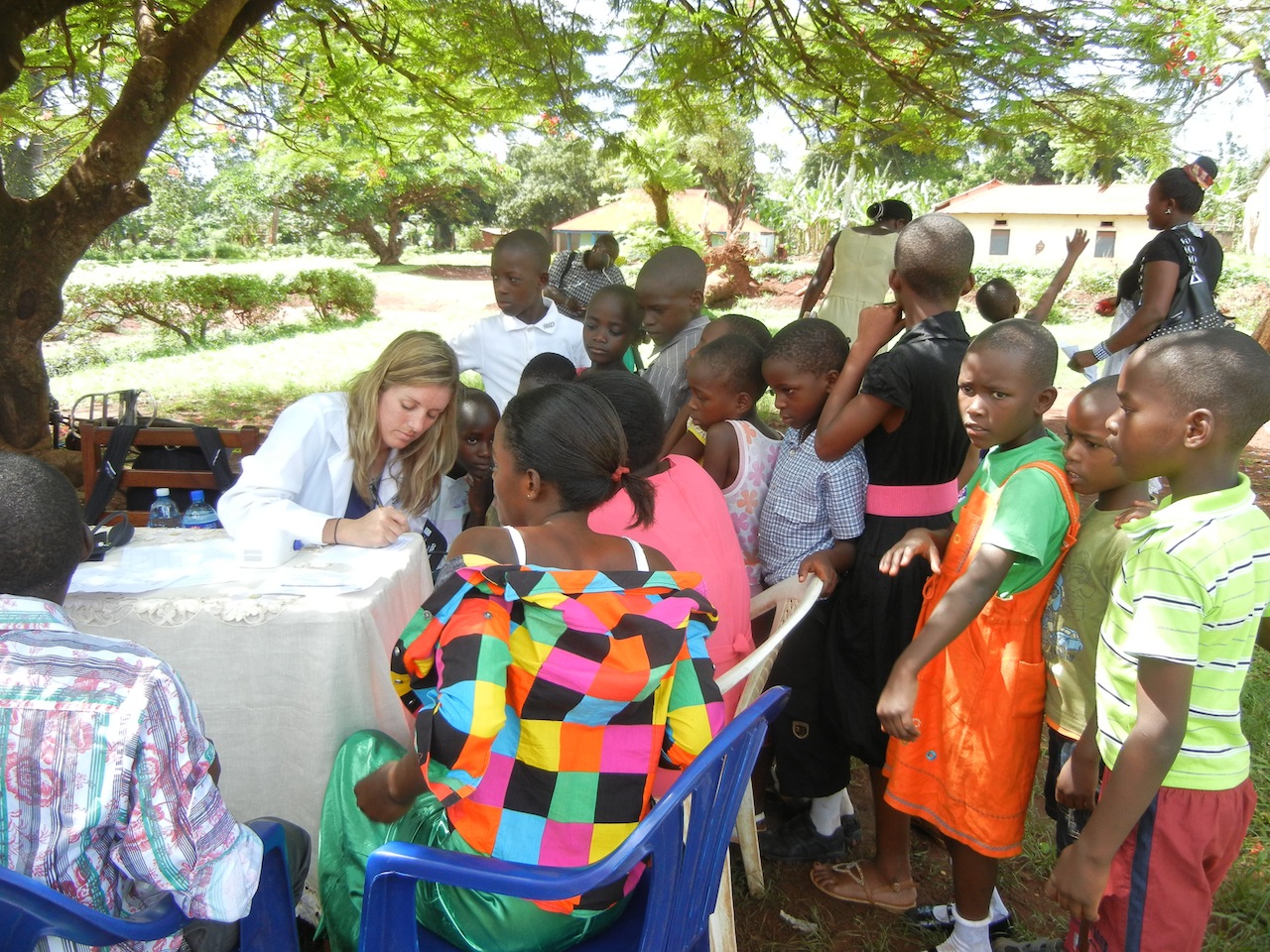
Hanna, the pied piper, had children lining up to see what was going on and to have their BP taken.

Hanna, the pied piper, had children lining up to see what was going on and to have their BP taken.

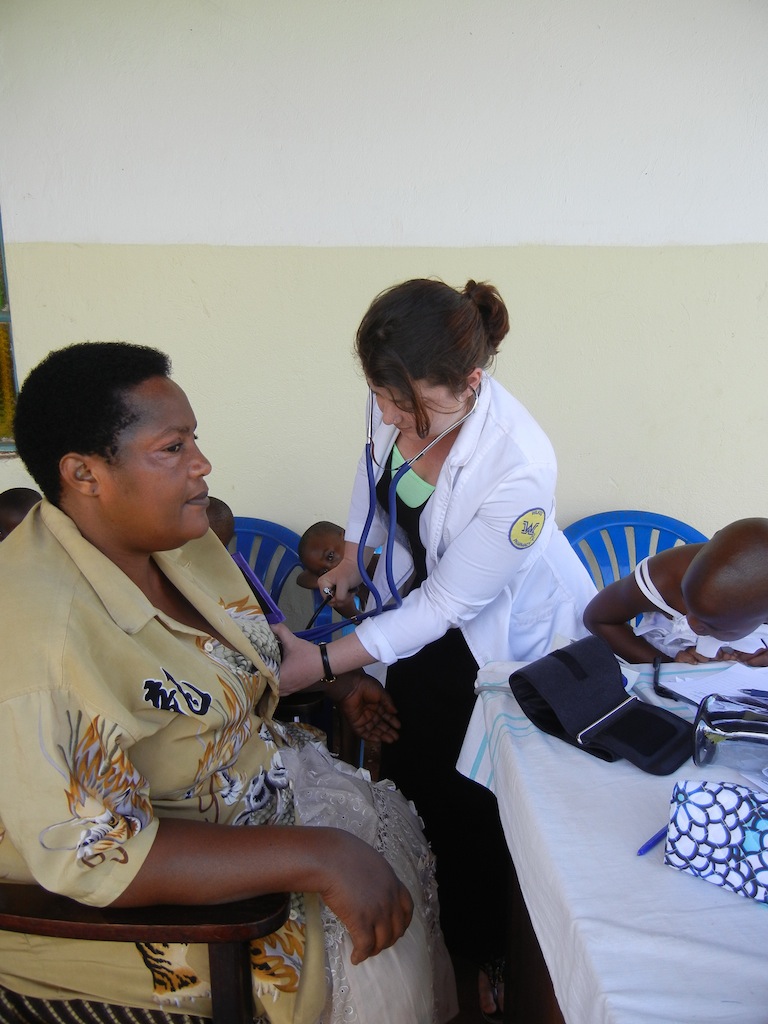
Wrap the cuff around the arm, apply the bell of the stethoscope to the antecubital space (inside of the elbow), pump, pump, and pump some more as the dial goes up and up and up, then slowly release the knob to let the air out and then finally, carefully read dial as it descends through the numbers listening for the first drum beat through the stethoscope and then the cessation of all sounds to determine the blood pressure (BP) reading. This procedure can be life saving as it can discover people who are at risk for developing heart and kidney disease that can lead to stroke, heart attacks, and death.

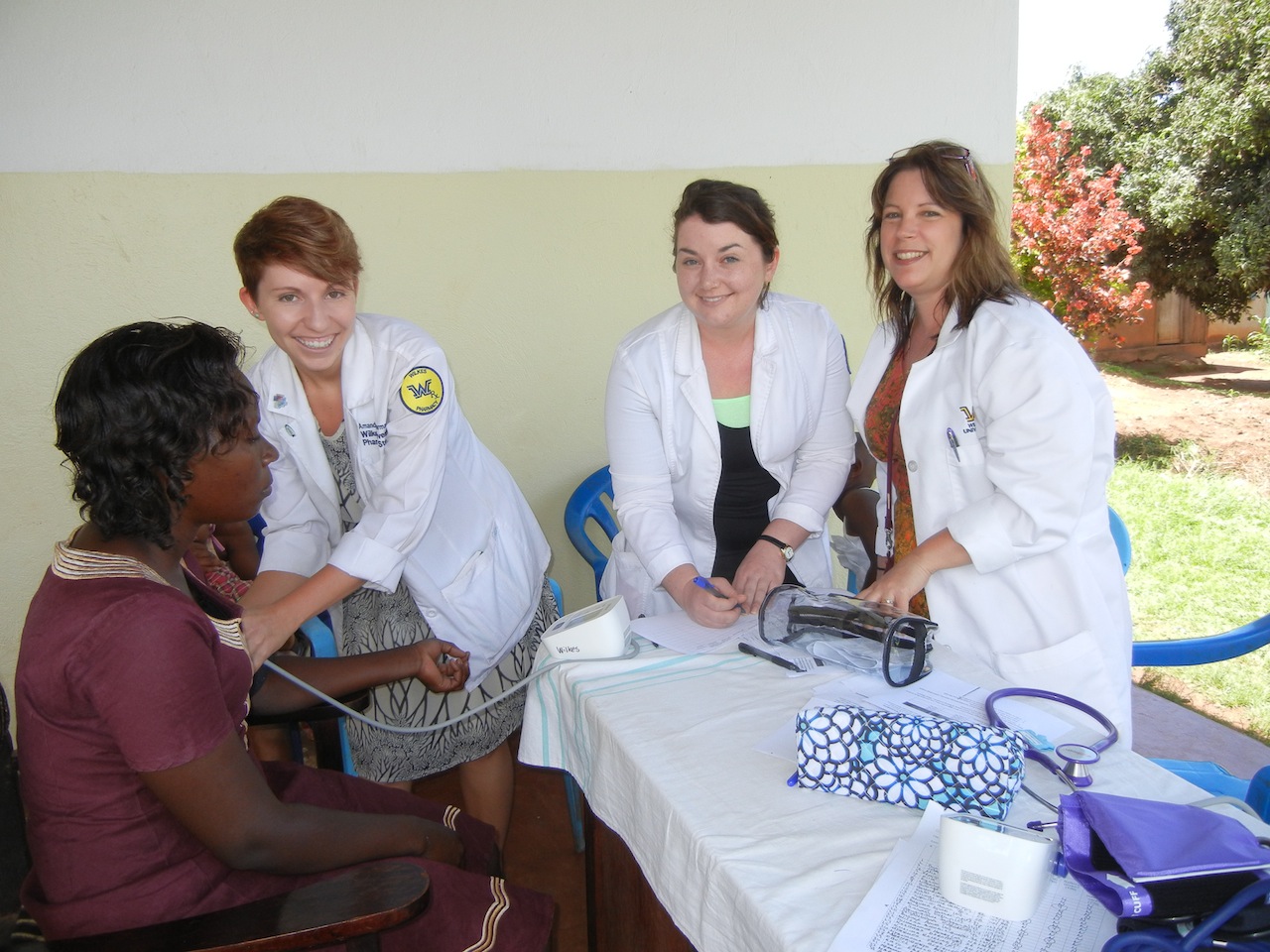
Amanda, Lizzie, and Dr. Bohan at All Saints Church

Amanda, Lizzie, and Dr. Bohan at All Saints Church

Today the Wilkes students and St. Joe’s Pharmacy Resident completed this procedure about 252 times while they screened parishioners at St. Matthew and All Saints Church in Masindi, Uganda. In fact, most people who had a high reading were tested at least one more time, to double check. We were able to identify 84 people (33%) who had high readings and 33 (13%) had extremely high readings and were referred to seek medical care as soon as possible this week. Although there are plenty of medical clinics around, some of the patients with high BP that I counseled admitted they had never had it taken before and also had not ever seen a doctor.

Kristen at St. Matthews Church

Kristen at St. Matthews Church

Identifying people with high BP is the first step in improving their long-term health, but unless they follow through with treatment, which will probably be daily medication(s) for the rest of their life, patient health outcomes won’t be actually altered for the better. There are many barriers to sustained medical care that will have to be overcome and when you consider them, it is easy to get discouraged and wonder if we are really making a difference. The majority of people in Masindi live on extremely modest incomes and affording regular medication is nearly impossible for most. Think about having to make the decision “Do I pay my kid’s school fees* or purchase my BP medicine this month?” If they seek care through the government health system, medications will be free but unfortunately, you can’t always rely on the medications to be available every month. Using a private doctor or clinic is much more reliable in terms of available medications and healthcare providers, but this will cost the patient some amount of money.

Lizzie had fun playing with the children too! She not only had her BP taken but also had her hair braided.

Lizzie had fun playing with the children too! She not only had her BP taken but also had her hair braided.

Another factor is lack of education about illnesses that we in the developed world are well aware of. Just about anyone you ask in the USA probably knows what a heart attack or a stroke is and that medical care and drugs can be helpful. In the developing world, this may not be common knowledge and trying to explain it is difficult. There is also poor comprehension about the concept of “preventative care”. In fact, this applies to not only to personal healthcare but also items like cars and generators. During one of my trips to Masindi, the hotel’s generator stopped working. A generator is a really critical piece of equipment here because the electricity commonly goes out for some amount just about every day and often is out for days at a time. That time, though, the electricity went out and the generator broke down. It turns out that the reason for the malfunction is that no one had done the preventative maintenance necessary and let it run without oil.

We spoke to all of the patients who had high BP to give advice. Much of the time the patients understood and spoke English but when Runyoro was their best language, we had the help of 2 wonderful translators.

We spoke to all of the patients who had high BP to give advice. Much of the time the patients understood and spoke English but when Runyoro was their best language, we had the help of 2 wonderful translators.

I don’t really know the route of the problem but suspect it has something to do with not having a lot of money to do the upkeep necessary but I think they also don’t understand the concept of paying a small amount to keep equipment or your health in good shape so that you don’t have to pay catastrophic fees later. But, we have to start somewhere and identification of the health problem (elevated BP) and discussing the potential benefits of treatment is what we are able to do when we just come here once a year. People are starting to remember us, though, since this is our 3rd time doing BP screenings at these 2 sites. In fact, one patient actually came with his 3 prior BP readings on the cards we provide!

Lizzie at All Saints Church

Lizzie at All Saints Church

All of the crew agreed their work today was really fun and they had a great time- it was a 10/10 experience and they would “do it again!” There were lots of children hanging around watching us and at one time, Hanna had 2 lines going where she was measuring the little kids BP with the automatic cuff while she took the adult’s BP with the regular BP cuff. One story Amanda recounted to me was pretty amazing. She got herself a mint and saw a little girl watching her and so she offered her a mint. She promptly put it in her mouth to soften it up and then bit it into pieces and gave it out to the other children there. The extent to which they share and care for each other is really touching!

*Most children go to one of the many private schools available and those prices range from really low but likely low quality to really high providing a high quality education. There are free government schools, but these are considered poor quality and even when utilizing them, parents still need to pay for uniforms, shoes, writing tablets, and pencils. Education is something that is highly valued in Uganda, as most parents know that sending their kids to the best schools they can afford is the most likely way to advance their financial status and position in life.

Amanda and Lizzie with Jackson, the excellent translator at All Saints Church

Amanda and Lizzie with Jackson, the excellent translator at All Saints Church

Kristen and Hanna with Godwin, another excellent translator for St. Matthews Church

Kristen and Hanna with Godwin, another excellent translator for St. Matthews Church

Posted in Diseases/Health | Tagged , , , , , , , | Leave a comment

Rhino Trekking at Ziwa Rhino Sanctuary, Masindi, Uganda

Saturday, April 18, 2015

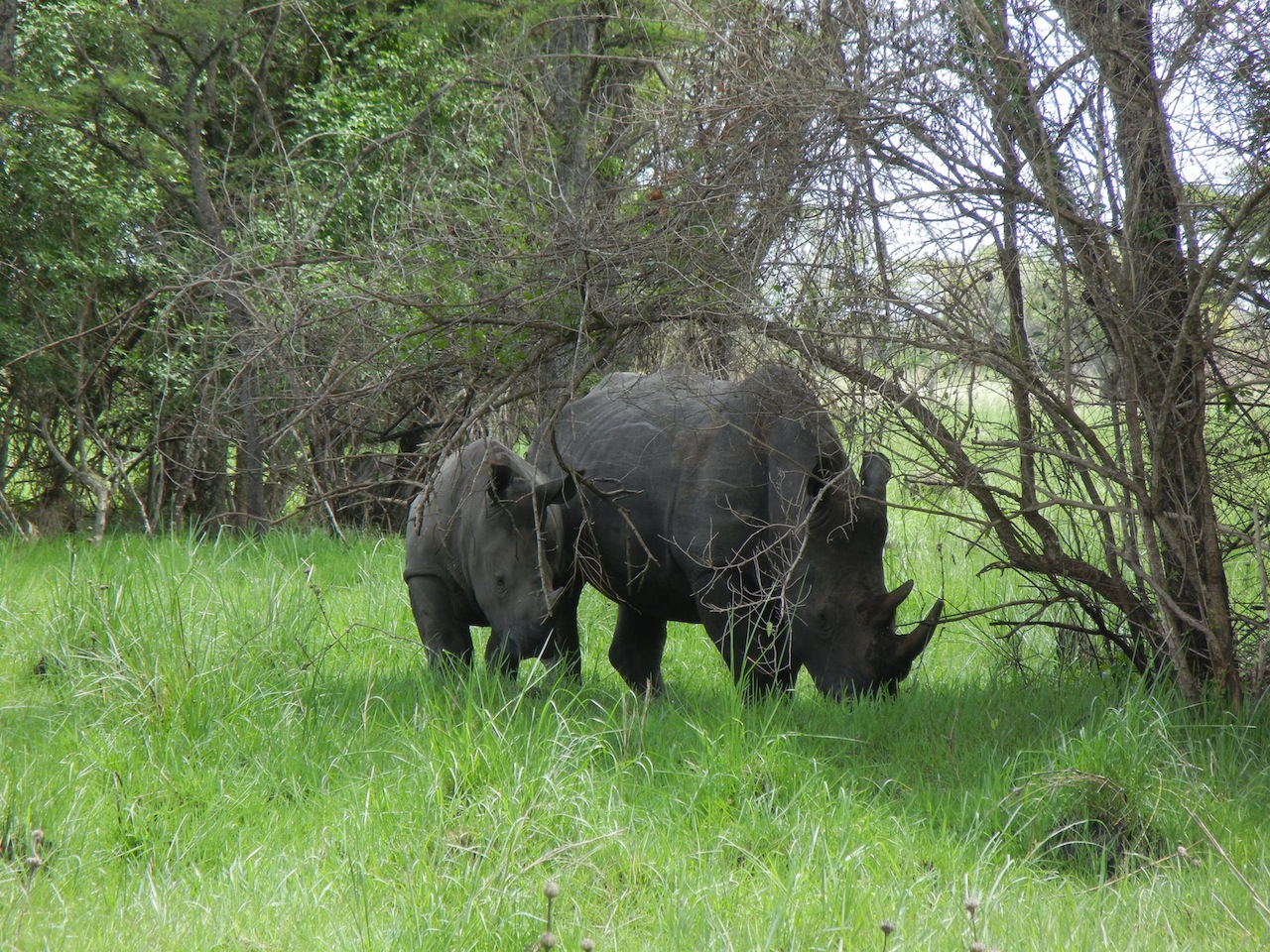
This is a Mama Rhino with her baby.

This is a Mama Rhino with her baby.

Today we had a real treat- a trip to the Ziwa Rhino Sanctuary.  Uganda used to have Rhinos in Murchison Falls Park quite a long time ago but they were poached and became extinct from Uganda.  Since early the early 2000’s, the Ziwa Rhino Sanctuary has been harboring Rhinos and trying to grow a new herd that can eventually be released back into the wild.  The sanctuary is quite large- 70 km squared- and the Rhinos have the full run of the area.  Today we really had to trek into to see them but the 30min hike was richly rewarded was great – we got to see 2 different families and a total of 8 Rhinos. Also, usually they are quiet and lying around in the shade during the heat of the day but today, they were pretty active. DSCN8589Even the Ranger Guide said it was unusual to see them moving around and grazing during the day.  We also saw the famous baby born on site called, Obama. Named because his Mom is from the USA and the Father is from Kenya.

The group and our Ranger Guides. Notice Sam, our driver in the far left corner.  He is always afraid of the Rhinos and although he loves to come along and see them, he is really cautious and always stands near a tree.  I think he has heard of the Rhinos attacking people in the past.

The group and our Ranger Guides. Notice Sam, our driver in the far left corner. He is always afraid of the Rhinos and although he loves to come along and see them, he is really cautious and always stands near a tree. I think he has heard of the Rhinos attacking people in the past.

This is a real cowboy herding the Ankole Cattle along the road.  He was very happy to pose for this picture.

This is a real cowboy herding the Ankole Cattle along the road. He was very happy to pose for this picture.

DSCN8604

Posted in My Safari (My Journey/Adventure) | Tagged , , , , , , , , | Leave a comment

Road Trip to Gulu

Friday, April 17, 2015

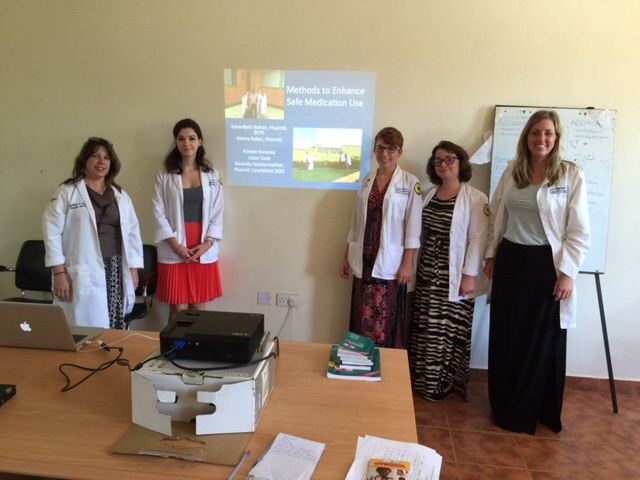
The group presenting on Methods to Enhance Safe Medication Use

The group presenting on Methods to Enhance Safe Medication Use

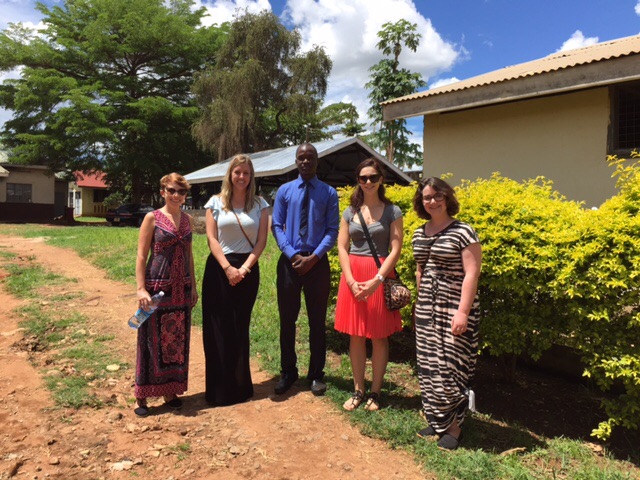
Today we took a long drive up to Gulu, which is north of Masindi. We had been asked to come up to give a presentation to the healthcare providers at Gulu Regional Hospital by a Pharmacy Intern, Michael, who had been a student at Makerere University during one of my prior trips to Uganda.

Micheal, the Pharmacy Intern, with the rest of our team just prior to having good lunch at the hospital canteen

Micheal, the Pharmacy Intern, with the rest of our team just prior to having good lunch at the hospital canteen

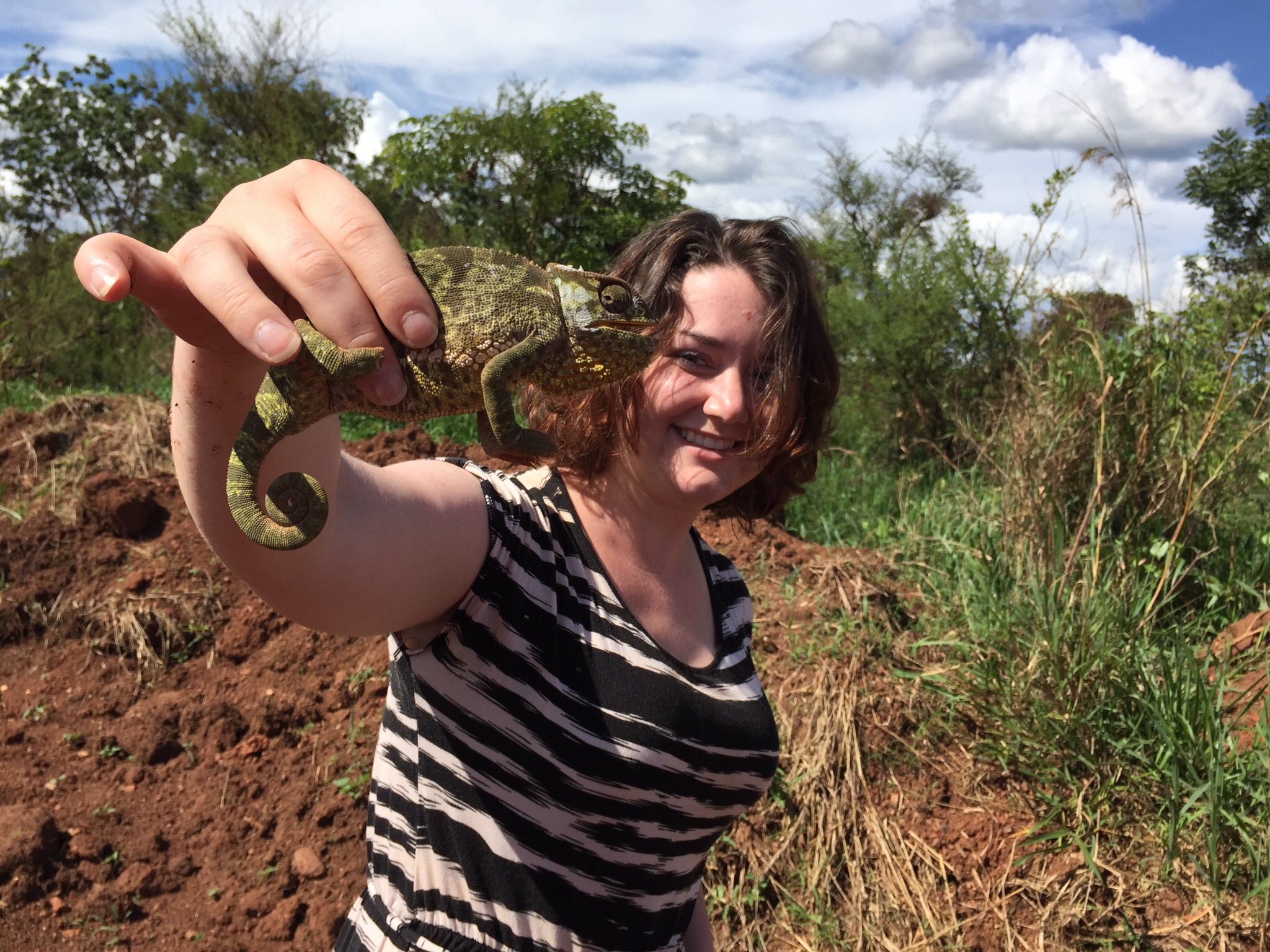
We came across a chameleon along the road on our way home. Sam, our wonderful driver, has the best eyes for spotting creatures. We stopped and admired it and tried to get out of the road but then it crawled up into the wheel well of our car. But, Lizzie saved the day by rescuing the little lizard. She had to get on the ground and wiggle her hand up into the wheel to grab the little guy.

We came across a chameleon along the road on our way home. Sam, our wonderful driver, has the best eyes for spotting creatures. We stopped and admired it and tried to get out of the road but then it crawled up into the wheel well of our car. But, Lizzie saved the day by rescuing the little lizard. She had to get on the ground and wiggle her hand up into the wheel to grab the little guy.

I had never been to Gulu and thought this would be a good chance to check it out and it would be a good experience for the students and me to share our knowledge and skills. When I asked Michael about how long we should prepare to speak for, he said “3-4 hours and as long as possible.” This made me smile because it just shows how eager these young professionals are to gain more abilities. He mentioned the audience would be multidisciplinary including doctors, clinical officers (like physician assistants), nurses, pharmacists, and the trainees of all these professions. We ended up speaking to about 40-50 enthusiastic people, of which most were first year pharmacy students. All in all it seemed to go well. We didn’t end up getting to finish our whole talk because it took us longer than expected to get there.

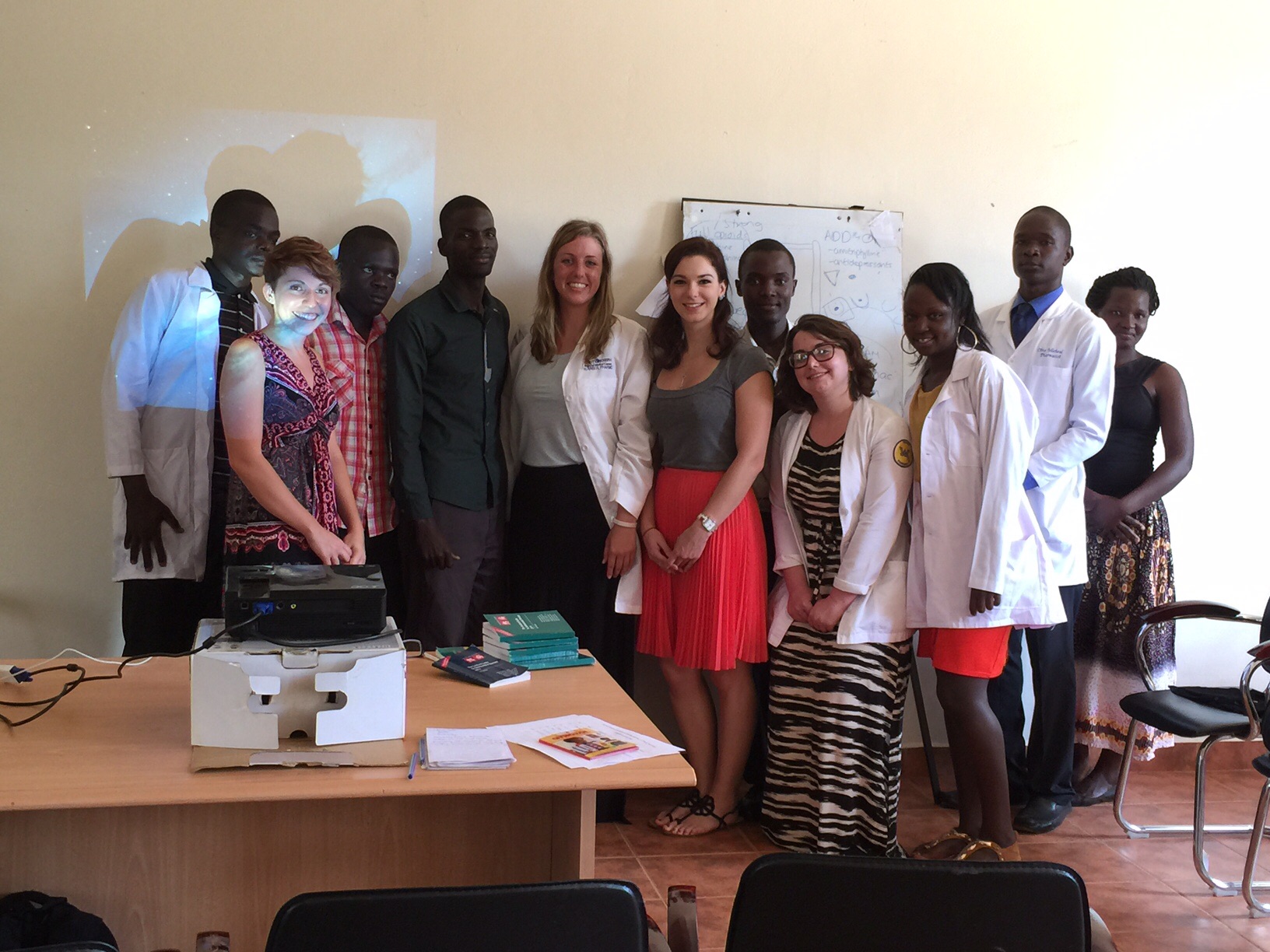
The American Pharmacy crew with many of the Ugandan pharmacy students and interns after the talk

The American Pharmacy crew with many of the Ugandan pharmacy students and interns after the talk

We knew it would take 2.5-3 hr and so we planned to leave Masindi at 6am. We were all waiting for Sam, our driver, at 5:45am but he uncharacteristically didn’t show up on time. I gave him until 6:10 and then called. It turns out the car had a flat tire and he was in the middle of changing it. Sam always keeps really good care of his car, but because it is small and the drive was long, he rented a larger vehicle. Although, with the bumpy, rutty, pothole-filled red dirt roads around here, it’s a wonder cars aren’t getting flat tires all of the time. We finally got on the road a little after 6:30am and reached Gulu at about 10:10am. The trip was especially long because there are road crews working on road repair and laying new paved roads all the way to Gulu. It was kind of an exciting trip at times, though, because we passed a bunch of baboons and monkeys along the way. Also, we drove right by Karuma Falls, a beautiful sight that will be extinct within the next couple of years. The government is building a dam there to provide much needed electricity to the north and western part of Uganda but the casualty of this project will be the lovely falls. I’m glad I got to see them now. Enjoy the pictures of our trip and experience as they can tell the story better than I can with words.

Pharmacy students wanted to have their picture taken with us

Pharmacy students wanted to have their picture taken with us

More students

More students


This Mama Baboon and her baby were so funny. We stopped to watch them on our way home for about 10min. Eventually, though the dad came by and seemed like he was fed up and was going to jump in the window so we quickly closed it and then moved on.

This Mama Baboon and her baby were so funny. We stopped to watch them on our way home for about 10min. Eventually, though the dad came by and seemed like he was fed up and was going to jump in the window so we quickly closed it and then moved on.

Posted in Diseases/Health | Tagged , , , , , , , , , | 1 Comment

A Day with TASO: The Aids Support Organization

A Blog Post by Amanda Fenstermacher and Hanna Raber

This is part of the TASO main clinic in Masindi

This is part of the TASO main clinic in Masindi

Today we were able to spend the day with The Aids Support Organization (TASO). This is funded by the US government and has 11 different centers throughout Uganda. Today we went with the traveling unit to a neighboring village.

This is St. Jude's Roman Catholic Church where the TASO traveling HIV clinic was held.

This is St. Jude’s Roman Catholic Church where the TASO traveling HIV clinic was held.

Basically the patients are organized into groups that are visited by the mobile unit every 2 months. When we arrived at the site (a porch outside of a building) we waited for the 14+ members to arrive to the site. They have a group leader who is responsible for collecting the 1000 schillings (equivalent to 30 cents) members are expected to pay for the services provided. We started out by taking attendance- over half of the group members were missing which the TASOs worker said is unusually bad. It is rainy season so many people are busy working in the fields.

Another view of St. Jude's Church

Another view of St. Jude’s Church

After taking role the members most recent CD4 counts and hemoglobin levels were read out in front of everyone. Each patient has their own notebook to record these values. Of course we pharmacists were cringing, thinking of the huge HIPAA violation it would be in the United States. (HIPAA is the privacy of medical information act that prevents the sharing or release of patients protected medical information to others without explicit consent)  After that, the TASO worker gave a brief talk about the importance of showing up, reasons for remaining adherent to medications, and not getting discouraged about CD4 counts. After further investigation we found out they get their CD4 checked every 6 months. They do not get their viral load checked unless their CD4 drops really low and they are failing therapy. This was interesting to us because you really don’t know if you are transmitting the virus without knowing your viral load. This is a very expensive test, which is why they don’t do it more often. Then the patients would come up one at time to get their medications- they would get a two month supply. Each patient had to provide a signature after receiving their medications. Some patients did not know how to write, and they would provide a fingerprint instead. Every single patient got Bactrim, an antibiotic used for prophylaxis, regardless of their CD4 count. Again this concerned us about the prevalence of resistance among all of the TASO treated HIV positive patients who are taking chronic Bactrim.  Any female members who were sexually active, (again this was asked in front of everyone), had to take a pregnancy test, (they didn’t go to a bathroom just went out to the bushes), before getting medications. Everyone also had to have their weight taken and recorded. We were shocked but really pleased that they were actually getting newer HIV combination medications (one tablet once daily regimens) which is the standard of care in the USA.

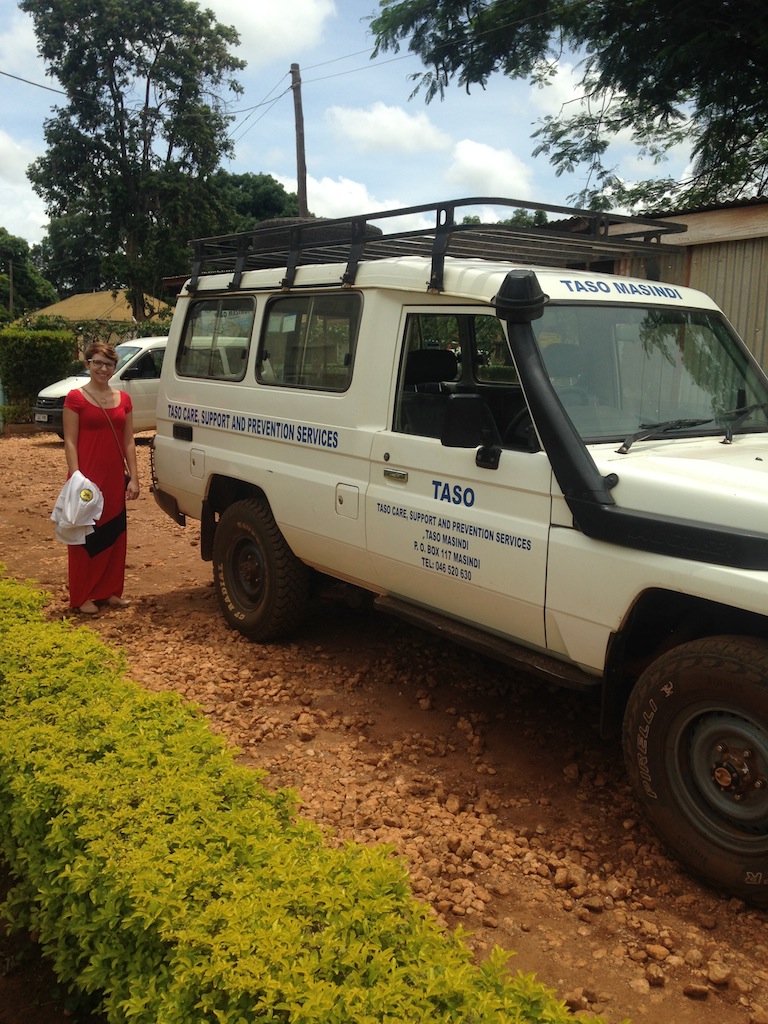
Amanda standing next to the TASO vehicle

Amanda standing next to the TASO vehicle

They also assigned one group member to distribute condoms which were not accepted by any of the male members.  The acceptance of contraception seems to still be a struggle here, which is unfortunate. It was really impressive that TASO provides not only medications, but social support, education, and community programs. It was also really impressive that the group leader was so invested- he recorded the blood levels of all the missing members and staying until the very last patient was finished. He was also organizing the collection of additional funds from group members in order to purchase benches for the meeting site. They currently had two benches and were collecting for more. We were really impressed with the great work that TASO is doing to combat the HIV epidemic here in Uganda.

The village road outside the Church

The village road outside the Church

The TASO Mission Statement

The TASO Mission Statement

Posted in Diseases/Health | Tagged , , , , , , , , , , | Leave a comment

Settling Into Work in Masindi, Uganda

Wednesday, April 15, 2015:

Amanda, Lizzie, Kristen and Hanna outside the entrance to Masindi-Kitara Medical Center, Masindi, Uganda

Amanda, Lizzie, Kristen and Hanna outside the entrance to Masindi-Kitara Medical Center, Masindi, Uganda

We have now been in Masindi 5 days, although we already feel so comfortable with the routine and new surroundings in some ways it feels like we’ve been here for weeks.  Right away on Monday we showed up at the Masindi-Kitara Medical Center (MKMC) at 8am and immediately headed to Ward Rounds with Dr. Godson and two American Medical Students who are also here on a clinical rotation.  It felt so comfortable for me to join the team as I have worked with Dr. Godson and many of the staff in the past.  After Ward Rounds the students have a chance to work with one of the Clinical Officers who is seeing the outpatients or they can work in the Pharmacy or learn about the lab tests that can be done, including getting a chance to view a blood smear filled with Malaria parasites. We are all also helping to do some data entry of medical records into a computer database for the Masindi-Kitara Diocese Health Education Missionary.

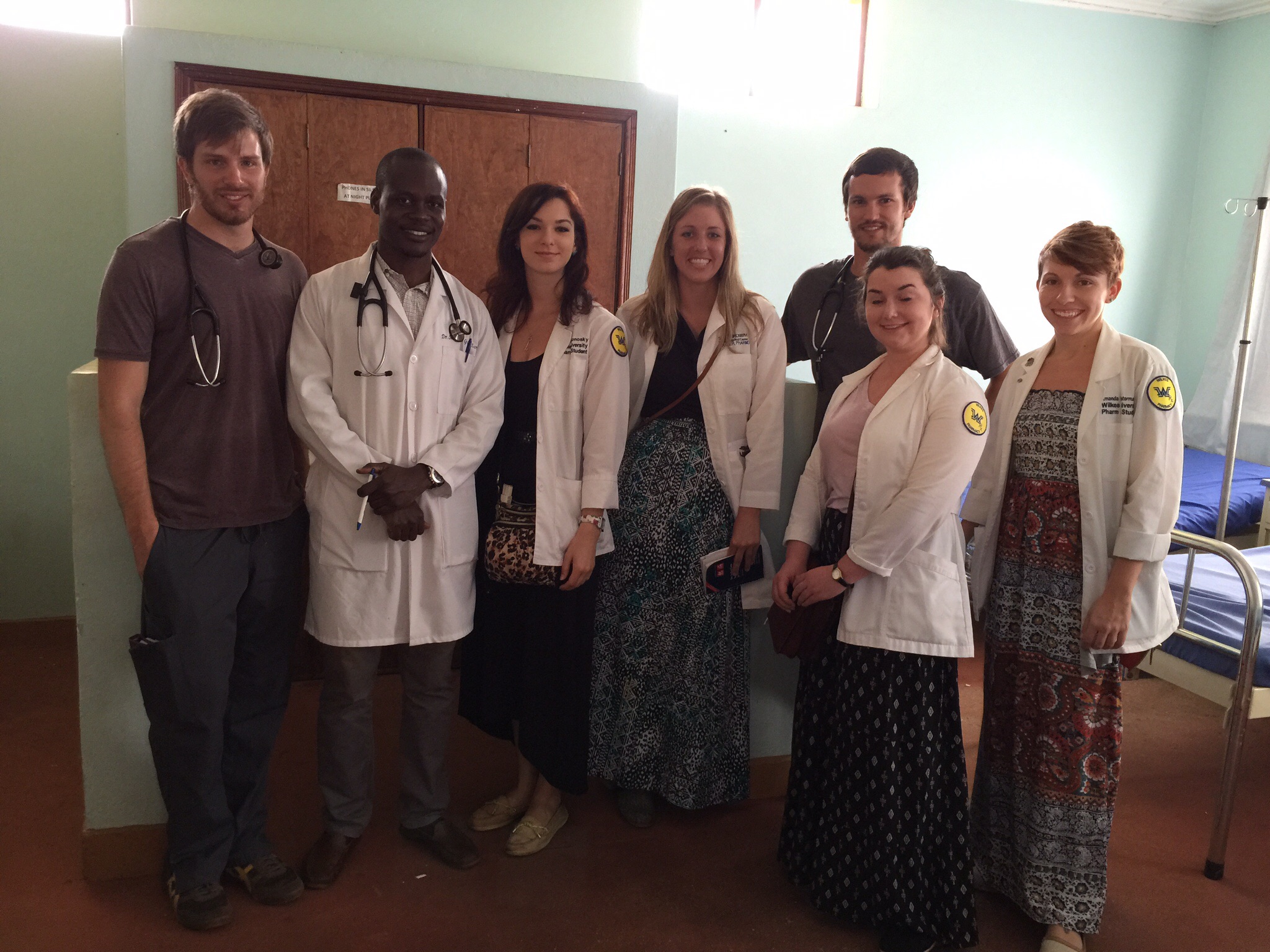
In the Wards at MKMC: Robert (med student), Dr. Godson, Kristen, Hanna, Terrell (med student), Lizzie, and Amanda

In the Wards at MKMC: Robert (med student), Dr. Godson, Kristen, Hanna, Terrell (med student), Lizzie, and Amanda

I think the students would agree that the moment they stepped foot on the property and in the facilities of MKMC they knew something was different.  Initially you are confronted with a well-planned medical clinic and hospital design that is very clean and orderly.  The staff all get along really well and work together like an oiled machine to connect patients to the services they need.  MKMC is a private NGO healthcenter categorized as a Health Center 4 by the District (hospital) which provides high quality care to patients for a reasonable fee.  Although Government healthcare is free to all Ugandan’s, sometimes the services and medications are not available but most private facilities are quite expensive for the average Ugandan.  MKMC was developed to provide private quality care but for a reasonable fee so that it can be sustainable.

The Pharmacy students and residents have already seen quite a variety of patients and diseases they never would have encountered in the USA, Malaria and Typhoid, and a couple of them got to observe a major surgery today. I’ll let them tell you about that another day.

Kristen presents information about Pharmacy Inventory Management

Kristen presents information about Pharmacy Inventory Management

Today we all gave a presentation on Safe Medication Use to the full staff and medical team at MKMC. It was very well received and sparked a lot of great conversations.

Lizzie presented information on Pediatic Dosing and safe medication writing practices

Lizzie presented information on Pediatic Dosing and safe medication writing practices

Hanna presented information on changing IV medications to Oral medications

Hanna presented information on changing IV medications to Oral medications

Amanda presented information about Insulin Use

Amanda presented information about Insulin Use

Posted in Diseases/Health | Tagged , , , , , , , , , , | Leave a comment

Experiences on the Patient Care Wards at Mulago Hospital: Part 3

This is a picture of the entire group, before Stacy had to head back to Pennsylvania last Saturday, at a lovely quiet restaurant on top of one of the hills in Kampala called Cassia Lodge. The view is spectacular and I always like to bring the students there early so we can watch the sunset over Lake Victoria

This is a picture of the entire group, before Stacy had to head back to Pennsylvania last Saturday, at a lovely quiet restaurant on top of one of the hills in Kampala called Cassia Lodge. The view is spectacular and I always like to bring the students there early so we can watch the sunset over Lake Victoria

Before I move on to the post of the day I wanted to let you know all is going well in Masindi. We just spent our second day working with the physicians and medical staff of the Masindi-Kitara Medical Center and have already learned about a lot of new illnesses.  We have prepared a presentation for the staff which we will give a 8am tomorrow to provide education on some pharmacy-related topics they had questions about.  We were also able to have a brief visit with the medical director of the Masindi Branch of The Aids Support Organization (TASO) today to set up opportunities for the students to accompany the nurses on some community visits later this week and next.  Although Masindi is much more quiet and rural than Kampala, all of us are really enjoying the change of pace. There will be much more about our experiences in Masindi to come later.

Labor and Delivery:  A Blog Post by Lizzie Cook

(Since I’ve already posted the pictures of Lizzie giving her talk at Mulago Hospital, I’ve decided to post a variety of animal pictures, since she is a serious animal lover- even snakes.)

This praying mantus was perched on the ledge of Mulago Guest House near Lizzie's room. He stayed still quite awhile and just looked right at us while we took his photo.

This praying mantus was perched on the ledge of Mulago Guest House near Lizzie’s room. He stayed still quite awhile and just looked right at us while we took his photo.

I spent the majority of my time on the Labor and Delivery floor of Mulago Hospital in a ward that specialized in handling postpartum complications, primarily infections post cesarean section delivery and management of HIV/AIDS in the mothers and their newborn babies. On my first day I attended ward rounds with a medical student from Makerere University and a physician who specialized on Obstetrics and Gynecology. I was very surprised how willing the physician was to have me along with his team and he made sure to quiz me about all of the medications we encountered, so it was a great learning experience. The physician I worked with was exceedingly knowledgeable, but I was startled by the lack of hygiene he observed between patients, palpating and inspecting a c-section incision of one woman, then proceeding to do the same on another woman without washing his hands or using hand sanitizer. While I was scared to speak out of turn at the time, after that experience I made sure to bring hand sanitizer and gloves with me on and offer them to all in contact with patients.

This small little guy is rather harmless to humans unless you try to squash him or brush him off your arm. It is called a Nairobi Eye and looks like an ant or fly but is in the beetle family.  Today we were saved from getting a serious rash or burn from the toxin it releases when crushed. Dr. Godson spotted it on the ledge and pointed it out to us but stopped me as I went to "get it".

This small little guy is rather harmless to humans unless you try to squash him or brush him off your arm. It is called a Nairobi Eye and looks like an ant or fly but is in the beetle family. Today we were saved from getting a serious rash or burn from the toxin it releases when crushed. Dr. Godson spotted it on the ledge and pointed it out to us but stopped me as I went to “get it”.

I also worked alongside the pharmacy interns on the floor, Enoch and Lillian, to dispense medications to patients. There I learned about the numerous barriers pharmacists at Mulago Hospital face in facilitating patient care. Procurement of drugs is a huge issue, and many doctors will write scripts for out of stock medications, forcing the patients to either go without or send a family member to a local pharmacy to buy it. Additionally, documentation in patient charts is sporadic, the notes that physicians write are often not in chronological order, and there is no readily available medication administration record, among other things.

I had the privilege to address these issues in a formal presentation about sepsis at Pharmacy Rounds last Thursday with interns and pharmacists from Mulago Hospital. Lillian, Enoch and I selected a patient from our ward and presented her individual case as a team. After presenting the basic information, I lead an interactive discussion with the lecture hall about the pathophysiology, diagnosis and treatment of sepsis, focusing on interventions that pharmacy interns at Mulago can make to enhance patient care. Many students were eager to participate and all of them had innovative thoughts on how to remedy issues such as lost microbiological cultures, lack of vital sign documentation and irregular administration of medications, and how to develop alternative antibiotic regimens when drugs are out of stock.

This is the largest snail (or slug) I ever saw. It was on the front porch of the Mulago Guest House one morning just slowly creeping along. It was probably about 3 inches in length.

This is the largest snail (or slug) I ever saw. It was on the front porch of the Mulago Guest House one morning just slowly creeping along. It was probably about 3 inches in length.


Posted in Diseases/Health | Tagged , , , , , , , , , , , | Leave a comment

Experiences on the Patient Care Wards at Mulago Hospital: Part 2

A Blog Post by Kristen Konosky

I spent the majority of my time between two pediatric wards, but I was also able to spend a day each in endocrine and solid tumor at UCI. At all the sites, I was able to round with a varying team of physicians, nurses, medical students, and intern pharmacists. The teams I worked with were all am

Dr. Bohan reviews a patient chart with Kristen, David, the leader of the Ugandan Pharmacy Interns, and Amanda on the Stanfield Pediatric Ward

Dr. Bohan reviews a patient chart with Kristen, David, the leader of the Ugandan Pharmacy Interns, and Amanda on the Stanfield Pediatric Ward

azing and welcoming and happy to teach me and ask questions of me whenever possible. I chose to spend most of my time in pediatrics because it is not an area that I have dealt with at home and the challenges here are many, though they are similar and different than those at home. It was great to get some experience in pediatric dosing, but it was difficult to see such small children with sickle cell disease, malaria, HIV, pneumonia, and often a combination of those diseases.

David, Kristen, Amanda, and George, another Pharmacy Intern

David, Kristen, Amanda, and George, another Pharmacy Intern

At the Ugandan Cancer Institute, I was able to see several types of devastating tumors. It was really heartbreaking to see the overflow of patients that resulted in lying on mats on the floor. The unit was so small that patients were forced to lift the edges of their mats up so the team could get by with the cart. I was also surprised to learn that the most common cancer in women here is cervical. In the USA, the HPV vaccine is readily available and can help prevent cervical cancer but often patients refuse it because of stigma about a common sexually transmitted infection or propaganda against vaccinations. I was able to learn a lot from the team at UCI and took away a very valuable learning experience.

David shows the Wilkes Students a product called Miconazole Oral Gel, a product we don't have in the USA which is used topically to treat oral thrush

David shows the Wilkes Students a product called Miconazole Oral Gel, a product we don’t have in the USA which is used topically to treat oral thrush

My day in the endocrine ward was truly eye opening. As someone who works in community pharmacy and just coming off an ambulatory care rotation, I felt confident about my knowledge of diabetes management and the available options. I, of course, anticipated that healthcare would be very different here in Uganda, but I was hopeful that my experiences would translate well. I walked into the ward and began rounding with the team, only to find that most patients were hospitalized to manage diabetic foot infections. Many of the patients had been on the floor for more than a month with infections taking over their entire toe and foot area, some down to bone. I found out from the team that these patients had been receiving antibiotics for weeks and still were not seeing improvement.

The walls of the pediatrics ward are covered in brightly colored paintings of Disney characters.

The walls of the pediatrics ward are covered in brightly colored paintings of Disney characters.

One of the many challenges faced is that drugs are not reliably available and often Doctors write for antibiotics the pharmacy doesn’t have. Rather than try to get a medicine changed, patients with little to no money would be told to go buy them from an outside pharmacy. During rounds, the doctors would look at charts and assume the caregivers were able to get the medicine and that patients have received doses as prescribed, but rarely would they speak to the caregivers or nurses and ask if doses had actually been given. This issue may be a contributing factor in the number of patients not improving.

When I asked about patients’ insulin regimens, I was told that many patients followed the same rarely adjusted dosing of a 70/30 mix given twice a day. Patients did not have money to afford glucose monitors or supplies to check their sugar regularly or at all, and would wait until their infections were too far gone to present to the hospital. This was really difficult for me to see because at home in the USA many patients receive free monitors, are told to check their glucose and check their feet regularly. They can get specially fitted diabetic shoes and free classes to support a healthy diabetic lifestyle. American patients are often given all the tools to manage their care, but make excuses to not test because they don’t like pricking their finger or just have to have those fast food meals. Most Ugandan patients aren’t even afforded a chance to help themselves.

Mulago provided great opportunity to see the differences between healthcare here and at home and really made me appreciate what we have in the USA. I was able to see intern pharmacists successfully joining the team and saw many opportunities for a clinical pharmacist to reduce medication errors and improve patient care. These past two weeks really helped to encourage the work that Dr. Bohan and my fellow students are doing here and I can only look forward to the next three weeks!

Posted in Diseases/Health | Tagged , , , , , , , | 2 Comments

Experiences on the Patient Care Wards at Mulago Hospital: Part 1

Friday was our final day at Mulago Hospital in Kampala before we ventured on to Masindi yesterday. All of us have found our time at Mulago to be an extremely rewarding experience to work along side fellow pharmacy interns in a foreign country. The primary duty of pharmacy interns is to perform bedside medication dispensing to all patients on the medical ward, as well as fill prescriptions for patients prior to discharge. All of these students were knowledgeable, passionate and invested in expanding their skills as a clinical pharmacist to augment patient care. Many of the interns accompanied us on ward rounds with the medical team, something that is very hard to fit into their routine work schedule. There we witnessed them make important interventions that will surely impress other healthcare professionals and prompt them to be more inclusive in the clinical decision making process. Below are our individual accounts of our times in different wards of Mulago Hospital:

Part 1:  A Blog Post by Amanda Fenstermacher

I spent most of my time in the pediatric ward, but I also spent some time in the endocrine, oncology, and infectious disease wards. My experience at Mulago hospital is one that I will never forget. I have seen disease states that I have not had exposure to before. Most of these disease states are hardly ever seen in the United States, but are quite common in Uganda. For example, I saw a case of tetanus in a child, several cases of tuberculosis, measles, malaria, hepatitis B, Stevens-Johnson syndrome in a child, several cases of rare forms of meningitis, and many many complicated infections. What is even more astonishing is that most of the patients I saw among the wards, besides pediatrics, were mostly 40 years of age or younger. I have learned that it can be very difficult diagnosing patients due to resources available/what patients can afford, and thus it is often very difficult to appropriately treat patients, especially when there are so many drug shortages throughout the hospital.

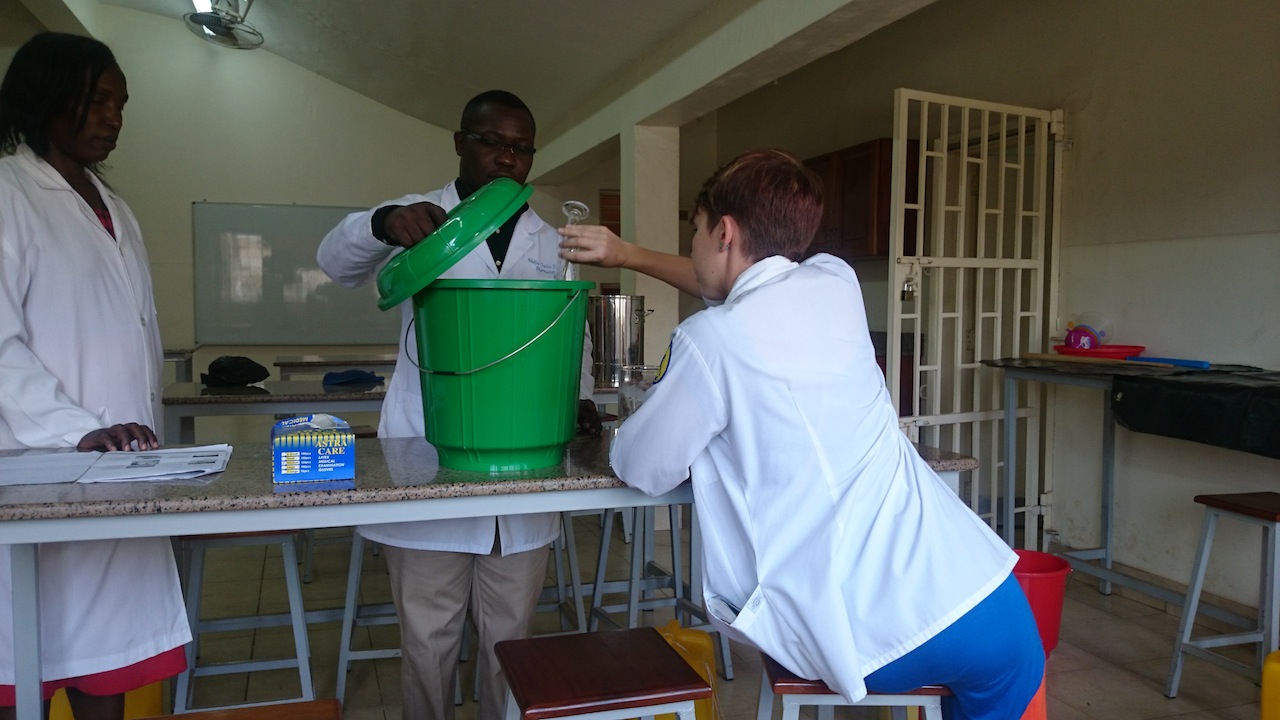
Amanda and David start the preparations to make hand sanitizer

Amanda and David start the preparations to make hand sanitizer

On one of the days I was asked to help compound 15 liters of hand sanitizer for the surgical ward. The ingredients for hand sanitizer consisted of 12.5 liters of what’s supposed to be at least 95% alcohol, ~200 mls of hydrogen peroxide, and ~300 mls of glycerol. I was also informed that the product is then tested by the World Health Organization for its sterility, which is mainly based on the percent of alcohol used.

Amanda points out how much to pour into the bucket

Amanda points out how much to pour into the bucket

Adding the glycerol to the solution

Adding the glycerol to the solution

Helping stir the solution

Helping stir the solution

We had to use the products available to us, meaning that we did not have the proper compounding equipment/environment and we did not even know the percent of alcohol provided to us. I was surprised at the fact that they do not have something as simple as hand sanitizer easily accessible to them because we take such things for granted in the United States. I was asked how we get it in the states, and my response was that we simply just buy it.

My time spent at Mulago hospital has made me appreciate, even more, the health care we have available to us in the United States. This was definitely an eye-opening experience that made me realize (1) how good we Americans have it, (2) how resilient the human body can be in less than sanitary conditions, and (3) the need for more resources and health care providers in Uganda.

Posted in Diseases/Health | Tagged , , , , , , , , , , , | Leave a comment