A Day in the Field with Hospice Africa Uganda

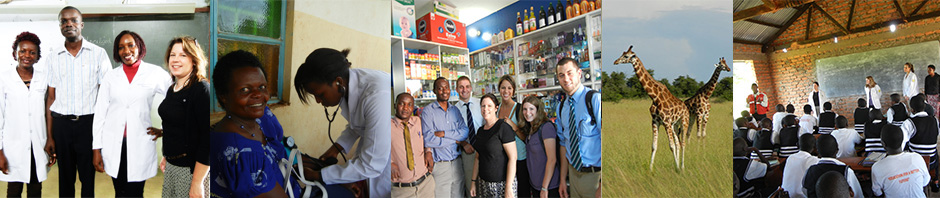
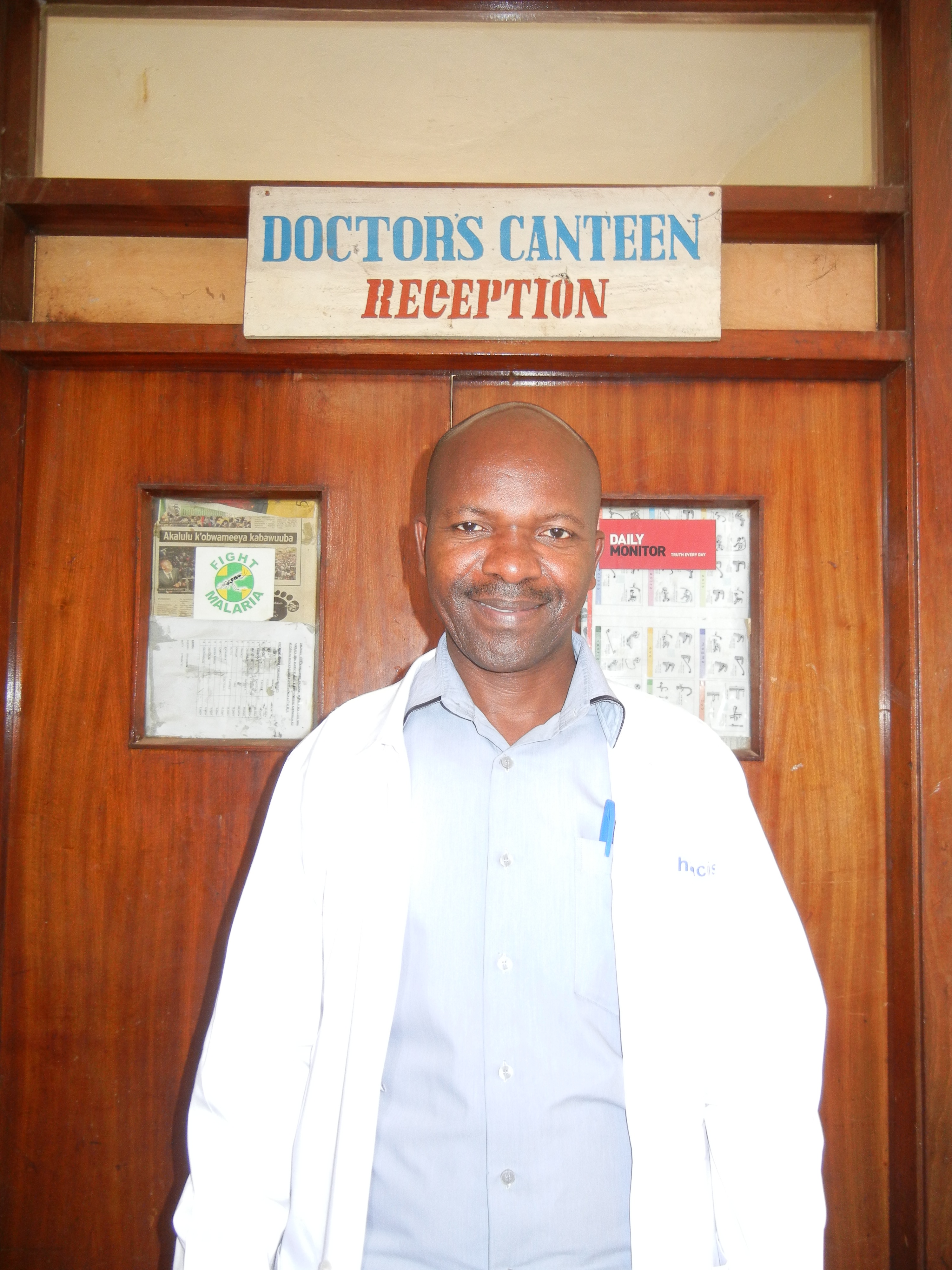
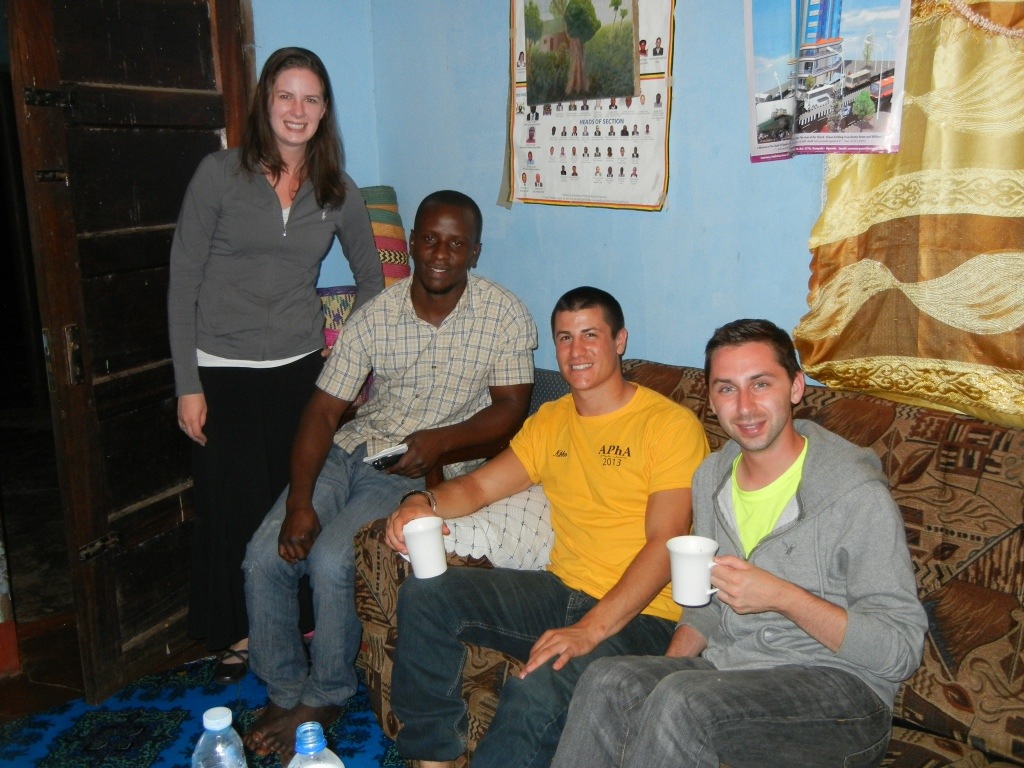
The hospice team for the day included Kavuma, the driver, Octavia, the nurse, Dr. Moses, KarenBeth, Jenna, and Sammi (taking the photo)

The hospice team for the day included Kavuma, the driver, Octavia, the nurse, Dr. Moses, KarenBeth, Jenna, and Sammi (taking the photo)

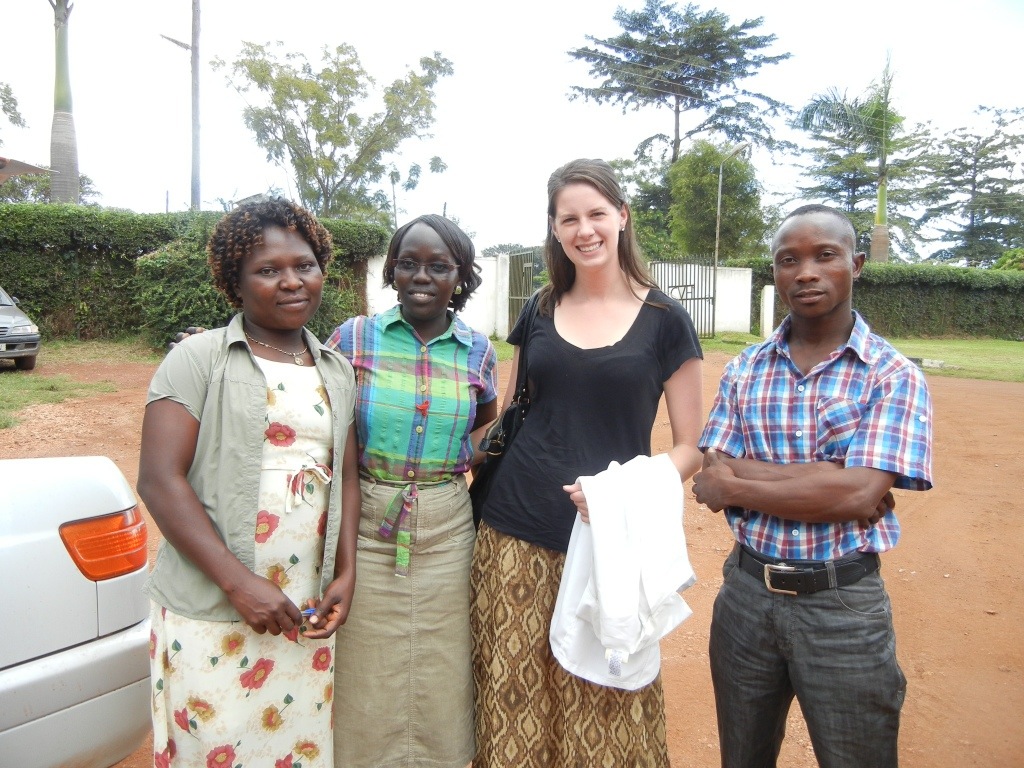
Tracy was the staff member that gave us the grand tour on Wednesday (pictured with Sammi and Jenna)

This in not an official U.S. Department of State (DOS) blog and the views and information presented are my own and do not represent the Fulbright Program or the DOS. 

On Thursday, Jenna, Sammi, and I were invited to participate in three home hospice visits with Dr. Moses, Octavia, the nurse, and Kavuma, the driver. All of the patients we saw, one with HIV/AIDS and two with cancer seemed to be stable if not improving with their pain.  Both the nurse and the physician were very compassionate and fully assessed all of the issues that were bothering the patients.  Hospice provides a holistic approach to patient care and addresses both medical issues, like pain, and the non-medical issues such as financial and social concerns.  Sometimes just providing a listening ear can be the perfect medicine.  The services provided by Hospice Africa Uganda (HAU) are available to patients regardless of socioeconomic status.  Patients can be referred by other healthcare providers or they can be self-referred. Most patients either have cancer or advanced HIV/AIDS but they are seeing a growing need for palliative care in patients with chronic illnesses like advanced heart and lung diseases.

We were invited to stay for lunch.  I thought you might be interested in seeing how the traditional Ugandan meal is cooked.

Sammi noticed that the meal would include a green leafy vegetable she is familiar with from her homeland, Egypt

Sammi noticed that the meal would include a green leafy vegetable she is familiar with from her homeland, Egypt

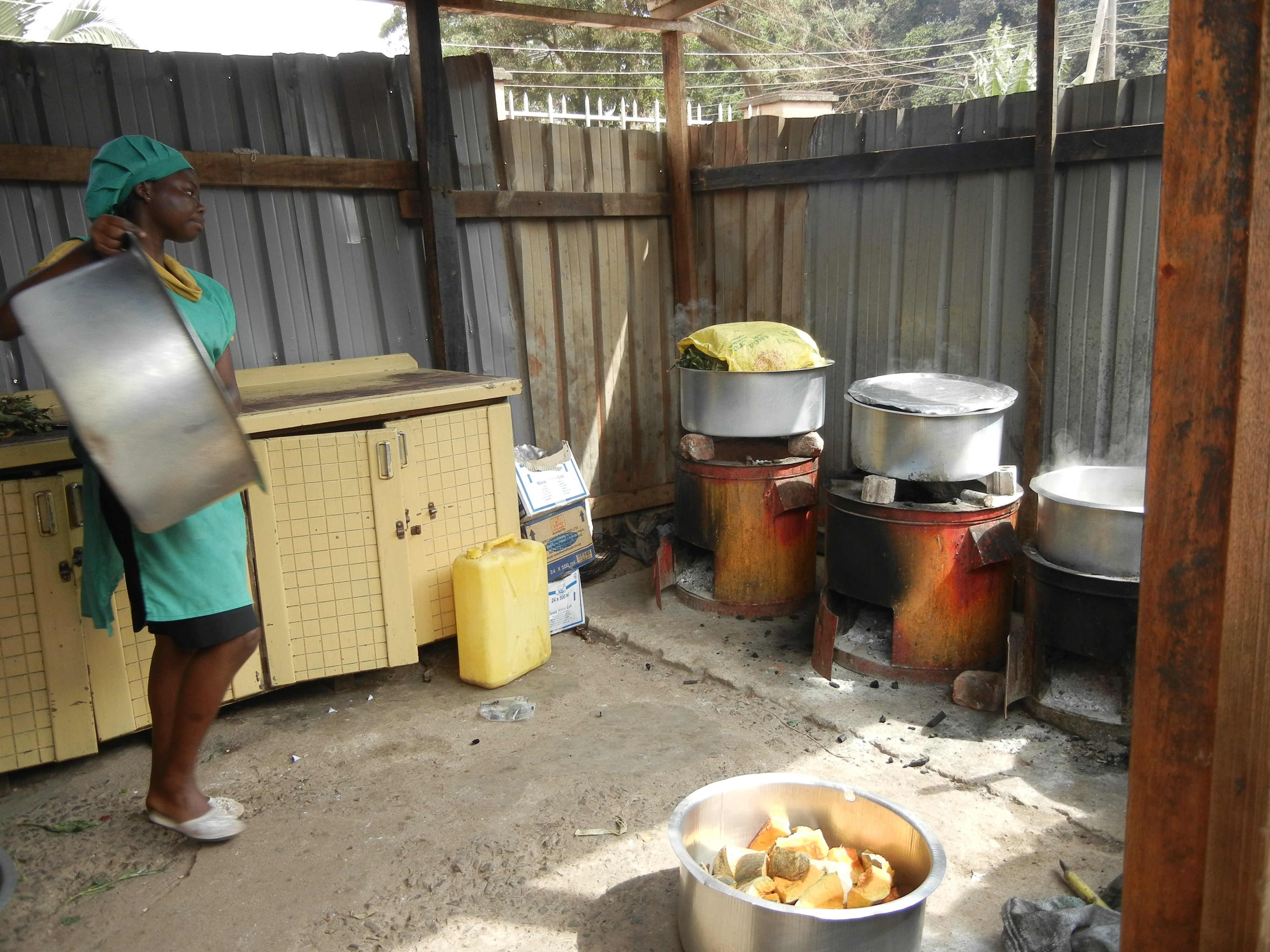
This is the cookhouse; the pot in the far corner is filled with matoke that is steaming in banana leaves

This is the cookhouse; the pot in the far corner is filled with matoke that is steaming in banana leaves. The pot in the foreground holds sliced pumpkin that will be put on to cook soon.  They will also cook rice.

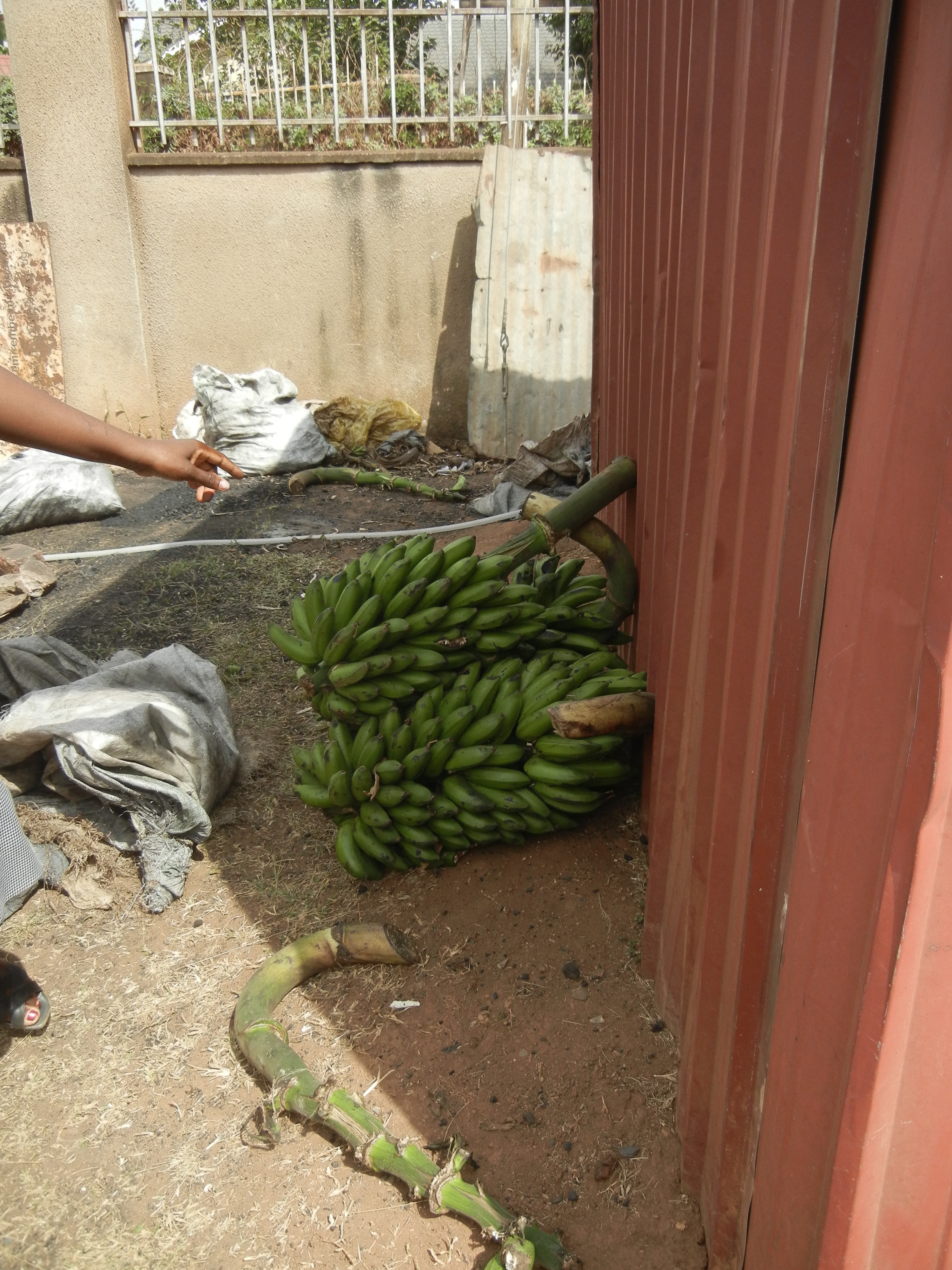
The green bananas are Matoke- yes, they are ripe. They are peeled and chopped up then I believe they are boiled before placing them in the banana leaves for steaming. It comes out as a yellow sticky substance that looks like very thick mashed potatoes. It is served with a sauce of beans or peas or meat.

The green bananas are Matoke- yes, they are ripe. They are peeled and chopped up then I believe they are boiled before placing them in the banana leaves for steaming. It comes out as a yellow sticky substance that looks like very thick mashed potatoes. It is served with a sauce of beans or peas or meat.

Posted in Fulbright Specialist Project | Tagged , , , , , | Leave a comment

Hospice and Palliative Care in Uganda

Sammi and Jenna by the sign at the entrance

This in not an official U.S. Department of State (DOS) blog and the views and information presented are my own and do not represent the Fulbright Program or the DOS. 

Wednesday and Thursday were spent learning all about the Hospice and Palliative Care services available in Uganda.  I owe this fabulous experience to the Pharmacist and Physician team from Beth Israel Hospital, New York City who has joined me this week in Uganda.  Ebstesam Ahmed, Pharm.D. “Sammi” is a Clinical Pharmacy faculty member at St. John’s University in NY specializing in Pain Management and Palliative Care Medicine. Jenna Butner, M.D. is Family Medicine Physician who is doing a Fellowship in Palliative Care Medicine. As mentioned in the March 3 post, Sammi is interested in developing a project to help Ugandan pharmacists get more actively involved in Palliative Care for patients.  She and Jenna know first hand how beneficial it is to have pharmacists on the interdisciplinary care teams of those who are helping to ease patients’ pain and provide supportive care for those near the end of life. (although that is only the tip of the iceberg of what they do, as I have learned this week 🙂   Anyway, I would have never met the wonderful people from Hospice Africa Uganda led by Dr. Anne Merriman, recent Nobel Peace Prize nominee, or the Mulago Hospital Palliative Care Team, led by Dr. Mhoira Leng, a guru in the world of international palliative care in which she has worked for the past 20 years, or even explored this new opportunity for pharmacy practice in Uganda if it hadn’t been for Sammi’s email to me back in Fall 2013 and her passion to jump right in, fly to Uganda with only a month’s notice and discover the possibilities.

KarenBeth, Sammi, Dr. Anne Merriman, Jenna

Wednesday we went to the Hospice Africa Uganda (HAU) Center in Kampala where we started the day with morning prayers and then were given a very detailed tour of the facility by Tracy, which included an introduction to every single person who worked there. Everyone was so gracious, welcoming, and friendly, and it really made me aware of how important people and relationships are to those in Africa.  If this center was in America, we would have had a fine tour but the focus would be on the facilities and equipment and introductions would probably be made to only those whom we might work with.

This is the Mission of Hospice Africa Uganda

This is the Mission of Hospice Africa Uganda

This center serves as an international training center for healthcare workers all over Africa and beyond who want to learn about Palliative Care Medicine and Hospice and it is this training that enables nurses in Uganda to prescribe morphine for pain control as they work to improve the lives of patients.  The site also has a small outpatient clinic but most of the clinical care is done during home visits- more on this tomorrow since that was what we did today.  The center also houses a morphine oral solution manufacturing operation, which provides ALL of the morphine for the entire country of Uganda.  We were able to observe the process of making morphine since we lucked out and came on one of the days they were doing so. I’ll save that for another post.

Dr. Leng, Sammi, and  Jenna are deep in discussion.

Dr. Leng, Sammi, and Jenna are deep in discussion.

The second half of the day was spent talking with Dr. Mhoira Leng, the Head of Palliative Care at Makerere University and Medical Director of Cairdeas International Palliative Care Trust, Scotland.  We met in a lovely coffee cafe, Endiro Coffee, and spent a few hours discussing all that Dr. Leng has done to improve patient access to Palliative Care and pain medicine both at Mulago National Referral Hospital in Kampala as well as in many other countries worldwide.  She uses and advocates a multidisciplinary team approach but admits that the pharmacist role is noticeably absent.  We brainstormed about some ways that Sammi could help to train pharmacy interns and come here herself with her pharmacy students to model this type of practice.  In addition, I realized that Pain Management and Palliative Care would be a great topic to suggest to Makerere University School of Pharmacy as the basis of the clinical skills course I am going to help them develop.  We all left this meeting excited about the future possibilities of this collaboration and the positive impact it can potentially play in improving patient quality of life.

Posted in Fulbright Specialist Project | Tagged , , , , , , , , , , , | 5 Comments

Back to the Classroom with Makerere University Pharmacy Students

This in not an official U.S. Department of State (DOS) blog and the views and information presented are my own and do not represent the Fulbright Program or the DOS. 

I’ve been having a great time so far in Uganda.  It has been wonderful to see so many old friends and everyone is as pleasant, gracious, and as friendly as I remember.  Whenever you walk into a room or place of business someone always says “You’re Welcome”.

The 3rd Year Pharmacy students are engaged in the task of developing learning objectives for their weekly topic

The 3rd Year Pharmacy students are engaged in the task of developing learning objectives for their weekly topic

I spent Tuesday sitting in on the the classes of 3rd and 4th year pharmacy students. Makerere’s pharmacy school uses the Problem-Based Learning (PBL) format for teaching the majority of their curriculum.  Although I observed this when I was here in Fall 2012, it still amazed me today.  Their semester is split in blocks of topics and today the 4th
year students (4Y) (this is the last year of pharmacy school) were starting a module on Industrial Pharmacy.  The 3rd years (3Y) were on the second session of a module on   Pharmaceutical Biotechnology and Industrial Microbiology.  The foundation of the PBL format is self-directed learning.  The students are split into small groups of around 8-10 students for each tutorial session.  When students to walk into the class on the first of 2 sessions during the week, they receive a short vignette that outlines a problem related to the topic for that week. For example, the scenario for the 3Y’s involved a pharmacy student who was going to be working as an apprentice in a biopharmaceutical firm that made vaccines and utilized gene therapy.  The vignette explained that his supervisor told him to learn all about vaccines and genetic engineering to become prepared for the work ahead.  The task of the 3Y students was basically to figure out what he needed to learn and as a group, develop the learning objectives for the week.  Before the final session of the week on Friday, the students will investigate the objectives on their own, learning the content so that each objective is fully covered. They use many sources of information to do this and then when they meet again as a small group, they have a 3 hour session where all of the content is discussed with the discussion being led by the students.  Each tutorial group also has a faculty facilitator called the “tutor”.  This instructor lets the students work out all of the issues on their own, only guiding the comments when details are missed or the students are heading in the wrong direction. One of the really interesting things about this method of teaching is that it involves very little traditional lectures. Instead, the content is almost entirely self-taught by the students to each other. If, though, they feel they need more guidance, they are always welcome to ask for a lecture from the faculty to get a better grasp of the material. The decorum of the tutorial sessions is quite formal. At the beginning of class, a “chairperson” and “scribe” are chosen. The Chair leads the discussion and is responsible for making sure that everyone gets a chance to provide input and also mediates any conflicts. The Scribe writes all the notes on the white board as you can see in the photo. At the end of the session, the students evaluate their own performance verbally in front of the group and discuss how well they performed. Then they give themselves a grade on their performance.  The facilitator also grades the performance of each student. I was given the leader guide before class so I could follow along and I was quite impressed with the amount of preparatory work the students had already done on the topic and how well they were able to come up with almost the exact objectives they were supposed to. The content was very detailed and is not something that Wilkes pharmacy school emphasizes to this deep level. To contrast, Wilkes, and most USA pharmacy schools, place a much greater emphasis on the clinical or therapeutics aspect of pharmacy practice. (This is the study of how drugs are used to treat patients and how to manage drug therapy overall to ensure the best patient health outcomes.)  One of the reasons that Ugandan pharmacy schools teach topics like Industrial Pharmacy and Pharmaceutical Biotechnology and Industrial Microbiology is that they rely on graduates with a pharmacy degree to work in their growing pharmaceutical industry.  In the USA, students who want to go into the pharmaceutical industry usually either go on for a PhD in one of the pharmaceutical sciences and can then work in drug development or they study a basic science like chemistry and are trained on the job.  There are a few programs also that offer a Bachelors degree in Pharmaceutical Sciences also.

I’ll end this post with an interesting picture:  Can you believe this construction project is using WOODEN SCAFFOLDING?  Stay tuned tomorrow to hear about my day with the Institute of Hospice and Palliative Care in Africa and the Palliative Care Unit at Mulago National Referral Hospital.

DSCN6169-Wooden Scaffolding

Posted in Fulbright Specialist Project | Tagged , , , , , | Leave a comment

Greetings from Uganda- Yes, I’m Here Again!

This in not an official U.S. Department of State (DOS) blog and the views and information presented are my own and do not represent the Fulbright Program or the DOS. 

Hi Readers: I was hoping to get the following news posted BEFORE I arrived in Uganda but the craziness of preparing for a month away along with my normal teaching duties caused me to leave this until now.  As stated, I’m in Uganda again (read below for an explanation.)   I left PA on Saturday afternoon, March 1 and finally arrived in Entebbe, Uganda at 11:45pm local time (equivalent to 3:45pm Sunday 3/2 EST).  The flights were long as expected but also included one 2hour delay due to a problem with the plane leaving Amsterdam. A wonderful driver from Makerere University was patiently waiting to pick me up, though, and I was greeted with a large smile from a familiar face- Martin had driven me before and remembered me.  What a nice arrival.  We drove to Kampala in record time due to the late hour and little traffic, but due to an unexpected circumstances, the hotel wasn’t prepared to receive me so I wasn’t settled in at a new one until around 2:30am. I was truly glad for the bed and slept well.  Today has been really busy with back to the original hotel, which is quite nice, and spending the day at the University jumping right into the project (as stated below).  One last thing before I go, a pharmacy faculty member from St. John’s University in New York City who specializes in Palliative Care arrived today in Kampala with a physician colleague to check out the possibility of bringing pharmacy students and working with the Palliative Care team at Mulago Hospital.  She had actually met me through my blog and arranged to join me for the first week of this trip.  We are now here together working towards a common goal- helping to advance pharmacy practice and patient care in Uganda. Bye for now- more tomorrow.

This is the brief story of how I came to be here in Uganda, right now.

Greetings Readers, Since my return to PA from Uganda At the end of
October 2013 my blog has been quiet, but the home front has been
anything but quiet. As you previously read, the 1-month trip with my
pharmacy students was a wonderful success full of many mutual learning
experiences with new and old friends, good times, and many wonders as
we explored the beautiful nature, plants and animals on our Ugandan
safari.

Immediately upon arriving in the States, I met two Ugandan Pharmacists
at the airport to begin the first phase of my new project to help
advance Pharmaceutical Care in Uganda.  In collaboration with faculty
at D’Youville School of Pharmacy in Buffalo, NY, this 8-week course,
mostly experiential, was designed to teach higher level clinical
pharmacy skills not normally taught to Ugandan undergraduates studying
pharmacy for a Bachelors degree. The idea is that the Ugandan
Pharmacists would then take these skills to their country and begin to
build up the practice of pharmacy in their hospitals so that
ultimately patient healthcare outcomes are improved. They will also be
working with other pharmacists, pharmacy interns, and pharmacy
students to teach these skills. Below are their brief introductions
and pictures.  I will be elaborating on the activities of this project
in a later post(s) but right now I have some other great news to
share.

I was awarded a Fulbright Specialist Grant to work with Makerere
University Department of Pharmacy in Kampala, Uganda to develop and
implement a Pharmaceutical Care Skills course for their undergraduate
pharmacy degree!!  Professor Richard Odoi from Makerere and I have
been working together for the past 4-5 years to help bring about the
Advanced Pharmacy Practice Experience (APPE) in Global Health where I
bring Wilkes University and other U.S. Schools of Pharmacy students to
Uganda which has now resulted in 2 successful trips with a 3rd planned
for April 2015.  We also continue to work on the Water Research
project in Masindi, Uganda to help The Water Trust, a WASH NGO, assess
the impact of their projects on the health of the villagers they
serve. This actually started in 2011, the year before my first APPE
trip.  And now we’ve been successful in achieving this Fulbright grant
to help advance pharmacy education!  And the most exciting news is
that as I write this post, I am on a flight to Uganda where I will
spend 1 month accomplishing the first of 3-parts to this project.  In
brief, this first trip will be focused on information gathering to
figure out exactly what the curriculum should look like to best serve
the needs of Uganda and Makerere University.  I will be working with
the faculty who will eventually teach the course (the faculty
champions) to develop the learning outcomes so that in between trip 1
and 2, I will write the curriculum during a sabbatical from Wilkes.
Trip 2 will take place in September 2014 and at that time I will teach
the curriculum to both students and the faculty champions using a
train-the-trainer model.  During Trip 3 I will help the faculty
champions assess the effectiveness of the course and the abilities of
the students to achieve the learning outcomes. Now back to the current
trip- I will continue to blog and share my experiences throughout the
month I’m in Uganda so stay tuned for more…

Now introducing the first Ugandan Pharmacists to participate in the
Wilkes-D’Youville Advanced Pharmaceutical Care Course in the USA:
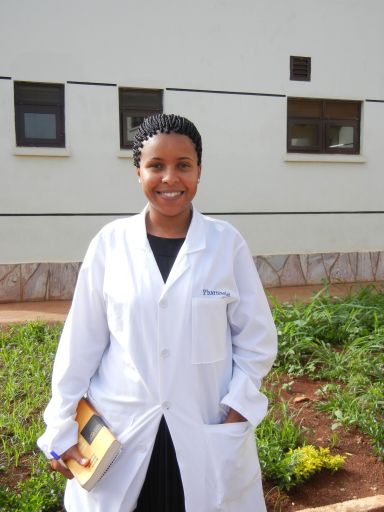
Vicky in front of her hospital, China-Uganda Friendship Hospital-Naguru, Kampala, Uganda

Vicky in front of her hospital, China-Uganda Friendship Hospital-Naguru, Kampala, Uganda

Vicky Nyombi graduated from the State Educational Institution of
Higher Professional Education Nizhny Novgorod State Medical Academy of
the Federal Agency of Public Health and Social Development, Russia.
She is employed as the sole pharmacist and head the pharmacy department at the China-Uganda Friendship Hospital- Naguru (CUFH-N) in Kampala.  CUFH-N is a new (2012) small, 100-bed facility. In her application she stated “I have discovered that this training in Pharmaceutical care is timely and I am optimistic and confident that at the end of the training, there will be better patient care outcomes
in our hospital.”  One of the things that made her a great candidate was her prior experiences trying to implement new services such as developing a system of reporting the pharmacy needs to the clinical
team and being the secretary of the Medicines and Therapeutic Committee where though these activities she has “seen a positive impact in rational prescribing”.  Agreeing to come to the USA meant leaving her supportive husband and her 2 young sons to brave the cold
Nov- Dec weather of PA and NY.  The latter, though, was not going to be totally new to Vicky since she was quite familiar with cold and snowy weather from her education in Russia.
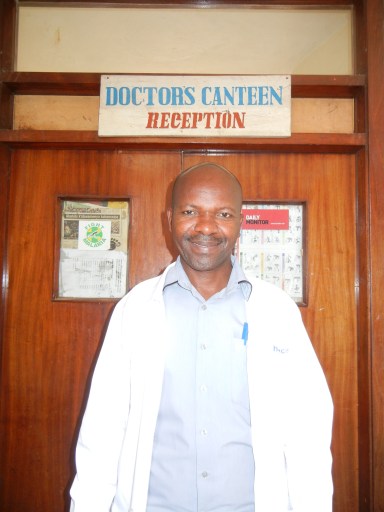
Patrick is standing in Mulago National Referral Hospital, his practice site

Patrick Opio, a graduate of Makerere University, is one of the 6 pharmacists at. Mulago National Referral Hospital.  Mulago is a huge, 1500 bed facility. Although there are few pharmacists, most of the
dispensing of medications is performed  by the 65 pharmacy interns deployed to Mulago for their mandatory post- graduation training and
Patrick is one of their preceptors. Patrick, too, has distinguished himself with his involvement on many committees and projects designed to improve patient care at Mulago.  In referring to his participation
in this course in his application, he stated “I’m confident it will equip me with more skills to provide better pharmaceutical care in line with the vision and mission of Mulago hospital of becoming the centre of excellence in provision of specialized health care to referred patients and conducting research.” Patrick also left a supportive wife and 4 children at home to spend this time in the USA. The cold weather in PA and NY, not to mention possible snow, will definitely be something new to him as he hasn’t ever lived outside of
Uganda.

Posted in Beginnings, Diseases/Health, Fulbright Specialist Project | Tagged , , , , , , , , | 4 Comments

A Gathering of New and Old Friends in Kampala

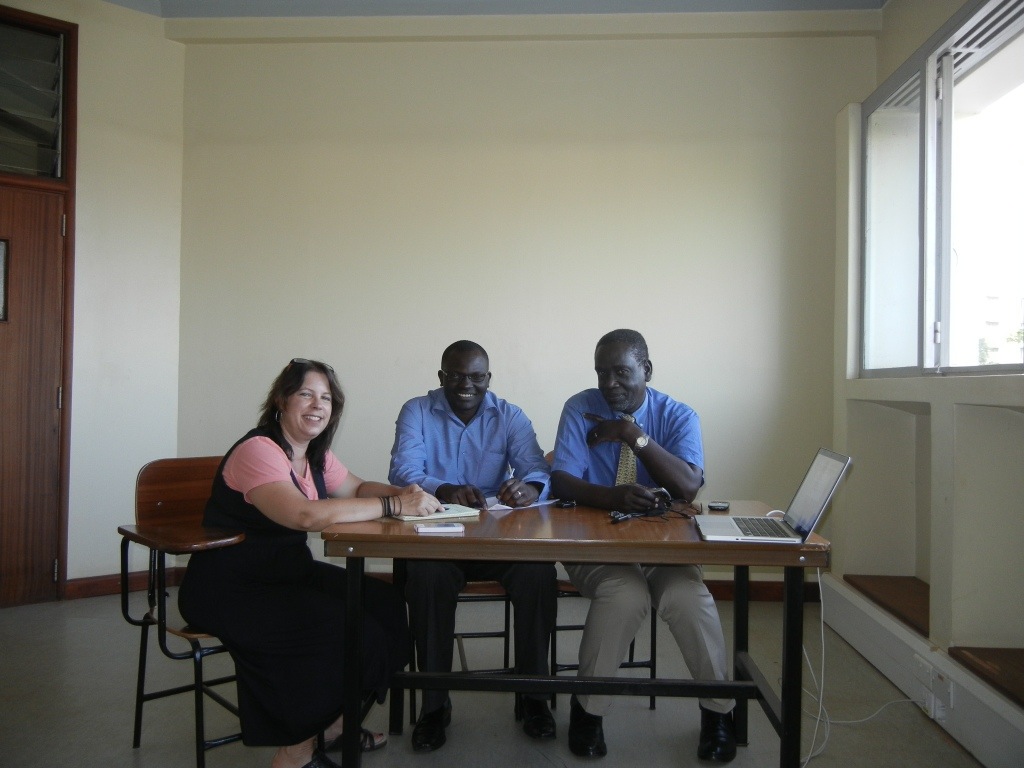
Today we left Masindi, Uganda and headed back to Kampala. We wanted to have one last night here so we could once again meet up with the new and old friends we have met on this journey and also so I could have some final meetings to discuss the next steps in the collaboration of Wilkes U and D’Youville College regarding the Pharmaceutical Care project with the Pharmaceutical Society of Uganda (PSU) and Makerere University. The first picture is of Sam Opio, the Secretary of the PSU, Professor Richard Odoi of Makerere U and me as we discuss the next steps in true project. My co-collaborators from D’Youville joined us via Webex conference call until my USB modem ran out of the data plan and abruptly cut us off. Nonetheless it was a productive meeting.

20131015-001557.jpgThe rest of the pictures below we’re taken at the dinner I arranged at an Italian Restaurant called Il Patio. It was delicious and we had great fellowship and conversations. There were a total of 19 attendees! We will all miss our new friends and pledge to keep in touch and hopefully meet again when we return. I know I am coming back but all of the students really want to come back as well!! It has been a fabulous trip for sure!!

20131015-002653.jpg

20131015-002717.jpg

20131015-002731.jpg

20131015-002747.jpg

20131015-002804.jpg

Posted in My Safari (My Journey/Adventure) | Tagged , , , , , , | 2 Comments

A Collage of Photos from Murchison Falls National Park, Uganda

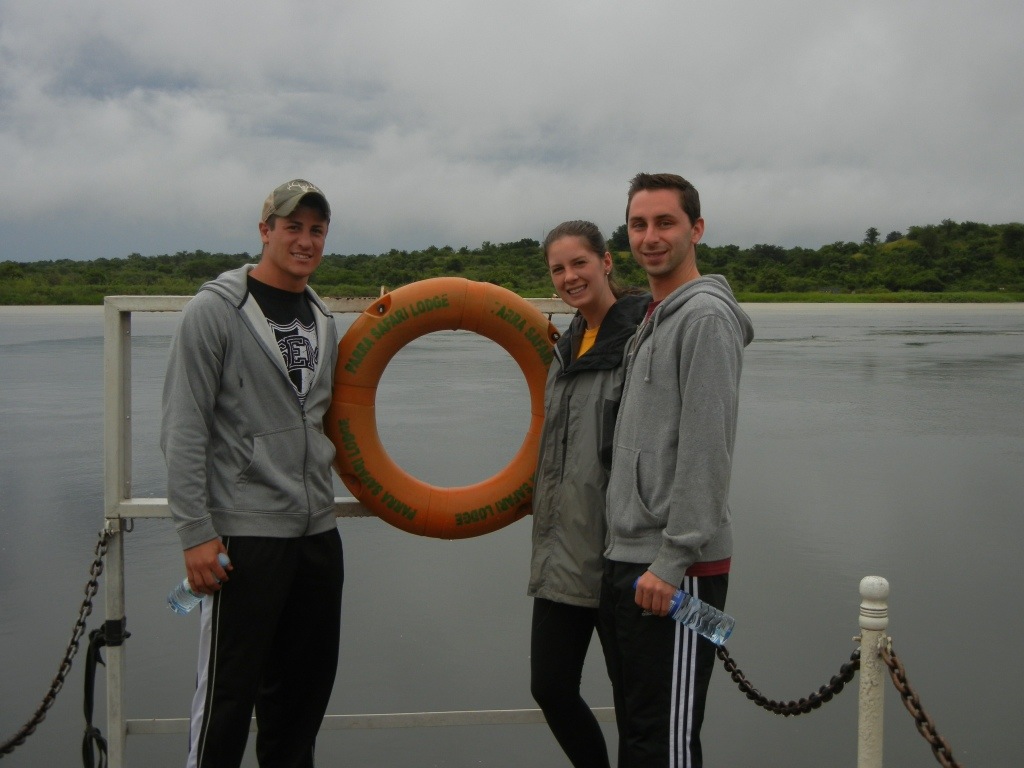
20131013-191730.jpgGetting ready to go on the boat ride on the Victoria Nile River- it seems gray is the color of the day.

20131013-193153.jpg“Eye” spy multiple hippos!

20131013-193655.jpgWow, double rainbows at the top of the falls!

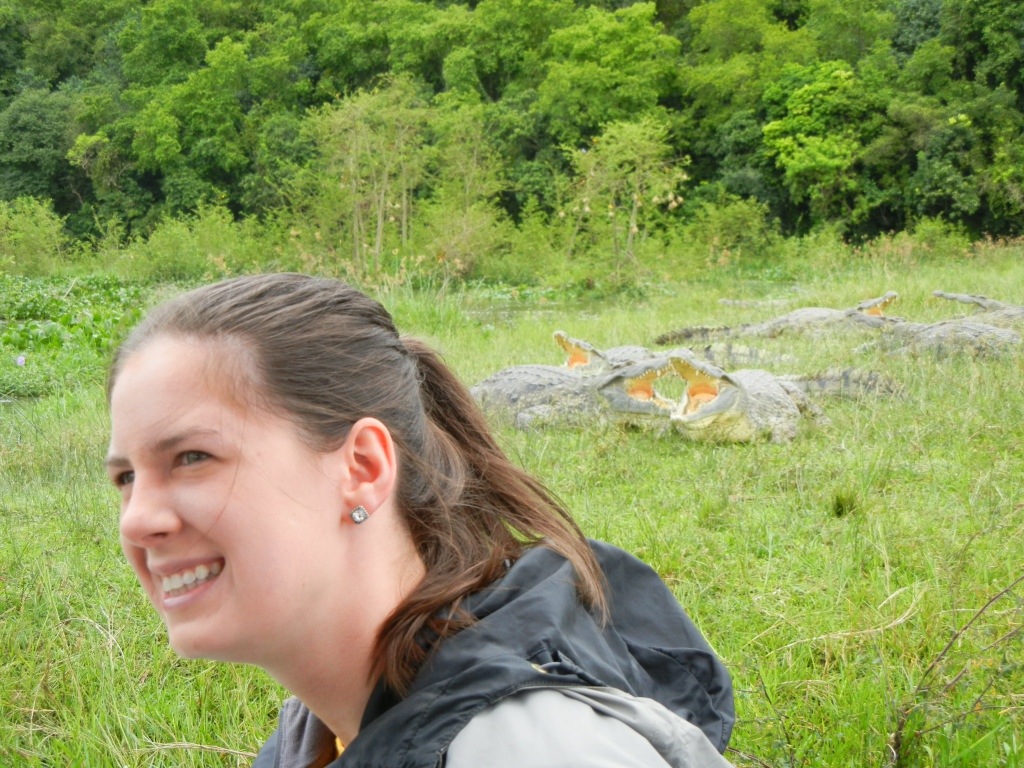
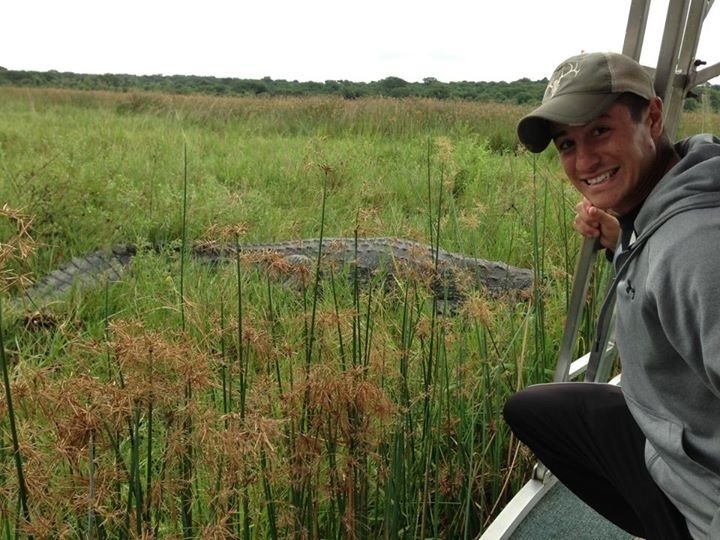
20131013-193920.jpgStacy’s smile is saying “take the picture fast and get us away from these crocs”

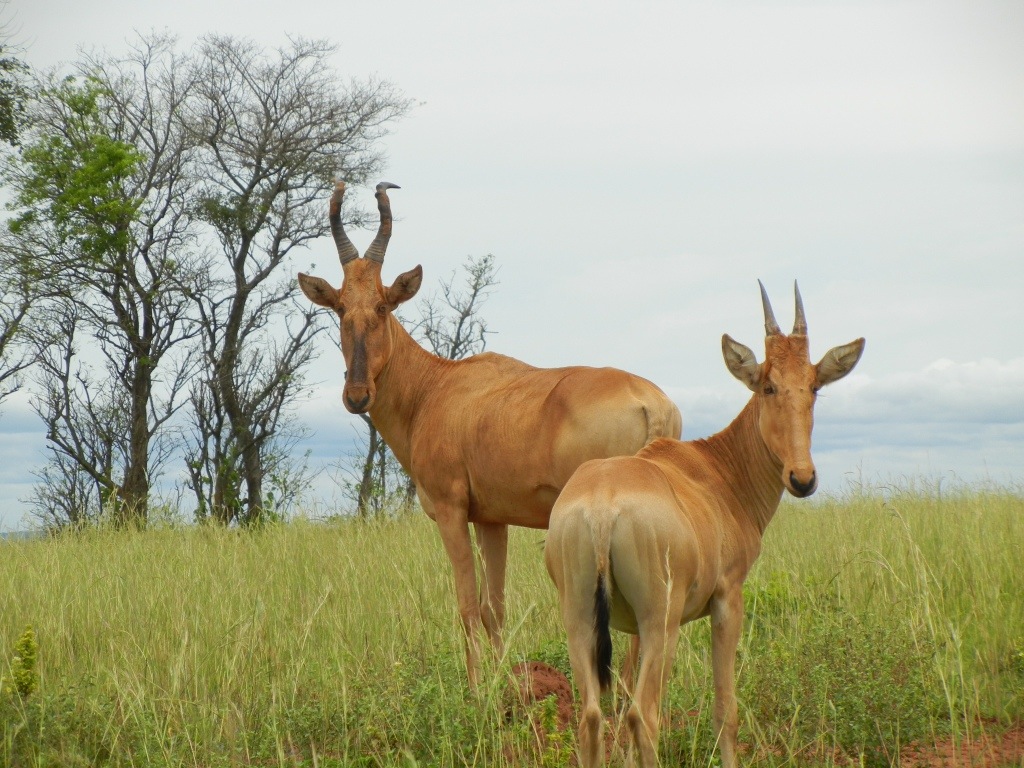
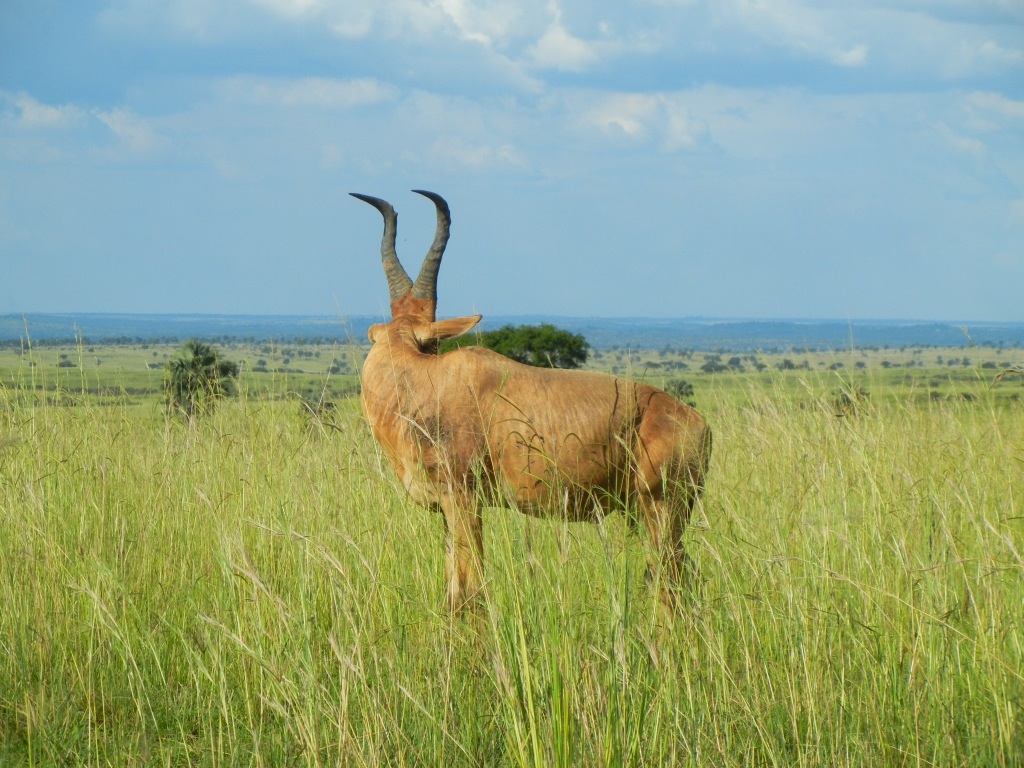
20131013-194225.jpgHey, you lookin’ at me! (Jackson Hartebeest)

20131013-194444.jpgWe finally got to see elephants up close- yea!

20131013-195257.jpgSunrise from Paraa Lodge while eating breakfast.

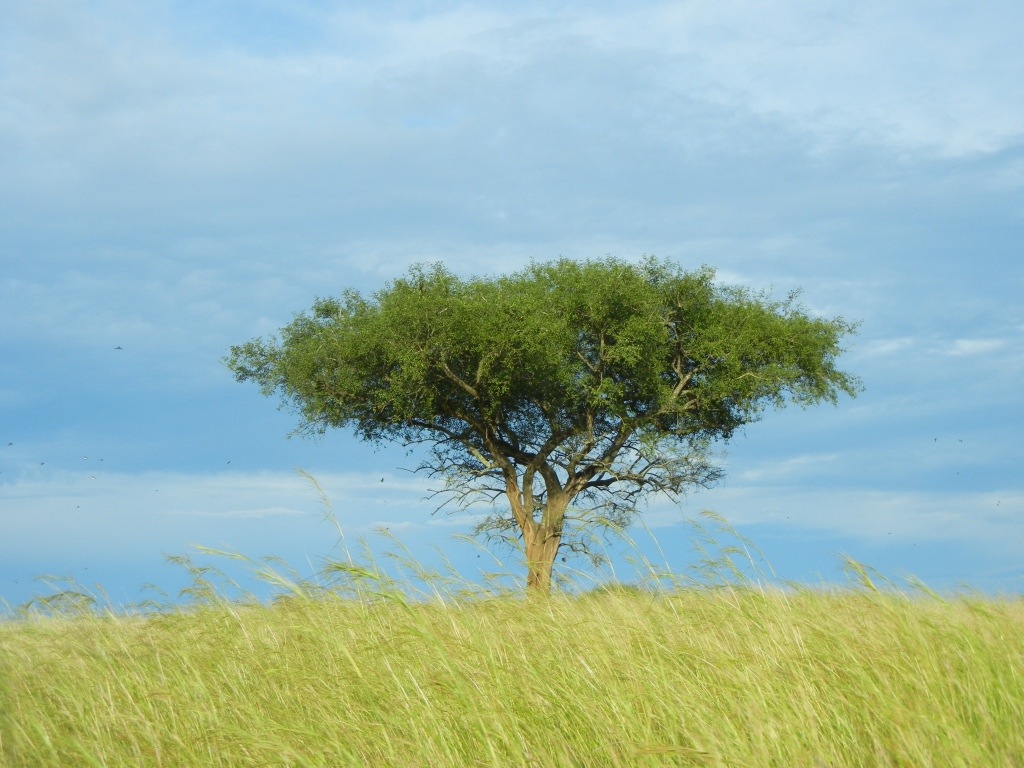
20131013-195434.jpgMidday in the savannah grasslands of Uganda- the Acacia Tree is a familiar symbol of Africa.

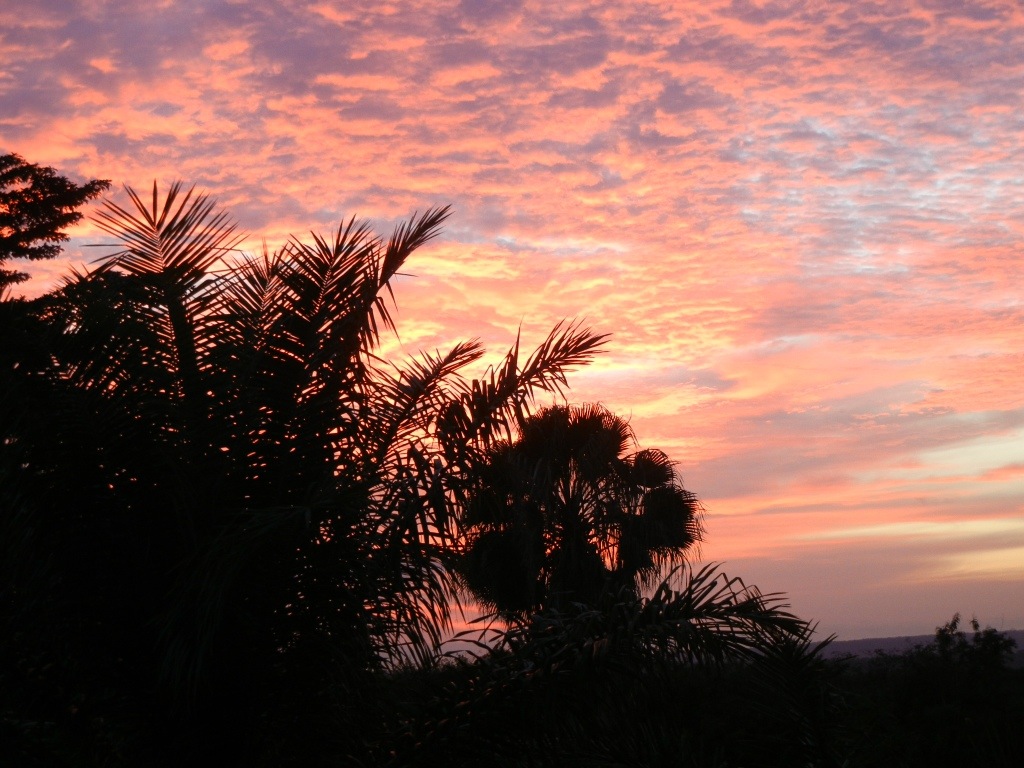
20131013-200005.jpgSunset over Murchison Falls National park- a fitting end to a wonderful trip and our final game drive!

Posted in My Safari (My Journey/Adventure) | Tagged , , , , , , , | 8 Comments

A Morning With The Hippos & Croccodiles

20131012-212738.jpgThis morning we woke up to the sounds of a heavy rainstorm at 6:15am. We were getting up early anyway because we had a boat ride scheduled at 8am but this didn’t bode well for seeing many animals. Luckily, as most of the Ugandan rainstorms do, this one passed and we didn’t get wet on the boat ride. It was still overcast until this afternoon, but I think we hit the jackpot as far as water animals go. We not only saw tons of hippos and some crocs, but we were fortunate to get to take the small boat which goes really close to the animals (they also have a double decker big boat that is nice, too, but unless you have a great zoom lens, the animal pictures aren’t as good). AND, we had a fearless guide who got us up close and very personal with the largest crocodile I have ever seen- not that I have much experience, but out driver, Sam, who has lots of safari experience said it was the largest he has seen and was quite impressed! Well, I’ll let you all decide for yourself. Check out these photos

20131012-214039.jpg

20131012-212648.jpg

20131012-212711.jpg

20131012-212725.jpg

Posted in My Safari (My Journey/Adventure) | Tagged , , , , , | 3 Comments

Giraffes, Buffalo, and Antelopes, Oh My! Safari Day 1

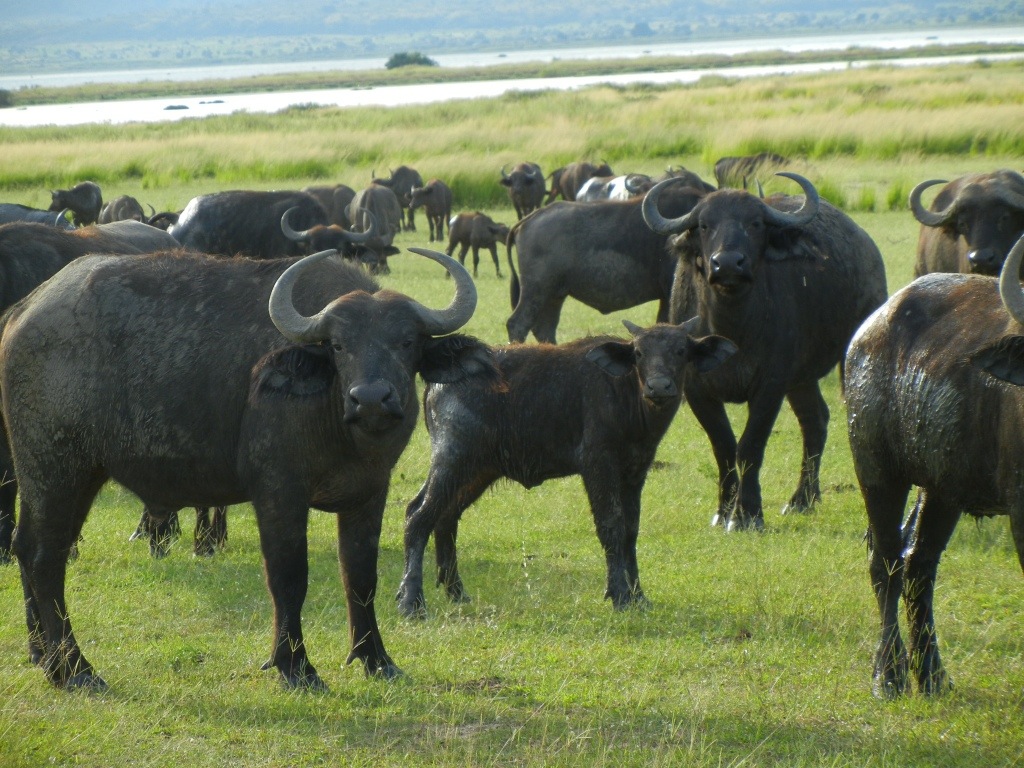
We are on Safari at Murchison Falls National Park, Uganda and we are having a fabulous time! The students agree that the lodging at Paraa Lodge is first class and it has been a nice treat at the end of all of our hard work. I’m going to just let the pictures do the talking because we don’t have much wifi access here. Enjoy!

20131011-213356.jpg

20131011-213415.jpg

20131011-213512.jpg

20131011-213554.jpg

20131011-213613.jpg

20131011-213643.jpg

20131011-213709.jpg

Posted in My Safari (My Journey/Adventure) | Tagged , , , , , | 2 Comments

Masindi Potpourri on the Day Before Safari

20131010-214126.jpgWell it is hard to believe that we’ve been in Uganda for 3&1/2 weeks and today was our last day at the clinic and in the field. Stacy and I worked at the Masindi-Kitara Medical Center today and rounded in the inpatient wards with the physician. We helped to make treatment decisions for a patient with diabetes and one with hypertension and acute asthma. One of the recurring themes is lack of access to drugs. The patient with the asthma needed a steroid inhaler but the clinic’s stock was out and a new drug order can’t be placed for another week or so and then it will take a week to arrive. The clinic strives to be self-sustaining by the small fees patients pay for service and there is not enough money to buy extra drugs that might not be needed so the ordering decisions are based on past usage and if they get more asthma patients this month than last, there might not be enough drugs. The good thing is that there are other pharmacies in town and hopefully one of them will have what the patient needs. Jeff and Nikko spent their last day in Masindi out in the field with a crew of medical personnel from TASO. Their experience was similar to mine and Stacy’s but unfortunately they did more observing than service because every time they asked to help, the staff just said, “no, you are our guests, you mustn’t do work- just relax”. This is probably a cultural misunderstanding because I’m sure the TASO staff was being kind and thoughtful but what they didn’t realize is that the pharmacy students really wanted to help and just sitting around makes them feel like they are not part of the team.

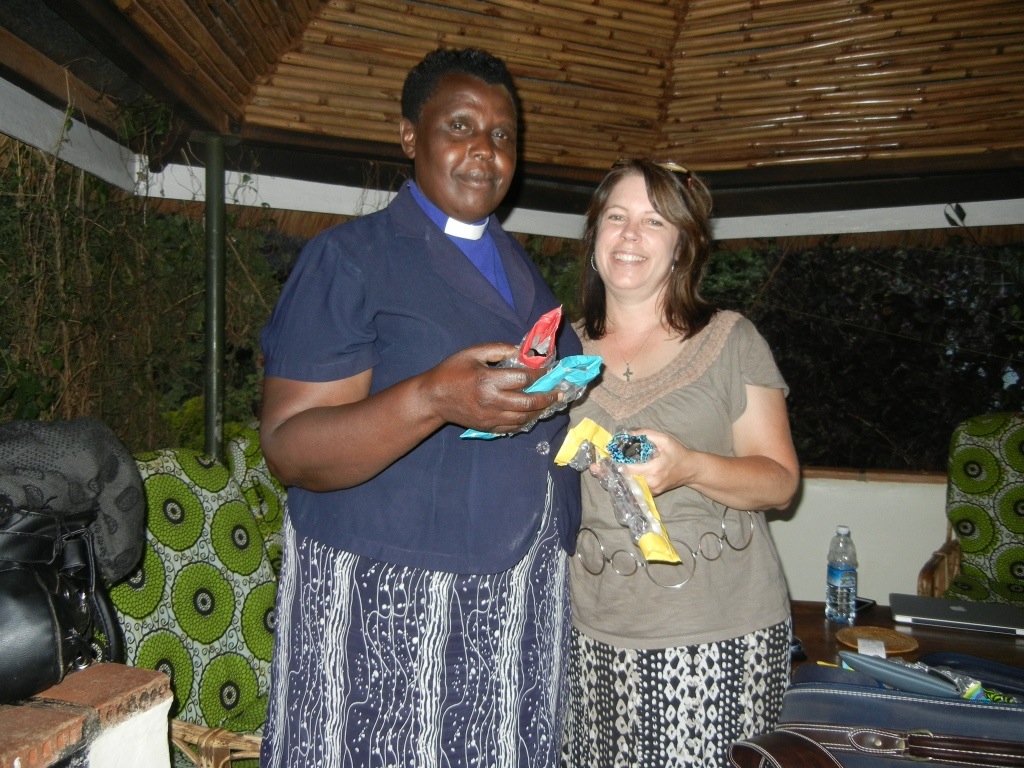
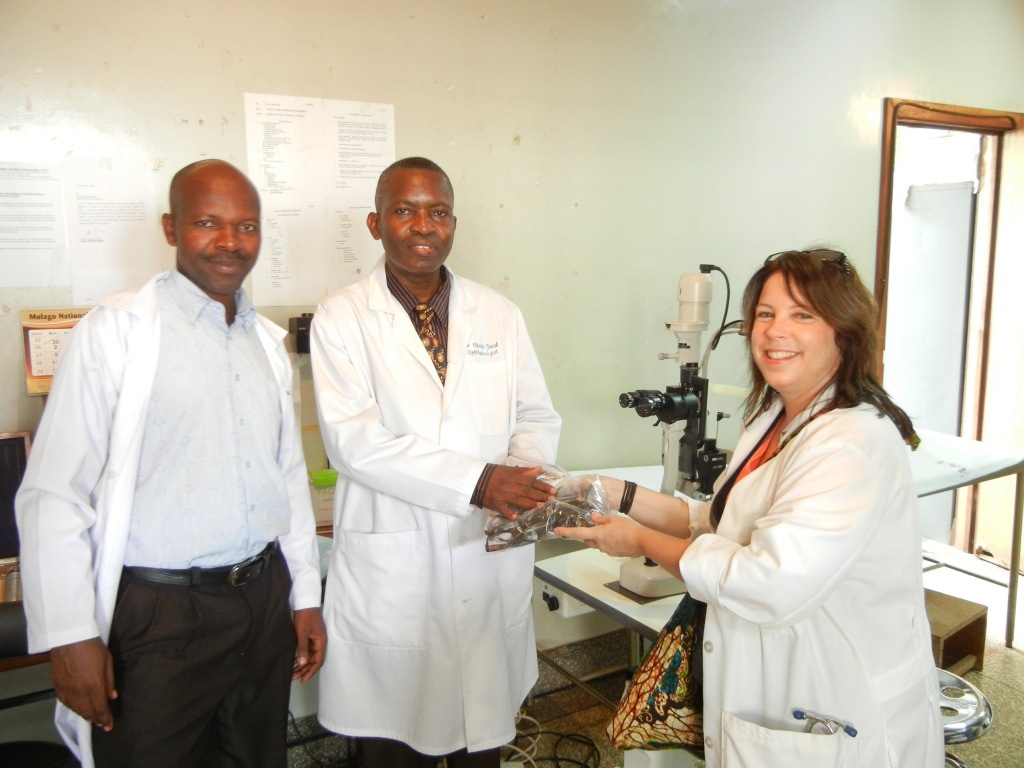
20131010-221319.jpgIf you’ve been following the blog all along, you will remember that I brought several suitcases of items to donate. The picture above is of Rev. Eva’s from the Masindi-Kitara Diocese of the Church of Uganda and me as she receives the reading glasses I brought for her to use with her women’s groups and for anyone else who needs them. I also brought her some prayer shawls along with the Little Dresses for Africa and some baby hats. My church was able to collect so many pairs of reading glasses that I was also able to donate some of them to the Health Outreach Missionary for the Masindi-Kitara Diocese and to the ophthalmologist at Mulago National Hospital in Kampala. See the photo below.

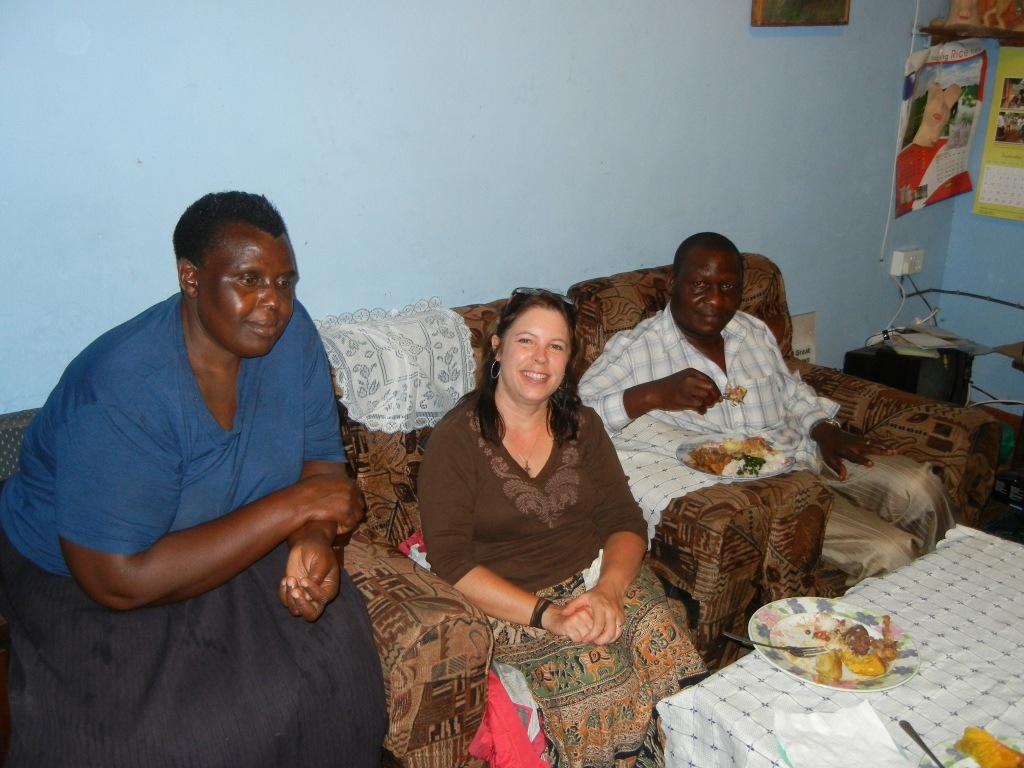
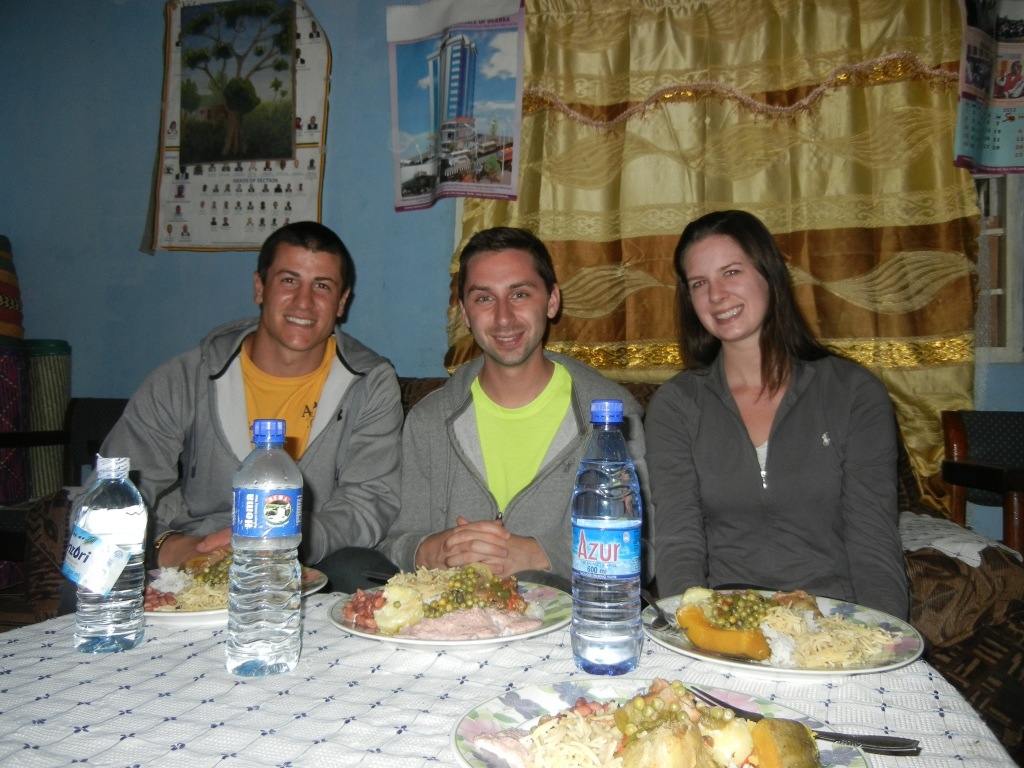
20131010-222141.jpgWe ended the day with a wonderful treat- we were invited to Rev Evas home for dinner with her family. She made a traditional meal of local foods including a chicken sauce served with matoke (mashed banana), Irish potatoes (white potatoes), white rice, spaghetti, baked pumpkin, millet, a green pea sauce, a bean sauce, g-nut sauce (like a peanut sauce), and greens. You can see how much food there was on our plates in the pictures below. We ended the meal with steamed milk with a soy coffee with sugar- really delicious. Rev Evas is the women in blue, her husband, Sem, is next to me in the chairs. The man with the students is their oldest son, Julius who is a water engineer and is going to South Sudan to work in a few days. Rev Evas and her whole family was wonderful to talk to and being invited to her home to share a delicious meal was truly a blessing. The final piece of potpourri for today is the video below. It isn’t great quality but you will get what I’m trying to show.

20131010-232712.jpg

20131010-232803.jpg

20131010-232849.jpgNow when I got back from dinner tonight I noticed a few ants on the floor by the bathroom. I looked more closely and saw a lot more than a few and then I noticed that they were carrying a piece of cracker across the floor that I must have dropped yesterday. Yes, it was kind of gross, but I could stop watching them. The cracker was so much bigger than them yet they were moving it gracefully. So, check out the video. You can be assured, now, though, that those ants are no longer in my room.

Posted in Diseases/Health, My Safari (My Journey/Adventure) | Tagged , , , , , , , | 2 Comments

A Day With Taso in the Field (The AIDS Support Organization) by Stacy

20131009-205652.jpgYesterday Dr.Bohan and I got to experience the great work of TASO, The Aids Support Organization. Through my time in Uganda I have noticed how prevalent HIV is in the population at the hospitals, yet none of their pharmacies dispense HIV medications. Patients are expected to bring their own from home. It was great to finally see the process of how some of these patients get their medication.

20131009-205919.jpgA wife whose husband got HIV from a blood transfusion started TASO. The village thought that witchcraft was involved and shunned them. A group of 15 friends infected or affected by the disease came together to start an organization to support one another and do something to fight against AIDS. In 1987, the group created the name TASO, which has since created a network of 11 service centers, 4 regional offices, and a training center spread throughout Uganda. The services they offer include HIV/AIDS counseling, medical care, social support, nutritional support, education, networking, and research. What we got to experience was a Community Drug Dispensing Point visit.

20131009-210029.jpgWe traveled with two counselors, Mary and Doreen, to the Kiryandongo district about 40km outside of Masindi. We expected to have 25 patients to meet with. Most patients were already sitting together on benches in the shade as we arrived, and a few more trickled in as they set up to total 21 patients. I quickly realized the counselors do much more than just deliver patients their next supply of medicine. First they have the patient’s pay 2,000 shillings and hand out their receipts. 2,000 shillings is equivalent to about 78 cents. They have the patients pay a small fee as opposed to it being free to encourage commitment and have them value the service. Each patient keeps their own journal that Mary and Doreen used to record the visits’ overview including updated patient weight, lab results from the last visit, medications they were receiving, and their next scheduled visit. In addition, the counselors filled out forms to assess medication adherence, additional medical problems, and the current risk of TB. They used the questioners as a guide to determine if a closer follow up date was needed for individual patients. Dr. Bohan helped by recording everyone’s weights and helping with signatures on forms, which we both found interesting. There were a few patients who could not sign, so we would cover their thumbs in pen ink and have them leave a thumbprint. I helped Mary with the paperwork and dispensing of the medication to patients.
20131009-210258.jpgThe atmosphere there was very positive, which was great to see. The group seemed very close and made us feel very welcome. The only thing that could have made it better was if I hadn’t removed my blood pressure cuff from my bag that morning to make room for my umbrella. One of the patients who has not made it to the dispensing point in 2 years actually came in hope of going to the hospital to get her blood pressure taken due to recently feeling dizzy. She is paralyzed from the waist down, so making a trip out herself is very difficult for her. Luckily she has amazing support from her family who were able to bring her sandwiched between two people on a BodaBoda for a 3km trip. Unfortunately, the nearby clinic did not have a blood pressure cuff so she left without having her blood pressure taken. Lesson learned: carry your blood pressure cuffs everywhere cause it is bound to come in handy!

20131009-210439.jpg​One of the patients who did not show up just delivered a baby, so the counselors felt it was important to actually seek out where the patient lived and visit her. This was one of the highlights of the trip as I got to hold the patient’s newborn as Dr.Bohan. Mary, and Doreen dealt with dispensing the medication, the paper work, and assuring the newborn had medication. Although my “babysitting” was short, it caught the attention of the young children playing outside who quickly spread the word that a Muzugu (white person) was in the house and holding a baby! Children all took turns peaking inside the house to see what was going on. It is rare to see visitors in the village, so this was even more unusual for the children to see. The visit showed me how dedicated the counselors are to their patients. Although it was late, they took the time and went above and beyond to check on a patient who they knew must not have made it to the dispensing point due to her newborn.

20131009-210632.jpg

Posted in Diseases/Health, My Safari (My Journey/Adventure) | Tagged , , , , , , , , | 4 Comments